
Period Poverty in India: A Silent Crisis Affecting Millions
In many parts of India, managing menstruation is still a struggle. Period poverty in India is a growing concern that affects the health, education, and dignity of millions. From rural villages to urban slums, people who menstruate often face a lack of access to sanitary products, clean toilets, and safe disposal systems.
Rita Kumari, 17, from a village in Madhubani, Bihar, shared her experience. “I missed school for three to four days every month. We couldn’t afford pads, so I stayed home,” she said. Like Rita, thousands of girls miss school or drop out due to menstrual stigma and poor access to hygiene.
Stigma and Shame Make the Problem Worse
Menstruation is still treated as taboo in many homes and communities. This leads to silence and shame. Many young people are not even told what a period is before they experience it. Without open discussion, myths and misinformation continue to spread.
Neha Gupta, a community health worker in Uttar Pradesh, explained, “Some girls think they are sick when they first bleed. Mothers themselves are unsure of how to talk about it.”
Lack of education on menstruation is a major barrier. Studies show that 71% of girls in India are unaware of menstruation until their first period.
Education and Health Take a Hit
Period poverty in India has serious consequences. It impacts school attendance, concentration, and overall confidence. Students who cannot afford pads or clean facilities often feel uncomfortable or unsafe at school.
For working-class menstruators, missing work or dealing with infections becomes a regular problem. Some use rags, newspapers, or even ash to manage bleeding. This puts them at risk of urinary infections and other health problems.
Small Solutions, Big Impact
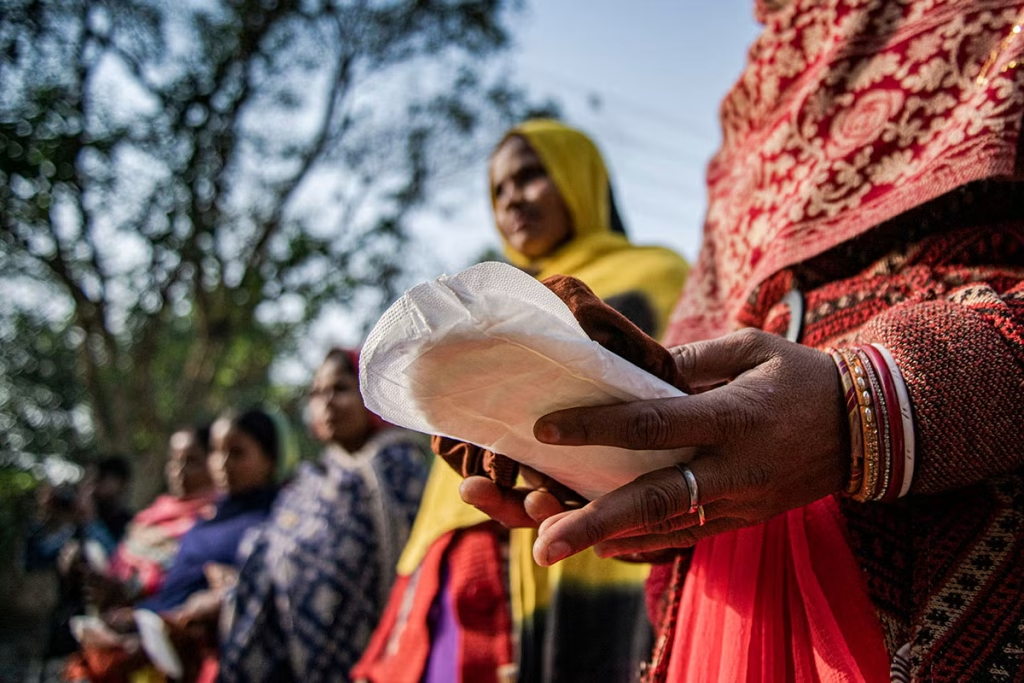
Change is happening — slowly, but surely. In Tamil Nadu, the state government provides free pads to schoolgirls. NGOs like Goonj and Project Baala distribute reusable pads and conduct awareness workshops.
Still, the need is huge. “We have reached only a small fraction. Period dignity should be a right, not a privilege,” said Asha Menon, an activist with an NGO in Delhi.
Many people are now advocating for menstrual products to be freely available in schools, colleges, and public places. The focus is shifting from charity to dignity.
The Need for Policy and Social Change
Experts believe that solving period poverty in India requires both policy action and social change. This includes more government funding, menstrual education in schools, and the normalization of conversations around periods.
“Periods are natural. The shame is not,” said Dr. Meera Joshi, a public health researcher. “We need to talk about it openly, in families, in classrooms, and in workplaces.”
Ending period poverty is not just about products — it’s about respect, access, and equality.
ALSO READ: Asia Sees Covid-19 Surge Again – Should You Be Worried?
Discover more from News Tap One
Subscribe to get the latest posts sent to your email.

