
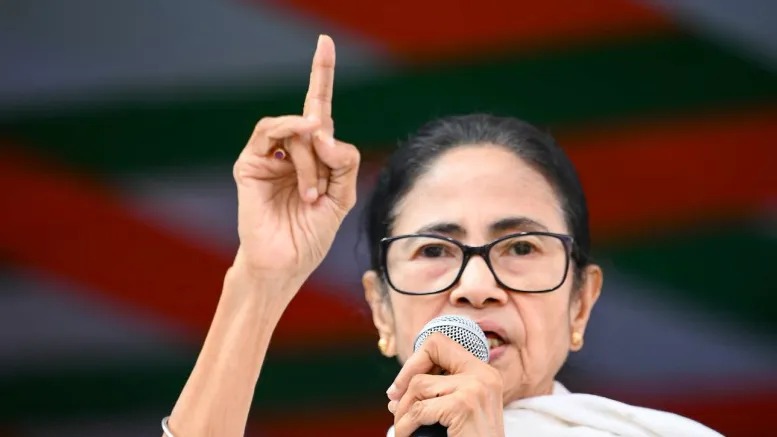
West Bengal CM Mamata Banerjee Announces SIR Compensation

West Bengal’s decision to provide financial support to the families of 39 people whose deaths were linked to the Special Intensive Revision (SIR) voter list update has placed the SIR process at the centre of India’s electoral democracy debate. The state announced ₹2 lakh compensation for each deceased and ₹1 lakh for those hospitalised, including Booth Level Officers (BLOs) directly affected during the voter verification and documentation stage. This government-backed financial support signals a clear acknowledgment of the human cost during the voter list revision while reinforcing the administrative importance of SIR as a national democratic necessity.
The Chief Minister of West Bengal presented her view on the Special Intensive Revision (SIR) process through a dual message—solidarity for affected families and clarity on the state’s ideological stance. She stated that “the state government stands by them in difficult times,” indicating a response-driven and empathetic governance approach to voter verification challenges. This assurance recognises the anxiety, stress, and pressure caused during the electoral roll update while confirming that frontline BLOs and citizens are not overlooked amid the nation’s evolving digital documentation framework.
The CM also clarified that West Bengal “does not allow creation of detention camps and remains committed to secularism,” distancing the SIR voter verification from national narratives of exclusion and identity conflict. This positions West Bengal’s SIR process as administrative reform, not punitive action—securing the foundation of citizenship without fear or deterrence.
Why the SIR Process Strengthens Electoral Democracy
India, with 900+ million eligible voters, demands accurate and transparent voter rolls. Maintaining updated electoral lists is not just routine; it supports resource planning, constituency boundary fairness, and prevents identity misuse. Updating records from earlier decades—including those dating back to 2002—ensures that duplicate entries are removed, deceased voters are excluded, and transparency increases in election management.
Political philosopher John Stuart Mill, in Considerations on Representative Government, argues that true democratic legitimacy depends on the fairness of representation. The SIR process aligns with this principle as part of India’s democratic hygiene. In simple analogy:
“Jodi jol na bodol hoye, tahole pukur-e moyla jome jabe” – If water never changes, the pond gathers filth.
The same applies to a voter list that never undergoes revision.
BLOs as Critical Stakeholders in the SIR Voter Verification System
Booth Level Officers are not simply data collectors; they are guardians of voter identity legitimacy. The distribution, collection, and digital submission of forms under SIR contributed to a future-ready voter infrastructure, reducing human errors and supporting digital governance.
Therefore, the SIR process represents a transition phase—demanding today, beneficial tomorrow—as India moves toward integrated identity authentication and verification.
Voter Identity Verification: Stability in a Mobile Nation
With millions of citizens relocating for work, education, and marriage migration:
- Ghost voters remain
- Genuine voters may appear twice
- Constituency populations distort
- Government resource allocation misaligns
SIR is India’s answer to restoring demographic accuracy and sustaining democratic stability.
Compensation as Governance Accountability
The CM’s relief announcement is not condemnation of SIR but recognition that systemic reform must include citizen support mechanisms. The message—“the state government stands by them in difficult times” reflects responsible and mature governance by refining processes, not abandoning them.
Conclusion: SIR as an Investment in India’s Democratic Future
The SIR voter list update, though challenging, plays a strategic role in strengthening electoral legitimacy, voter identity accuracy, and trust in democratic institutions. West Bengal’s support for affected families demonstrates that reform and empathy can coexist. The future direction is not rejecting the Special Intensive Revision but improving its strategy, technology, and citizen communication. A clean voter roll is more than documentation it is a long-term investment in credibility, equality, transparency, and the integrity of India’s democratic roadmap.
Discover more from News Tap One
Subscribe to get the latest posts sent to your email.

