
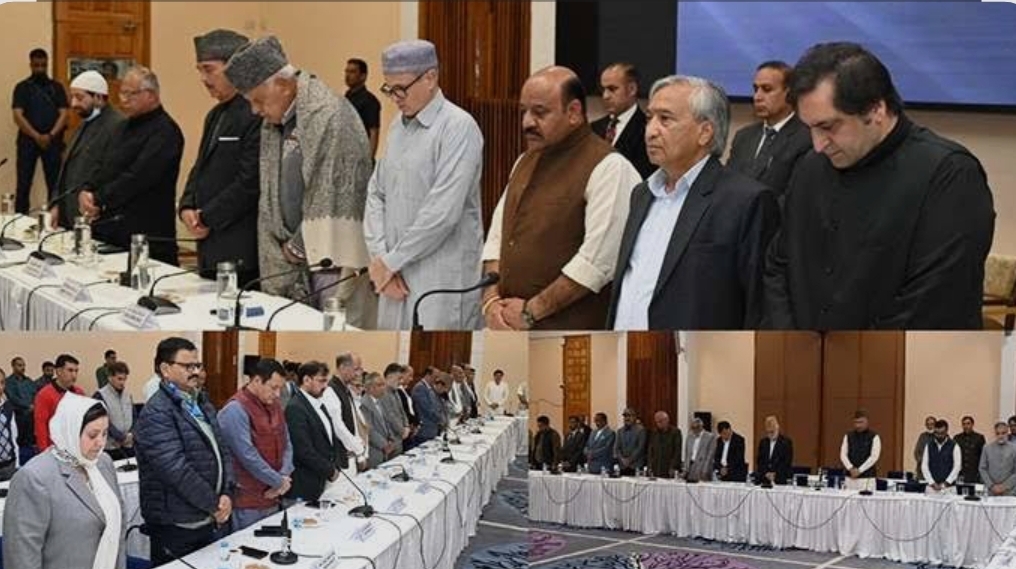
Indus Water Treaty Unfair, Says Omar Abdullah .

April 26, 2025 | New Delhi, India
Jammu and Kashmir’s former Chief Minister Omar Abdullah has stirred strong reactions by labeling the Indus Water Treaty as unfair. Speaking during a policy dialogue in New Delhi, he criticized the agreement, stating that it has deprived the region of economic and energy growth for decades. His comments come at a time when water sharing, energy access, and federal rights are major talking points in Indian politics. With increasing demand for clean energy and regional development, Abdullah’s statement has added urgency to a long-standing debate.
Indus Water Treaty Unfair to Jammu and Kashmir: Omar Abdullah
Omar Abdullah said the Indus Water Treaty unfairly restricts Jammu and Kashmir’s ability to benefit from its own rivers. Signed in 1960, the treaty allows India limited use of waters from the Indus, Jhelum, and Chenab rivers—most of which flow through the Union Territory. Abdullah emphasized that while the rest of India pursues large hydropower projects, Jammu and Kashmir is limited to run-of-the-river setups. These restrictions leave the region unable to store water or generate power at needed levels, especially during peak winter demand. The limitations, he noted, were not only economic but also environmental and social.
Policy Reform Needed as Indus Water Treaty Unfairly Limits Progress
Calling for structural changes, Abdullah urged the central government to offer financial mechanisms to support power generation in the region. He advocated for increased viability gap funding and equity investment in Jammu and Kashmir’s energy sector. These, he argued, would help offset the economic disadvantages created by the treaty. Furthermore, he insisted that the Indus Water Treaty unfairly placed the region in a subordinate position, blocking it from tapping into its full potential. Clean energy from mountain rivers, if fully utilized, could power local development and supply surplus energy to neighboring states.
Political Reactions to Omar’s Stand
Abdullah’s remarks drew both praise and criticism. Sajad Lone, a political rival, accused him of aligning with central government sentiments to stay politically relevant. Meanwhile, Mehbooba Mufti acknowledged flaws in the treaty but urged caution, stressing that tampering with the agreement could strain relations with Pakistan. Experts also warned that any attempts to renegotiate the treaty could face legal and diplomatic hurdles. Despite the mixed responses, Abdullah’s comments have reignited interest in a document often seen as untouchable in bilateral affairs.
What the Indus Water Treaty Means for J&K
The Indus Water Treaty, signed between India and Pakistan with the World Bank’s mediation, allocates usage rights of the six rivers of the Indus system. India retains full rights over three eastern rivers, while Pakistan has control over the three western rivers, which mostly flow through Jammu and Kashmir. This has left the region with limited access to a critical natural resource. Abdullah said that this agreement, formed without local consultation, has ignored the needs and aspirations of the people of Jammu and Kashmir. As energy needs rise, the implications of this decades-old agreement are becoming more visible and contested.
Omar’s Statement Raises Pressure on Government
Omar Abdullah’s critique adds pressure on the Centre to rethink the treaty, at least in terms of internal compensation and support. Though the Indian government has traditionally maintained the treaty to avoid international conflict, rising local demands may push for a re-evaluation. Analysts suggest that while India is unlikely to walk away from the treaty entirely, amendments or internal policy adjustments may be possible. For now, Abdullah’s intervention has successfully brought the Indus Water Treaty unfair debate back into national focus, raising questions that both politicians and policymakers must now address.
Read more : Medha Patkar Arrest Sparks Debate Over Defamation Laws .
Discover more from News Tap One
Subscribe to get the latest posts sent to your email.
