
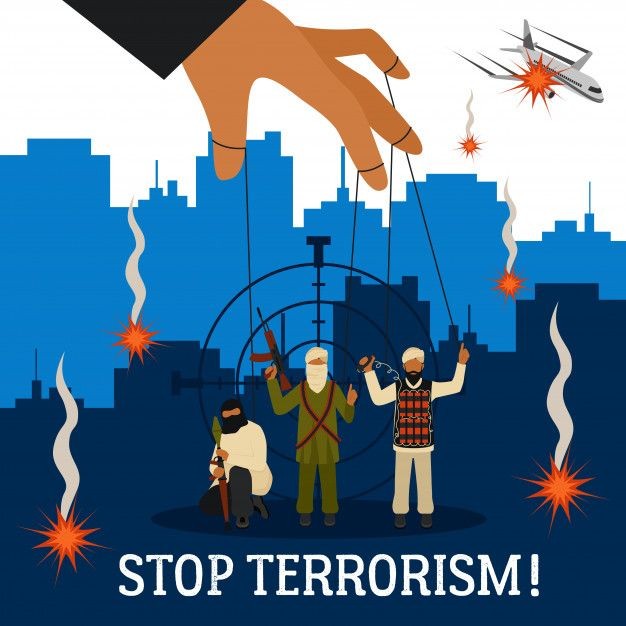
“Who Really Failed Us? A Nation’s Cry After Terror”

Introduction:
Another terror attack. More dead civilians. More political statements. More outrage. And then silence. In the aftermath of the Pahalgam massacre in Kashmir, it’s not just grief we carry—it’s questions. Deep, burning questions. About security. About accountability. About who’s really responsible for letting extremism flourish, again and again.
1. What Really Is Terrorism—and Who Gets to Define It?
Terrorism isn’t just a gun, a bomb, or a masked face—it’s ideology. It’s systemic hate. It’s the use of fear for power. But in today’s world, definitions shift depending on who’s being targeted or who’s in charge. Why is one group labelled “terrorist” while another, doing similar violence, is simply “radical” or “disturbed”? It’s time we stop using selective outrage and start calling out extremism in all its forms.
2. How Safe Are We Really? The Government’s Role in Security Failures
When attacks happen in known conflict zones like Kashmir, the question isn’t “how?”—it’s “why wasn’t it stopped?”What happened to intelligence? Why weren’t civilians protected? Isn’t security the bare minimum a government owes its people? It’s not just about retaliation after the damage. It’s about prevention. And on that front, every lapse is a betrayal.
3. Beyond the Bullet: Who Creates the Extremist?
No one is born a terrorist. So who radicalized him? Who trained him? Who failed to save him from that path? Extremists grow in broken systems—where there is no education, no opportunity, no hope. And when those systems are neglected for decades, the blame isn’t just on the terrorist—it’s on the world that watched him fall.
4. Hate as a Business: How Politicians, Media & Radicals Profit from Violence
Let’s not pretend this is just about safety. Every time a bomb goes off so do a politician’s poll numbers. News channels thrive on outrage, not truth. Religious radicals gain followers and funding. Hate has become a billion-rupee business—and the dead are just marketing tools.
5. Patriotism or Performance? How We React to Bloodshed
We change DPs.We trend hashtags. We say “Never again” every time—but we don’t demand answers. Is this the nationalism we’re proud of? A nationalism that wakes up only after tragedy? Real patriotism means holding power accountable, not just waving a flag.
Conclusion: Stop Asking ‘Who Attacked Us?’ and Start Asking ‘Who Let Them?’
Until we confront the uncomfortable truths—about our leaders, our systems, our silence—we’re doomed to watch this story repeat. The real enemy isn’t just across the border. Sometimes, it’s in the complacency within. And until we name that enemy, nothing will change.
Discover more from News Tap One
Subscribe to get the latest posts sent to your email.

