
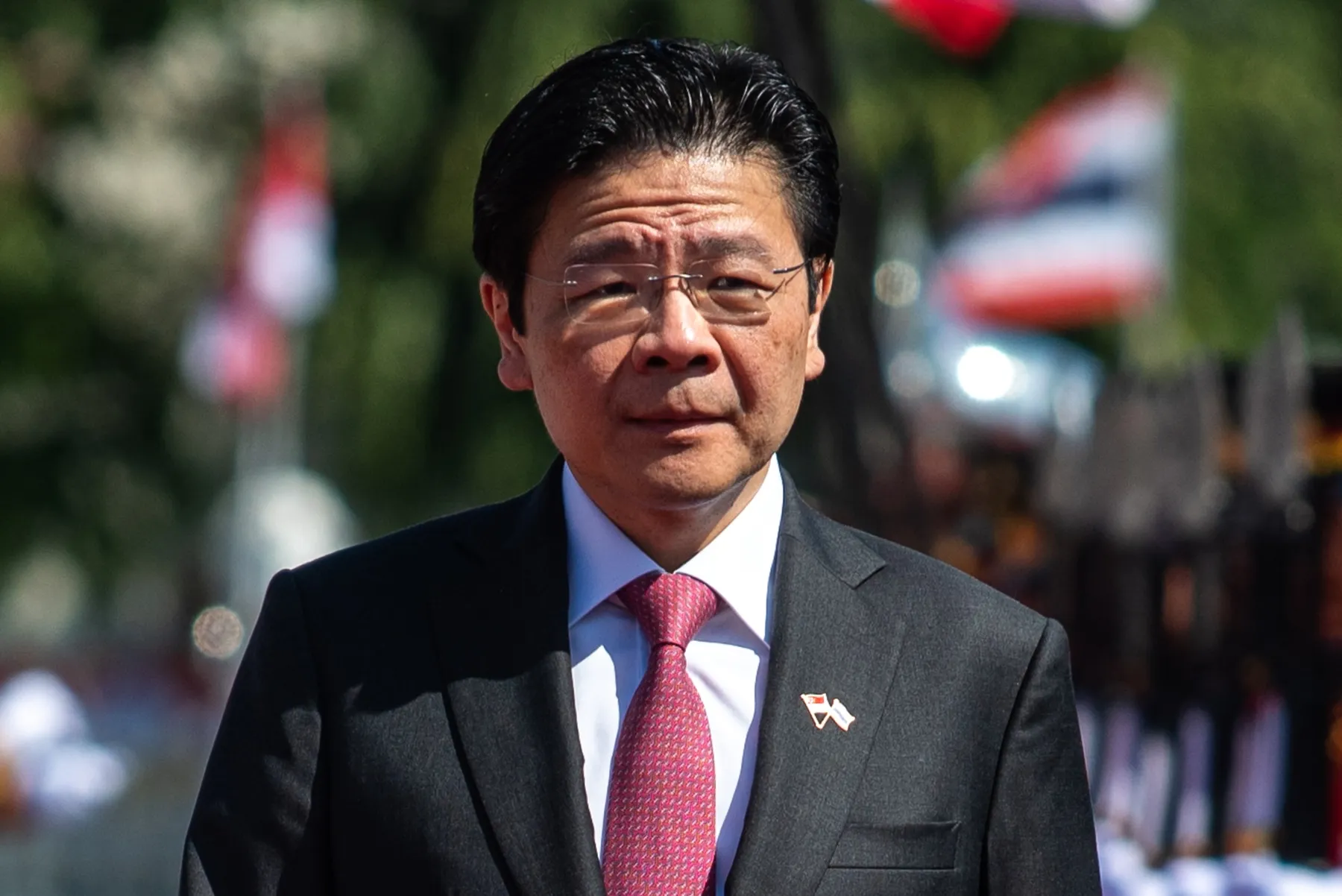
US-China Rivalry Reshaping Global Order: Singapore PM

Singapore PM: Lawrence Wong
Singapore Prime Minister Lawrence Wong has said the rivalry between the United States and China is reshaping the world and redefining global geopolitics. Speaking at the annual S. Rajaratnam Lecture, he addressed an audience of about 900 people, discussing the evolving dynamics between the two superpowers.
“America and China are now locked in a fierce contest for global supremacy. While neither wants an open conflict, both operate with deep mistrust and suspicion,” Wong said. He pointed out that despite public claims of neutrality, each nation is working to pull others into its own strategic orbit.
Shifting Global Landscape
During his address at the Singapore University of Technology and Design, Wong noted that Singapore had prospered for 60 years under a rules-based international order shaped by American leadership after World War II. However, he warned that this order is now faltering.
“Unfortunately, the international order has failed. Within America, support for global engagement has diminished. Many Americans feel left behind by globalisation,” he said. Furthermore, he explained that there is a growing belief in the U.S. that other nations benefit disproportionately from American military protection and market access, without giving much in return.
This, Wong emphasized, has triggered a strong domestic push in the U.S. to scale back foreign commitments and focus inward. “This is not just a temporary shift in policy—it reflects a deeper, structural transformation in American society,” he noted.
China’s Rise and the Power Vacuum
As China emerges as a near-peer competitor, Wong observed that the U.S. has begun retreating from its traditional role as a global stabilizer. At the same time, no other country, including China, appears ready or able to fill the vacuum. Consequently, many nations are turning inward and prioritizing narrow self-interests over collective progress.
He added, “Geopolitical competition has returned with a vengeance, and the major powers no longer feel economically secure.”
Tariffs and Economic Weaponisation
According to Wong, governments are increasingly using economic tools like tariffs, sanctions, and export controls not for economic efficiency, but as political instruments. These tools now serve to advance national interests and undermine rival economies, rather than promote open markets.
“These trends aren’t entirely new, but they’ve reached a new level of intensity,” Wong remarked. He cited recent U.S. tariff announcements on April 2, which imposed wide-ranging levies on several nations, hitting many Asian countries particularly hard.
Even though U.S. President Donald Trump later paused most of the reciprocal tariffs, he still announced tariffs of up to 145% on Chinese imports. China quickly retaliated, placing tariffs up to 125% on American goods.
A Fragmented Global Economy
“These developments are causing immense uncertainty for businesses across the globe,” Wong warned. He described the current economic shift as the “remaking of the global economy”—not into one integrated system, but into two competing ecosystems led by the U.S. and China.
In closing, he noted that countries around the world are re-evaluating their strategic positions and adjusting their foreign policies accordingly.
Also Read: UP to Launch ‘Dr Ambedkar Zero Poverty Mission’, Says CM Yogi
Discover more from News Tap One
Subscribe to get the latest posts sent to your email.

