
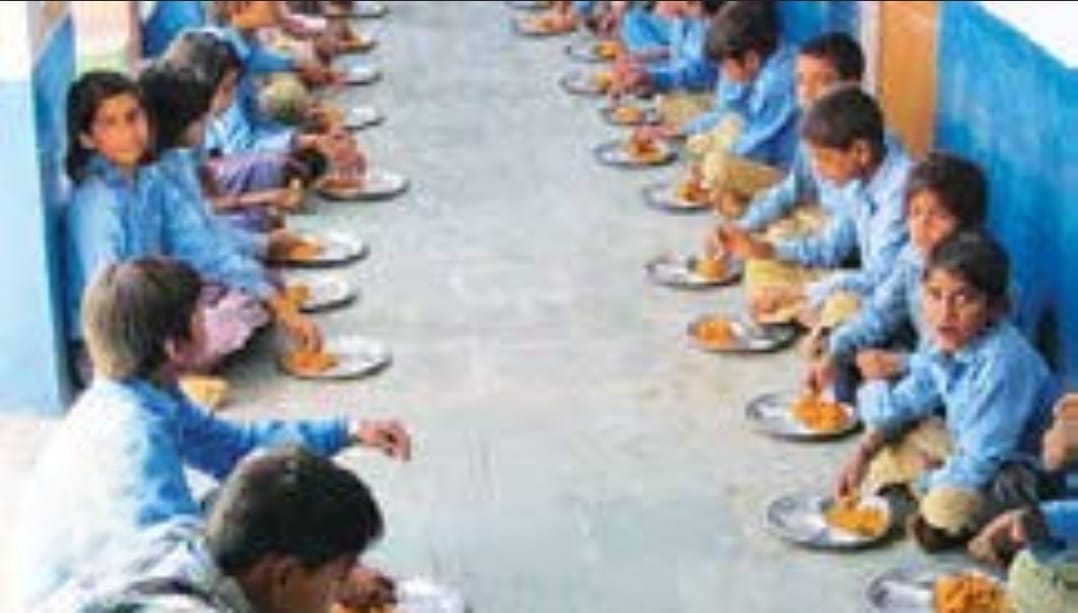
Midday Meal Case in Chhattisgarh High Court Orders Damages.
Raipur, August 21, 2025
Midday Meal Controversy Shakes State
In Raipur, the Chhattisgarh High Court delivered a significant judgment in a shocking midday meal case. The court ordered the state government to pay compensation after children were served rice that a dog had licked.

The disturbing incident raised strong questions about hygiene, accountability, and the monitoring of welfare schemes. Parents expressed anger, activists demanded reforms, and the judiciary stressed the importance of protecting children’s dignity and health.
Detailed Background of the Midday Meal Case
The controversy began when students in a government school in Chhattisgarh received contaminated rice as part of the midday meal. Villagers claimed that the rice had been licked by a stray dog before being served to the children.
Despite visible contamination, school authorities still distributed the meal. This negligence sparked outrage in the community, where parents accused staff of ignoring children’s health and dignity.
Local activists quickly brought the matter into focus, calling the incident an insult to poor children who depend on government schemes for nutrition. A Public Interest Litigation (PIL) was soon filed, seeking accountability from the state.
Court Observations on the Midday Meal Case
During the hearings, the High Court bench strongly criticized the school authorities and the state government. The judges said the incident revealed both administrative failure and lack of supervision in government schools.
The court noted that welfare schemes like midday meals exist to improve children’s health and ensure equal opportunities. Instead, negligence had endangered lives and humiliated students.
The bench also remarked that food security schemes carry constitutional significance. Therefore, the state has a direct obligation to uphold children’s rights by enforcing strict hygiene and monitoring in schools.
Court’s Final Order: Compensation and Accountability
In its final ruling, the High Court directed the Chhattisgarh government to compensate all affected students. The court also instructed the education department to submit a detailed compliance report.
This report must include:
- Specific hygiene guidelines for midday meal kitchens.
- Regular monitoring mechanisms to prevent contamination.
- Disciplinary action against negligent staff.
The order underlined that the state cannot escape responsibility when children’s health is compromised in government-run schools.
Wider Debate Sparked by the Midday Meal Case
This judgment triggered a wider debate about the midday meal scheme across India. While the program benefits millions of students, frequent lapses undermine its credibility.
Activists pointed out that many schools lack proper kitchens, storage, and supervision. They argued that the scheme requires stronger oversight, transparent audits, and stricter penalties for negligence.
Nutrition experts also highlighted the psychological impact on children. For many, the midday meal is their main daily source of nutrition. Receiving contaminated food not only harms health but also discourages trust in schools.
Parents in Chhattisgarh voiced concern that if accountability is not enforced, similar incidents will continue. They demanded assurance that the meals their children consume are prepared safely.
Lessons and Future Measures in the Midday Meal Case
The midday meal case carries important lessons for welfare schemes nationwide. The court’s intervention emphasizes that:
- Children’s health must remain the highest priority.
- Government schools require strict inspections and hygiene protocols.
- Accountability mechanisms must be transparent and enforceable.
Experts suggest that the state should also explore involving parent committees and local monitoring bodies to strengthen trust. Technology-based tracking systems could further ensure food safety compliance.
Upholding Children’s Rights and Safety
The Chhattisgarh High Court’s verdict in the midday meal case is not only about compensation but also about dignity. The ruling reinforced that government responsibility does not end with launching welfare schemes—it extends to their safe implementation.
By holding the state accountable, the judgment set a precedent for stricter monitoring. For millions of children relying on these meals, the decision ensures both justice and hope for a safer future.
Read more : Student Teacher Attack in Madhya Pradesh: Teacher Burned After Petrol Assault.
Discover more from News Tap One
Subscribe to get the latest posts sent to your email.

