
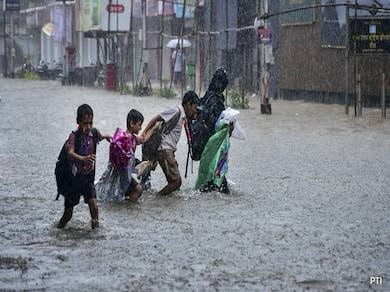
“Mumbai Weather Alert: Schools Closed, IMD Issues Red Warning Amid Heavy Rainfall”

Mumbai, India’s financial capital, is once again facing the wrath of the monsoon. After days of continuous showers, the India Meteorological Department (IMD) has issued a Red Alert for the city and surrounding districts. The alert indicates the possibility of extremely heavy rainfall exceeding 200 mm within 24 hours.
The Brihanmumbai Municipal Corporation (BMC) has responded swiftly by declaring that all schools and junior colleges will remain shut on Tuesday. This precautionary step comes in light of worsening waterlogging, traffic disruptions, and the risk of flooding in low-lying areas.
But beyond the immediate inconvenience, this weather warning has raised questions about Mumbai’s preparedness, infrastructure, and the resilience of its people. Let’s take a closer look at the situation in detail.
What is a Red Alert by IMD?
The India Meteorological Department (IMD) issues different categories of weather alerts:
Green Alert → No severe weather expected. Yellow Alert → Be aware; rainfall likely but manageable. Orange Alert → Be prepared; heavy rainfall expected, possible disruption. Red Alert → Take action; extremely heavy rainfall very likely, severe disruption expected.
A Red Alert is the highest level of warning. It means rainfall could cross 200 mm in 24 hours, potentially leading to flash floods, waterlogging, power cuts, transport paralysis, and property damage.
Schools & Colleges Closed: BMC’s Precautionary Measure
The closure of schools and junior colleges on Tuesday is not just a precaution but also a reflection of lessons learned from the past.
In 2005, Mumbai witnessed one of its worst floods, where thousands of students were stranded in schools and buses for hours. Since then, authorities have become cautious.
This year, the BMC announced school closures well in advance, ensuring parents don’t risk sending children out during extreme rainfall.
Parents have appreciated this proactive measure, though working professionals are worried about managing children at home while balancing office work.
Public Transport Disrupted: Local Trains, BEST Buses, Flights
Mumbai runs on its local trains, often called the city’s lifeline. But heavy rain has once again slowed down these services.
Central Line & Western Line: Delays of 20–40 minutes were reported. Some trains were stuck between stations due to waterlogged tracks. Harbour Line: Services impacted near Kurla and Wadala. BEST Buses: Over 120 bus routes were diverted due to waterlogging in Sion, Kurla, Dadar, and Chembur. Flights: Chhatrapati Shivaji Maharaj International Airport saw delays in over 25 flights due to poor visibility.
The ripple effect of these disruptions has left office-goers stranded, with many opting to work from home.
Areas Severely Affected by Waterlogging
Waterlogging is not new for Mumbai, but certain areas are always hit the hardest. This time, Dadar, Sion, King’s Circle, Kurla, Andheri Subway, and Chembur were under waist-deep water.
Commuters shared images of cars submerged, bikers struggling to wade through, and buses stuck in flooded roads.
Government Response: Disaster Teams on Standby
The Maharashtra Government has directed:
National Disaster Response Force (NDRF) to remain on alert. BMC’s disaster management unit to monitor real-time rainfall data. Mumbai Police & Traffic Police to guide vehicles and prevent accidents. Coast Guard & Navy to be kept ready for flood rescue operations.
The Chief Minister also appealed to citizens:
“Stay indoors unless absolutely necessary. Avoid low-lying areas and follow official advisories.”
Emergency Helplines for Citizens
To help people during emergencies, the BMC has shared important numbers:
BMC Control Room: 1916
Mumbai Police Helpline: 100
Fire Brigade: 101
Ambulance Services:108
Railway Helpline: 139
Power & Internet Disruptions
Several parts of Mumbai, especially suburbs like Mulund, Bhandup, Kurla, and Chembur, reported power outages lasting 1–3 hours.
Telecom services were also unstable in waterlogged zones, with mobile internet speed dropping significantly.
Impact on Daily Life
The red alert has impacted everyday routines:
Vegetable & fish markets saw a sharp decline in supply, leading to price hikes. Online food deliveries were restricted in waterlogged areas. Working professionals struggled with office commute, many opting for remote work. Hospitals saw a rise in cases of fever, cold, and waterborne diseases.
Historical Context: Mumbai’s Monsoon Nightmare
This is not the first time Mumbai is under the grip of such extreme weather. A quick look at the city’s rainfall disasters:
2005 Floods → Mumbai received 944 mm in 24 hours, one of the heaviest rainfalls in Indian history. Over 1,000 lives lost. 2017 Deluge → 315 mm rainfall in a day brought the city to a halt. 2019 Floods → Over 500 mm rainfall caused massive waterlogging.
Experts argue that climate change, rapid urbanization, and poor drainage systems are making Mumbai more vulnerable each year.
Expert Opinions: Why Mumbai Faces Flooding Every Year
Urban planners and meteorologists point to several reasons:
Poor Drainage System → Mumbai’s 150-year-old stormwater drains are inadequate for today’s rainfall intensity. Encroachment on Rivers & Wetlands → Rivers like Mithi are clogged with sewage and plastic. Unplanned Construction → High-rises on reclaimed land make water absorption impossible. Climate Change → Erratic monsoon patterns are leading to cloudbursts.
Dr. Raghavan, a climate scientist, says:
“Mumbai will continue to face such extreme rainfall unless infrastructure planning keeps pace with changing climate realities.”
Safety Tips for Citizens During Red Alert
Authorities recommend Mumbaikars follow these safety measures:
Stay indoors during heavy spells. Avoid using private vehicles in waterlogged areas. Don’t touch electrical poles or wires. Drink boiled or filtered water to avoid diseases. Keep emergency kits ready (torch, battery, medicines).
Social Media Flooded With Updates
As always, Twitter, Instagram, and WhatsApp groups became Mumbai’s real-time news channels. Citizens posted videos of flooded roads, stranded trains, and children playing in rainwater.
While some praised BMC for quick alerts, others criticized the chronic waterlogging problem. Memes also flooded social media, with many comparing Mumbai’s rain to Venice.
Citizens’ Voices
Rohit, a commuter from Dadar: “It takes me 30 minutes to reach office, but today it took 2.5 hours. Roads were like rivers.” Meena, a parent from Kurla: “Glad schools are closed tomorrow. Safety comes first.” A BEST driver: “We are working extra shifts to ensure passengers reach safely, but waterlogging makes it risky.”
What Lies Ahead? IMD’s Extended Forecast
The IMD has warned that heavy to very heavy rainfall will continue in Mumbai, Thane, Raigad, and Palghar for the next 48 hours.
By mid-week, intensity may reduce to moderate rainfall, but intermittent heavy showers will continue throughout August.
The Bigger Picture: Mumbai’s Infrastructure Challenge
Every year, monsoon exposes Mumbai’s fragile infrastructure. Despite crores spent on drainage projects, citizens still face the same problems:
Broken roads Overflowing drains Flooded subways Stalled trains
Experts suggest:
Desilting rivers before monsoon Expanding stormwater drains Building rainwater harvesting systems Strict construction control on wetlands
Mumbai’s spirit is often praised, but it shouldn’t always be about resilience. With climate change intensifying monsoon rains, it’s high time the city focuses on long-term solutions instead of temporary fixes.
For now, Mumbaikars are bracing for more rain, with schools closed and the city on red alert. But the bigger question remains: How long will Mumbai remain unprepared for a monsoon it faces every single year?

IMD issues red alert in Mumbai as heavy rainfall lashes the city. BMC orders closure of schools and colleges. Updates on traffic, weather, safety tips, and government response.
Discover more from News Tap One
Subscribe to get the latest posts sent to your email.

