
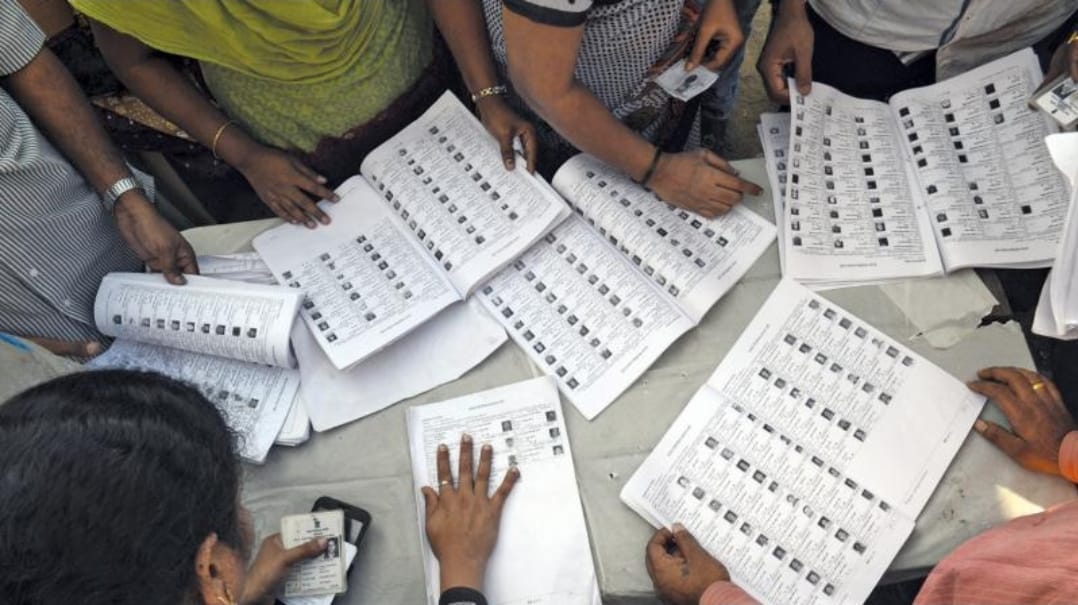
Notional House Numbers Spark Debate Over Voter List Accuracy.
Delhi , August 13, 2025
Rahul Gandhi’s recent allegations have turned the spotlight on a decades-old Election Commission practice. He accused electoral authorities of enabling large-scale voter irregularities through the use of placeholder addresses, often called notional house numbers. The claim has ignited political debate and renewed public interest in electoral roll management.

Rahul Gandhi’s Allegations on Notional House Numbers
During a press briefing, Rahul Gandhi alleged over 1 lakh stolen votes in the Mahadevapura Assembly segment during the 2024 Lok Sabha elections. He said 40,009 voters were listed with unverifiable or fake addresses.
Additionally, Congress claimed 10,452 “bulk voters” shared the same address. These included entries with “0” as house numbers, addresses pointing to empty fields, or non-existent buildings. Gandhi argued that such records made it easier to manipulate the voting process.
Historical Evolution of Notional House Numbers
Electoral rolls before the 1990s were minimalistic, showing only names, ages, and relatives’ names. House numbers often remained blank. In the 1980s, the Election Commission began assigning temporary placeholder addresses when actual house numbers were unavailable.
The digitization of electoral rolls in 1998 and the introduction of photo voter lists in 2005 brought uniformity but also expanded the use of notional addresses. These numbers ensured no eligible voter was excluded due to a missing permanent address.
Purpose Behind Using Notional House Numbers
The Election Commission introduced notional house numbers to keep rolls inclusive. Migrant workers, homeless citizens, and residents of informal settlements often lack proper address documentation. Placeholder entries allowed them to remain on the electoral roll while still providing a reference point for booth allocation.
Standardization Challenges and National Initiatives
India’s address formats vary widely due to linguistic diversity, informal settlements, and inconsistent municipal records. In May 2025, the Department of Posts proposed a digital public infrastructure for addresses. This system aims to assign unique, verifiable codes to every property and location across the country.
However, until this is implemented, placeholder addresses remain a stopgap solution. Critics argue that the lack of uniformity makes it harder to detect fraudulent or duplicate entries.
Election Commission’s Guidelines on Notional House Numbers
The Election Commission has issued multiple instructions on managing notional house numbers. Since at least 2011, it has directed Chief Electoral Officers to clearly mark such entries and keep them distinct from verified addresses.
In May 2023, these instructions were sent to states including Chhattisgarh, Madhya Pradesh, Mizoram, Rajasthan, and Telangana. On June 24, 2025, the Bihar Special Intensive Revision also received directives to handle placeholder addresses with transparency.
Political and Public Reactions
Rahul Gandhi’s remarks have amplified calls for electoral roll reform. Opposition parties see the current system as prone to abuse, while the Election Commission defends it as necessary for inclusivity. Civil society groups suggest an independent audit of voter lists before every major election.
Balancing Inclusivity and Accuracy in Voter Rolls
The notional house numbers debate highlights a conflict between electoral inclusivity and security. While these placeholders prevent voter exclusion, they also create vulnerabilities that could be exploited. The ongoing push for address standardization may offer a long-term fix, but until then, the controversy is likely to remain a recurring flashpoint in Indian politics.
Read more : Abhishek Banerjee Slams ECI Over Voter Rights.
Discover more from News Tap One
Subscribe to get the latest posts sent to your email.

