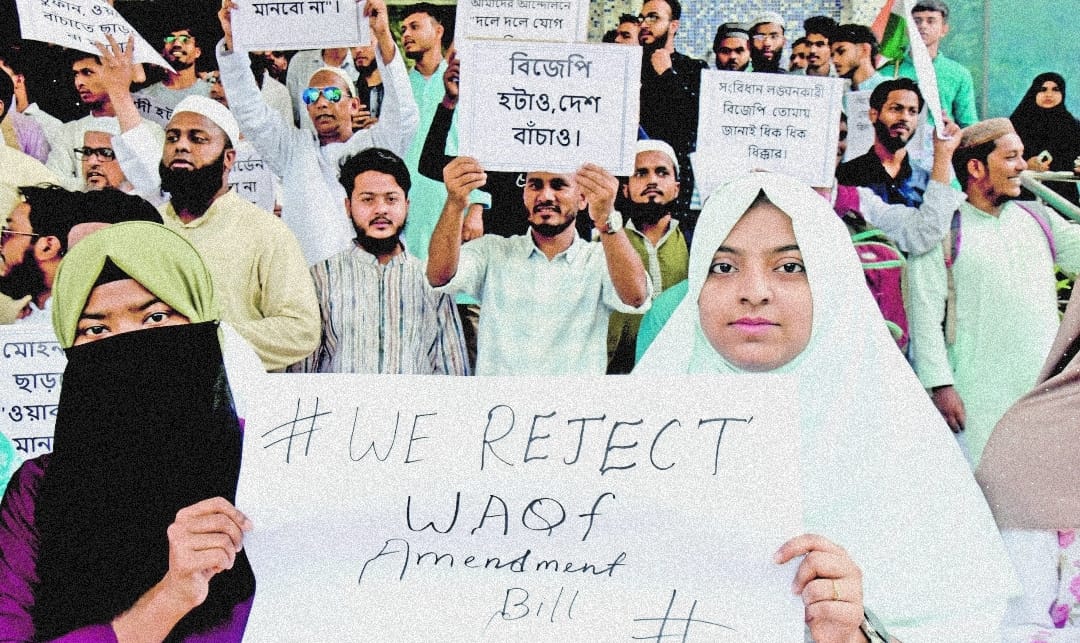
Waqf Amendment Act Faces Supreme Court Scrutiny on Property.
New Delhi, May 22, 2025
Waqf Amendment Act Hearing Resumes in Supreme Court
The Supreme Court resumed hearings on the Waqf Amendment Act petitions. These petitions challenge the constitutional validity of the law, alleging it violates both secular and religious boundaries.

Waqf Amendment Act: Solicitor General Defends the Law’s Validity
Solicitor General Tushar Mehta addressed the bench with pointed arguments. He asserted that waqf does not qualify as an essential religious practice. According to him, waqf functions are primarily administrative and secular in nature.
Additionally, he explained that waqf, as a concept, exists in other religions too. Therefore, it cannot receive exclusive religious protection under the Constitution.
Waqf Amendment Act Sparks Debate Over Inclusion of Non-Muslim Members
A major point of contention was the inclusion of non-Muslims in waqf boards. Mehta clarified that the law only allows up to two non-Muslim members. Hence, Muslim majority within the board remains intact.
He stressed that these members handle administrative matters—not religious ones. This ensures legal compliance with Article 25 while preserving community control.
Clarifying Land Identification Procedures
Concerns around Section 3C also surfaced during the proceedings. Critics feared it allowed the government to take over waqf lands without due process.
However, Mehta assured the bench that the law only allows for correction in land records. Furthermore, anyone affected may still approach waqf tribunals for redress.
Historical Context Supports New Provisions
To strengthen his case, Mehta highlighted the Mussalman Wakf Act of 1923. He said that registration and monitoring of waqf properties began long ago.
Moreover, the amendments aim to improve transparency and management, not infringe upon religious freedom.
Supreme Court Observes Arguments Closely
The bench, led by Chief Justice B R Gavai and Justice Augustine G Masih, continued to hear both sides. Legal observers noted that the court asked probing questions.
More hearings will follow as the court explores the intricate balance between secular law and religious rights.
Read more : SEBI Leadership Transparency Reform Gains Momentum.
Discover more from News Tap One
Subscribe to get the latest posts sent to your email.