
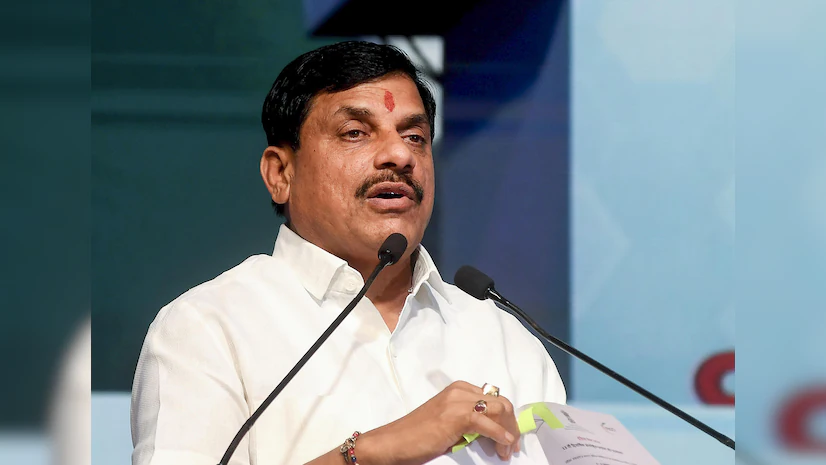
Farmers burning stubble won’t receive welfare benefits: CM Yadav
No benefit of CM Kisan Kalyan Yojana and MSP procurement for farmers who burn narwai (stubble), announced Madhya Pradesh CM Mohan Yadav

New Delhi, April 25, 2025
Madhya Pradesh CM Mohan Yadav has said that cultivators who practice stubble burning will not receive benefits under the Chief Minister Kisan Kalyan Yojana from May 1, 2025.
Additionally, their crops will not be procured at the Minimum Support Price (MSP) in 2026.
“Madhya Pradesh is an agricultural state. An increase in stubble burning after harvests has harmed the environment in many ways, including air pollution. To solve this issue, the state government has already banned the activity,” he said.
“Despite this, if any farmer burns stubble in his field, he will not receive the benefit of Chief Minister Kisan Kalyan Yojana,” he continued while reviewing the performance of the revenue department.
Yadav argued that stubble burning destroys nutrients in the soil and reduces land fertility.
MP overtook Punjab in the number of stubble burning cases
Air pollution in North India has also been significantly impacted by the increasing incidence of stubble burning. Notably, while states such as Punjab and Haryana have made progress in reducing the number of cases, a notable surge in farm fires has been observed in Madhya Pradesh, Rajasthan, and Uttar Pradesh.
Madhya Pradesh surpassed Punjab in 2024 in the total number of farm fire cases, exceeding 10,000 instances.
New initiative by the MP government to stop the practice
Amid rising incidents of stubble burning, Madhya Pradesh government has introduced a new scheme called the Annadata Mission. It is to incentivize farmers for adopting environment-friendly farming practices.
The initiative was approved in-principle during the cabinet meeting held on April 15 and aims to provide financial assistance to farmers who meet specific environmental and agricultural criteria.
Under the new scheme, farmers with one acre of land will receive an incentive amount ranging from ₹1,500 to ₹3,000 if they fulfill some key conditions. These include:
- Avoiding stubble burning.
- Reducing the use of chemical pesticides by adopting organic practices.
- Ensuring timely loan repayments.
- Promoting the cultivation of oilseeds and pulses.
- Implementing drip irrigation techniques.
In total, if all 5 conditions are met, farmers could earn an additional ₹15,000 annually.
Amid these intitatives, some farmers have argued that the government punishes them without offering viable alternatives. They need to plant moong in time. At the same time, the administration threatens fines, FIRs, and even jail time. Many believe the government’s approach shows no understanding of rural realities, according to a report by Ground Report.
Read More: India Heatwave: IMD Issues Alerts as Temperatures Cross 44°C
Discover more from News Tap One
Subscribe to get the latest posts sent to your email.
