
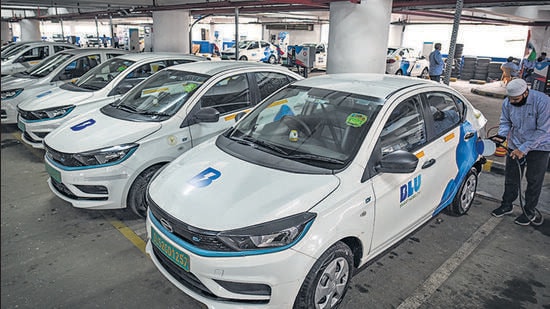
Gensol-BluSmart Scandal: How a Green Dream Turned into a Financial Nightmare

In a shocking turn of events, BluSmart, once celebrated as India’s leading electric vehicle (EV) ride-hailing platform, and its affiliate Gensol Engineering Ltd (GEL) are at the center of a massive financial scandal. The Securities and Exchange Board of India (SEBI) has uncovered a web of alleged fund diversion, forged documents, and misuse of public money meant for clean energy. This saga, involving brothers Anmol Singh Jaggi and Puneet Singh Jaggi, has led to BluSmart suspending operations, a stock market crash, and thousands of drivers and investors left in distress.
The Rise of Gensol and BluSmart
Gensol Engineering, founded in 2007 by Anmol and Puneet Singh Jaggi, started as a solar energy company in Ahmedabad. It later expanded into EV leasing. In 2019, the Jaggi brothers, along with Punit Goyal, launched BluSmart, an all-electric ride-hailing service, initially called Gensol Mobility. Rebranded as BluSmart, it positioned itself as India’s green alternative to Uber, operating over 8,500 EVs across Delhi-NCR, Mumbai, and Bengaluru by January 2025. With a charging network of 5,800 stations and 10,000+ driver partners, BluSmart gained traction, backed by investors like BP Ventures.
The Financial Backbone: Public Loans for EVs
Between 2021 and 2024, Gensol secured ₹977.75 crore in loans from government-backed institutions, the Indian Renewable Energy Development Agency (IREDA) and Power Finance Corporation (PFC). Of this, ₹663.89 crore was specifically for purchasing 6,400 EVs to lease to BluSmart. Gensol was also required to contribute 20% equity, making the total expected investment around ₹829.86 crore. The goal was to boost India’s clean mobility mission with taxpayer-backed green energy funds.
Cracks Appear: Whistleblower and Financial Struggles
The trouble began in June 2024 when a whistleblower complaint reached SEBI, alleging share price manipulation and fund diversion by Gensol’s promoters. By December 2024, Gensol defaulted on loan repayments, a fact hidden from credit rating agencies like CARE Ratings and ICRA. In March 2025, both agencies downgraded Gensol’s credit rating to “D” (default status), citing delays in debt servicing and suspected falsified documents. Gensol’s stock, which peaked at ₹2,527 in October 2023, started to slide.
Around the same time, BluSmart faced its own challenges. The company was burning through ₹20 crore monthly, with no new investments and a failed fundraising attempt. Reports surfaced in March 2025 that Uber was in talks to acquire BluSmart, hinting at its financial distress. Additionally, BluSmart’s top leadership, including CEO Anirudh Arun, Chief Business Officer Tushar Garg, and Chief Technology Officer Rishabh Sood, resigned, raising red flags.
SEBI’s Probe: Uncovering the Fraud
SEBI’s investigation, intensified after the June 2024 complaint, revealed shocking details in its interim order on April 15, 2025. Key findings included:
Fund Diversion: Of the ₹977.75 crore loaned, only ₹567.73 crore was used to buy 4,704 EVs, far short of the promised 6,400. This left ₹262.13 crore unaccounted for. Funds were rerouted through shell companies like Go-Auto Pvt Ltd and Capbridge Ventures LLP, controlled by the Jaggis.
Luxury Purchases: ₹42.94 crore was used to buy a luxury apartment in Gurugram’s The Camellias, registered under a firm linked to the Jaggis. Anmol Jaggi spent ₹25.76 crore on personal indulgences, including a ₹26 lakh TaylorMade golf set and a ₹50 lakh investment in Ashneer Grover’s Third Unicorn startup.
Fictitious EVs: SEBI found that the shortfall in EV purchases was covered up with fake invoices, creating “ghost” vehicles that existed only on paper.
Forged Documents: Gensol submitted fake “Conduct Letters” to IREDA and PFC, falsely claiming regular loan repayments. These were exposed when SEBI contacted the lenders directly.
Related-Party Transactions: Funds were funneled to entities like Wellray Solar Industries, which transferred ₹39 crore to the Jaggis (₹26 crore to Anmol, ₹13 crore to Puneet). Some money reached family members, including ₹6.2 crore to their mother, Jasminder Kaur.
SEBI described Gensol as a “personal piggy bank” for the Jaggis, highlighting a “complete breakdown” of corporate governance. The regulator accused the brothers of treating the listed company like a family-run business, with no internal controls.
Fallout: Stock Crash and BluSmart’s Collapse
On April 15, 2025, SEBI barred Anmol and Puneet Jaggi from the securities market and from holding directorial roles in listed companies. It also halted Gensol’s proposed stock split and ordered a forensic audit. The next day, Gensol’s stock fell 5% to ₹123, hitting the lower circuit. By April 18, it was trading at ₹116.54, down 91% from its October 2023 peak and 84% in 2025 alone. The company’s market value plummeted from ₹4,300 crore to ₹506 crore, devastating over 110,000 retail investors.
BluSmart, heavily reliant on Gensol’s leased EVs, suspended ride bookings on April 16, 2025, across Delhi-NCR, Bengaluru, and Mumbai. The app sent emails to customers, citing a “temporary closure” and promising refunds within 90 days if services didn’t resume. Thousands of drivers were left jobless, and customers with wallet balances, like one with ₹20,000, expressed frustration online. Delhi Airport issued an advisory about BluSmart’s suspension, and reports emerged that some BluSmart cabs at Bengaluru Airport were being rebranded as Uber Green.
Gensol’s independent director, Arun Menon, resigned on April 16, citing concerns over the company’s debt and governance. BluSmart’s Dubai operations, launched in 2024, were also shut down, and the company reportedly considered pivoting to become a fleet partner for Uber.
Public Outrage and Broader Implications
The scandal sparked outrage on social media, with netizens calling it “Scam 2025” and questioning the integrity of India’s startup ecosystem. Posts on X highlighted the betrayal of public trust, with one user lamenting the impact on honest founders seeking investment. Another criticized the lack of accountability from independent directors. The misuse of taxpayer-backed loans meant for green energy drew particular ire, with comparisons to past corporate frauds like Harshad Mehta (1992), Satyam (2009), and DHFL (2020s).
The scandal exposed weaknesses in regulatory oversight. Credit rating agencies and auditors missed red flags, and public lenders like IREDA and PFC were misled. SEBI’s order emphasized the need for stronger corporate governance, warning that the diverted funds might need to be written off, causing further losses for investors. The case also raised concerns about the clean energy sector, potentially leading to stricter scrutiny of green financing.
What’s Next?
As of April 18, 2025, SEBI’s forensic audit is ongoing, and the Jaggi brothers remain barred from capital markets. Gensol has stated it is cooperating with SEBI, with Anmol Jaggi claiming the company is preparing documents to clarify its position. However, investor confidence is shattered, and BluSmart’s future is uncertain. The scandal serves as a stark reminder that ambition without accountability can lead to collapse, especially when public funds are at stake.
This saga is a cautionary tale for India’s startup and clean energy sectors. Transparency, ethical governance, and regulatory vigilance are critical to sustaining trust and growth. For now, the Gensol-BluSmart dream lies in ruins, leaving investors, drivers, and customers to pick up the pieces.
Discover more from News Tap One
Subscribe to get the latest posts sent to your email.