
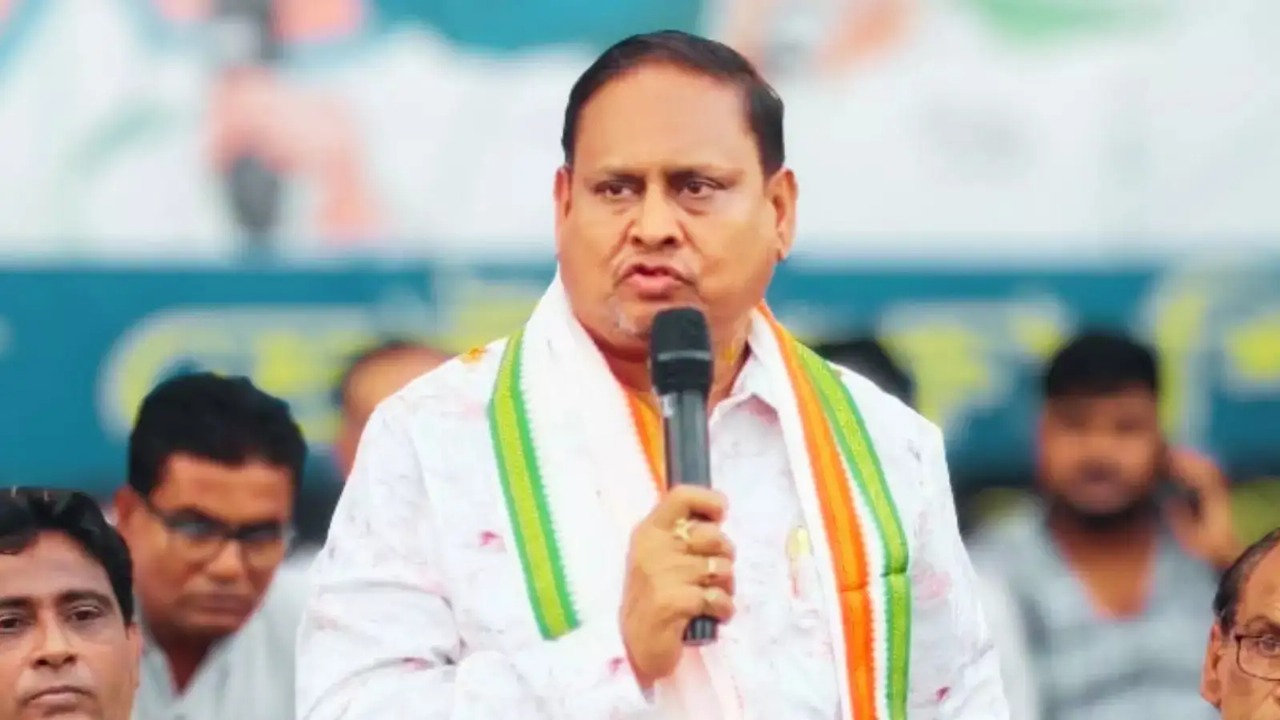
Babri Masjid Breaking News: Humayun Kabir Lays Babri Masjid Replica in Murshidabad
Murshidabad, West Bengal – December 6, 2025: On 6 December 2025, Murshidabad, West Bengal, hosted a large gathering. Suspended TMC MLA Humayun Kabir laid the foundation stone of a mosque that resembles the Babri Masjid. The incident occurred on the 33rd anniversary of the demolition of the mosque that happened in 1992. High security was present at the meeting. The event leads to a question: what did happen during the year 1992 and why has it continued to be an emotional subject?

Humayun Kabir made the foundation stone event a political and religious proclamation. He referred to it as a “prestige fight for Muslims.” He announced that the new mosque would contain a 300 bed hospital, a helipad, a hotel and a school. The compound would comprise 25 bighas and the main mosque would cover three acres. Kabir stated that the project would not have a funding problem.
Being there, and Social Reception:
Thousands of people were early. They brought with them bricks and Indian flag as a token of gifting to the new mosque. According to the estimates made by Kabir, the bead is estimated to have been around 40,000, but the records differ. The large turnout raised questions: Does the Babri Masjid still exist? What is the meaning of the 1992 anniversary?
The government sent over 3,500 police men and Rapid Action Force. Two BSF companies were on standby along National Highway 12. The Calcutta High Court did not halt the ceremony, but it instructed the state to maintain strict law and order. The event was peaceful, no violence, injuries, and no arrests due to heavy security. This was a sharp contrast to earlier incidents in Murshidabad.
Political Perspective and Crisis:
The political criticism about the announcement made by Kabir was instant. The TMC suspended him, citing “communal politics.” BJP leaders said the party was stirring polarisation. Kabir also challenged Chief Minister Mamata Banerjee, saying: “Whatever the Chief Minister does, that is right. Whatever others say is wrong… I will crush her arrogance.”
This raises another question: “Who is “Babri” in the context of the Babri Masjid, and why does using this name elicit such strong reactions?” The name is very historical and religious because it links the present grievances with what had occurred in 1992.
In a separate speech, BJP leader Suvendu Adhikari said that while building a mosque, temple or gurudwara is acceptable, naming a new mosque ‘Babri’ is provocative because it taps into historic sensitivities. He asked: “Who was Babri in Babri Masjid, and what is its significance in modern politics?”
Historical Context: The Babri Masjid and 1992
The Babri Masjid was constructed in the 16th century. It was the focus of a long term dispute over its location in Ayodhya. The mosque was destroyed by mobs on 6 December 1992, and this sparked communal riots that rocked the nation. The question is: “What was the result of the destruction of the mosque?”
Today the original Babri Masjid is gone, but its memory continues to shape politics, law, and religious sentiment. Kabir’s plan to build a replica in Murshidabad demonstrates how the events of 1992 are still invoked to rally supporters, highlight religious identity, and provoke debates about political symbolism.

Legal Oversight and Security Measures
On Friday, the Calcutta High Court decided not to intervene in the foundation ceremony. It taught the authorities to uphold peace. Chief Justice Sujoy Paul and Justice Parthasarathi Sen had directed that the police should not cause any tumults, but should otherwise leave Kabir alone.

Murshidabad witnessed one of the largest security deployments in recent memory. More than 3,500 officers and Rapid Action Force (RAF) units were present, with additional Border Security Force (BSF) companies on standby. It was a quiet situation though there was a possibility of anarchy. The high security level helped reduce the flashpoints of theirs, yet we will have to wait and see whether we will be able to avoid communal tensions in the long-term perspective.
Public Sentiment and Symbolism
Kabir’s use of the Babri Masjid name is a powerful symbolic gesture. A large segment of the population flocked together on the theory that the naming was not unimportant, that many hands make light work. Yet the act also raises questions: Is this purely a religious commemoration, or a political manoeuvre? What are the implications for communal harmony in Murshidabad and beyond?
Chief Minister Mamata Banerjee stressed unity in a tweet: “The soil of Bengal is the soil of unity… Shoulder to shoulder, Hindu, Muslim, Sikh, Christian, Jain, Buddhist, all in Bengal. Her statement reflects her ongoing effort to maintain peace in a region where historical wounds, such as those linked to the Babri Masjid, remain sensitive.
Babri Masjid Replica Event Details
Estimated Attendees: ~40,000
Distribution of the police: 3,500 and above together with the RAF.
BSF on Standby: Two companies along NH-12
Casualties/Injuries: 0
Arrests: 0
This stands in sharp contrast to earlier incidents in Murshidabad, where April 2025 clashes caused three deaths, 18 police injuries, and 274 arrests. The history of 6 December shows that the tight security, the judicial reins and attentive planning can minimise the risks, yet it is not clear whether the history repeats itself after all the precautions are taken.
Looking Forward
Humayun Kabir has numerous ideas of constructing a large complex which consists of schools and health care centres. Analysts wonder whether this will unite the Muslims in West Bengal or revive old animosities of the year 1992.
Questions from citizens persist: Does the Babri Masjid exist today? Who is Babri in the Babri Masjid? What happened in 1992? The answers are complex. Though the mosque itself is gone, its memory and political symbolism endure. The project by Kabir shows that even in the present day India there is still a remnant of political, religious, and communal attitudes of the past.
Conclusion
The laying of the foundation stone on 6 December 2025 is not a construction project, but a statement. It raises key questions for citizens and politicians: Can symbolic gestures heal old wounds, or will they reopen them? Will Murshidabad remain a model of communal peace, or will the replica become a flashpoint in coming years?
Discover more from News Tap One
Subscribe to get the latest posts sent to your email.

