
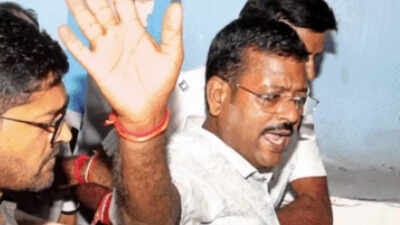
West Bengal Teacher Scam Deepens: ED Probes MLA Jiban Krishna Saha’s Alleged Gramin Bank Money Trail

The West Bengal teacher recruitment scam continues to deepen, shaking the very foundations of the state’s education system and political establishment. What began as allegations of irregularities in the School Service Commission (SSC) recruitment process has now evolved into one of the most significant corruption scandals in the state’s history.
At the center of this controversy stands Trinamool Congress (TMC) MLA Jiban Krishna Saha, who has been accused by the Enforcement Directorate (ED) of using state-run Gramin Bank accounts to launder bribe money collected from candidates desperate for teaching jobs.
The revelations have sparked political turmoil, public anger, and an intense investigation that is exposing a complex network of money laundering, political patronage, and systemic corruption.
The Teacher Recruitment Scam: Background and Origins
The teacher recruitment scam traces back to alleged irregularities in appointments through the West Bengal School Service Commission (SSC). The SSC was tasked with conducting examinations and interviews to fill vacancies in schools across the state. However, serious questions soon emerged about the fairness of the process.
Whistleblowers, rejected candidates, and opposition parties accused officials of:
Manipulating examination results to favor certain candidates. Accepting bribes in exchange for teacher appointments. Issuing appointment letters to candidates who had either failed exams or not even appeared for them.
As complaints piled up, the Calcutta High Court intervened, and central agencies like the CBI and ED were brought into the investigation. Over time, the scandal spread across multiple districts, implicating politicians, middlemen, and officials in a massive fraud worth crores of rupees.
The Role of Jiban Krishna Saha
Among those under the scanner, Jiban Krishna Saha, TMC MLA from Burwan (Murshidabad district), has drawn particular attention.
Allegations Against Him
According to the ED’s findings:
Saha allegedly collected large sums of money from job aspirants who were promised appointments as teachers. The money was funneled through multiple accounts in Gramin Bank, a state-run rural bank with significant political influence. Investigators claim that dummy accounts were created to disguise the origin of funds. A significant portion of the money was either withdrawn in cash or routed through shell companies for laundering.
The ED has described this as a sophisticated money trail designed to make illegal funds appear legitimate.
Saha’s Defense
The MLA has denied all allegations, calling the charges politically motivated. He insists that the ED is targeting him as part of a larger attempt to discredit the Trinamool Congress before upcoming elections. Despite his claims, investigators maintain that the paper and digital trail directly connects him to the scam.
Why Gramin Bank?
The alleged use of Gramin Bank accounts adds a distinctive layer to the scandal.
Gramin Banks are rural cooperative banks primarily designed to serve farmers, small traders, and low-income groups. Unlike major commercial banks, they often:
Have weaker monitoring systems. Handle a large number of small, scattered transactions. Are more vulnerable to local political influence.
According to ED officials, this made them an ideal channel for layering scam money — breaking large sums into smaller deposits across multiple accounts to escape detection.
The choice of Gramin Bank underscores how grassroots financial institutions can be manipulated for political and personal gain when adequate oversight is missing.
Impact on Students and Job Aspirants
Perhaps the most tragic aspect of the teacher recruitment scam is its impact on students and aspiring teachers.
Thousands of deserving candidates who cleared exams on merit were denied jobs. Many have been protesting for months, demanding justice. For some, years of preparation and financial investment in coaching have gone to waste. Aspirants accuse the government of betraying their trust by allowing political favoritism and corruption to dictate appointments.
This scandal is not just about money—it is about broken dreams and lost opportunities for an entire generation.
Political Fallout
The scandal has sparked a political firestorm in West Bengal.
Opposition Attacks
The BJP, Left, and Congress have accused the TMC of institutionalized corruption. They demand that Saha resign immediately and face trial. Leaders argue that the scam reflects a larger pattern of nepotism in state governance.
TMC’s Response
The ruling TMC has largely dismissed the allegations as a witch-hunt by central agencies controlled by the BJP-led government at the Centre. They claim the ED is being used as a political weapon to weaken regional parties ahead of elections.
This political tug-of-war has only added to the confusion, with ordinary citizens left wondering whether justice will truly be served.
Timeline of the Scam
To understand the depth of the scandal, it helps to trace its key milestones:
2016–2018: SSC conducts teacher recruitment exams amid complaints of irregularities. 2019: Whistleblowers approach the Calcutta High Court with evidence of fraud. 2020–2021: Court orders investigation; CBI and ED begin probing. 2022: Former education minister Partha Chatterjee is arrested; large sums of cash are seized. 2023: Multiple middlemen and bureaucrats are questioned. 2024: MLA Jiban Krishna Saha comes under the ED’s scanner for alleged money laundering through Gramin Bank accounts. 2025: Investigation intensifies, with ED tracing more bank accounts and preparing supplementary charge sheets.
ED and CBI Investigation
The ongoing probe by the ED and CBI has been extensive and highly publicized.
Raids and Seizures: ED officials have conducted raids at Saha’s properties and seized documents, digital devices, and bank records. Digital Evidence: WhatsApp chats, phone call records, and transaction details are being examined to establish links. Banking Trail: Dozens of Gramin Bank accounts are under scrutiny, many of which were allegedly operated by Saha’s associates. Supplementary Charges: ED is preparing supplementary charge sheets under the Prevention of Money Laundering Act (PMLA).
The investigation has not only shaken the education department but also cast a shadow on the integrity of rural banking institutions.
Public Protests and Civil Society Response
Across West Bengal, students, teachers, and civil society groups have organized protests demanding justice.
Demonstrations outside the SSC office have become routine. Many students have staged hunger strikes. Civil society groups argue that the scandal reflects a larger governance crisis in the state.
The growing frustration among youth has turned the scam into a symbol of systemic corruption, fueling broader political discontent.
Legal Proceedings
The legal process in the scam is far from over.
Several cases are pending before the Calcutta High Court. The ED is expected to file new charge sheets naming additional accused. If sufficient evidence is established, Jiban Krishna Saha could face trial under money laundering and corruption laws. Appeals, delays, and political interference, however, threaten to drag the process out for years.
Comparative Look: Recruitment Scams in Other States
The West Bengal scam is not an isolated incident. Across India, recruitment scams have plagued education systems:
In Bihar, irregularities in teacher recruitment have sparked protests for years. In Haryana and Uttar Pradesh, recruitment scams exposed deep-rooted political-bureaucratic nexuses. The Vyapam scam in Madhya Pradesh remains one of the largest, involving not only recruitment but also admissions to professional courses.
These parallels highlight that the problem is systemic and not limited to one state.
What This Means for West Bengal
The implications of the scam go beyond the immediate scandal:
Governance Crisis: It raises serious questions about accountability within the TMC government. Education Damage: It erodes public trust in the fairness of teacher recruitment. Political Repercussions: With elections approaching, the scandal could become a defining issue. Institutional Trust: The misuse of Gramin Banks reveals vulnerabilities in rural financial systems.
Ultimately, the scandal has become a test of West Bengal’s democratic institutions, including the judiciary, investigative agencies, and civil society.
The West Bengal teacher recruitment scam is more than a corruption case—it is a story of broken trust. The alleged involvement of an elected MLA, the misuse of a state-run Gramin Bank, and the betrayal of thousands of young aspirants make it one of the most serious political scandals in recent memory.
As the ED continues its probe, the scandal is likely to deepen further, exposing more names and networks. Whether justice will be delivered swiftly—or delayed by politics—remains to be seen.
For the people of West Bengal, the scam has become a grim reminder of how corruption at the top can destroy the future of those at the bottom.

The West Bengal teacher recruitment scam deepens as the ED investigates MLA Jiban Krishna Saha’s alleged use of Gramin Bank accounts to launder bribe money. A detailed look at the political, social, and legal fallout.
Discover more from News Tap One
Subscribe to get the latest posts sent to your email.
