
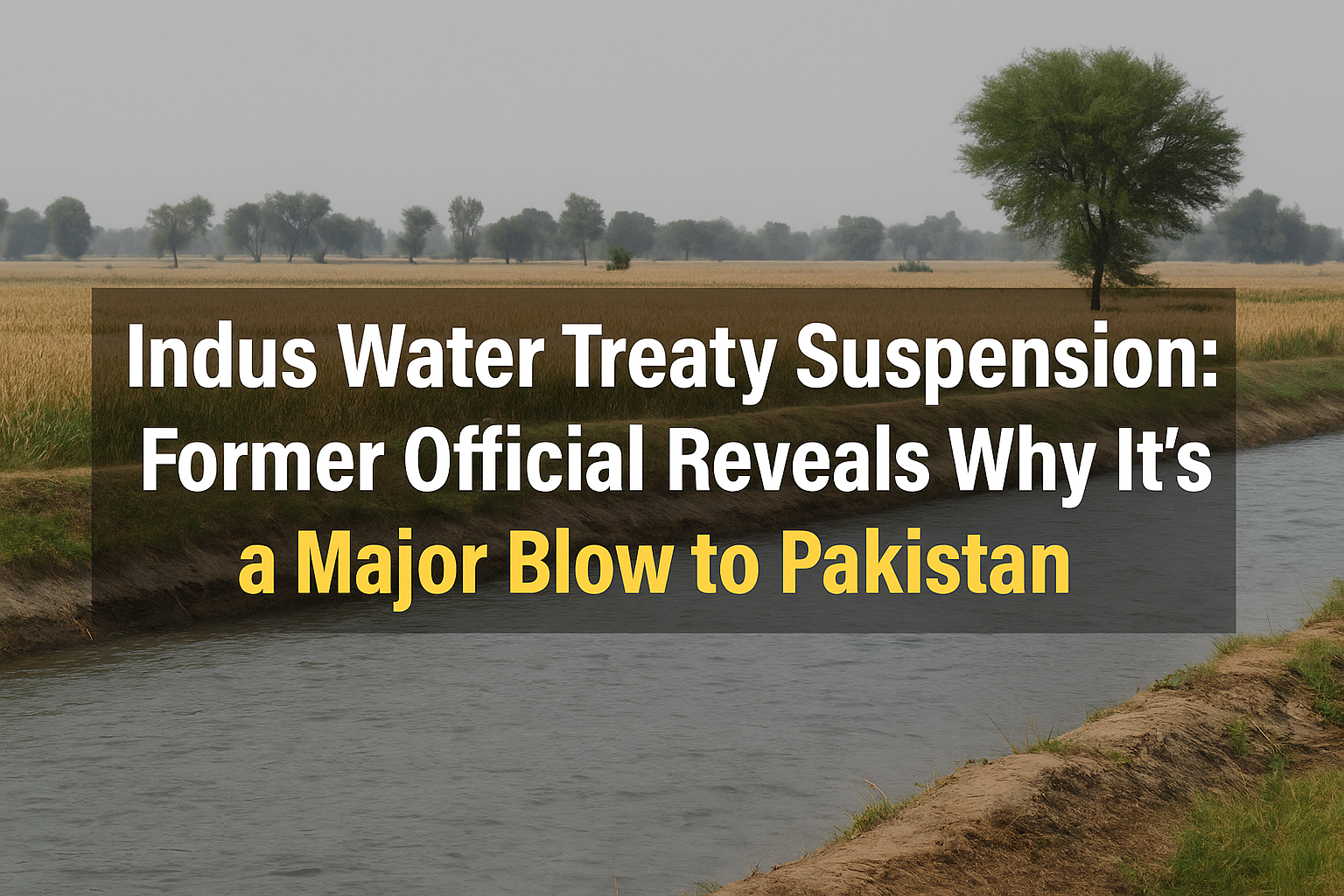
Indus Water Treaty Crisis: Impacts on Pakistan’s Economy

Introduction: Why the Indus Water Treaty Matters
The Indus Water Treaty was signed in 1960 between India and Pakistan. It is often hailed as one of the most successful water-sharing agreements in history. However, recent discussions about its potential suspension have triggered alarm across Pakistan. A former Indian government official provided a detailed statement. They explained how such a move could severely destabilize Pakistan’s economy. It could impact food security and internal stability.
1. The Indus Waters: Lifeline of Pakistan’s Agriculture
Pakistan’s agriculture is heavily dependent on the Indus River system. Nearly 80% of the country’s crops are irrigated using water from the Indus and its tributaries. This includes wheat, rice, and sugarcane. Suspending or altering the treaty could drastically reduce water availability, especially in Punjab and Sindh provinces.
Without sufficient water, crop yields could plummet. This would affect the domestic food supply. It would also lead to reduced agricultural exports. Agricultural exports form a major part of Pakistan’s GDP.
2. Water Scarcity: A Brewing Humanitarian Crisis
An ex-top Indian official warns that suspension of the treaty could worsen water scarcity in Pakistan. The country is already one of the most water-stressed globally. According to UN reports, Pakistan may reach absolute water scarcity by 2025.
A disruption in the agreed water flow could turn this threat into a reality much sooner. Urban centers could face water rationing, while rural areas might experience severe droughts and migration crises.
3. Energy Deficit: Hydropower at Risk
The Indus River isn’t just about irrigation. it’s also a key source of hydropower. Pakistan relies on its rivers to generate electricity for millions. If the upstream flow is disrupted, hydropower plants like Tarbela and Mangla could see massive drops in output. This leads to extended power cuts and higher fuel import bills.
4. Food Inflation and Economic Instability
A decline in water supply would hit agriculture first, leading to crop failure and food inflation. When food prices soar, the poorest suffer the most. The situation could ignite civil unrest, especially in urban slums where basic necessities are already scarce.
Moreover, any reduction in agricultural output would weaken Pakistan’s already fragile economy. This could potentially trigger a currency devaluation. It might also increase reliance on foreign aid or IMF loans.
5. National Security and Internal Tensions
Water crises often spiral into security threats. In Pakistan, water shortages could fuel internal tensions, especially among provinces that already compete for water distribution. Such stress could deepen ethnic and regional divides, straining the federation.
Additionally, it could provoke hostile rhetoric and military escalations with India, making diplomatic resolutions even harder.
6. Global Response and Diplomatic Fallout
While the Indus Water Treaty is a bilateral agreement, it has global recognition, including World Bank involvement. Suspending it unilaterally might be perceived as a violation of international norms, affecting Pakistan’s position in future negotiations.
The former official notes that such a diplomatic backlash could isolate Pakistan. This is particularly concerning when international support is crucial for economic recovery. It is also essential for climate resilience.
7. What Lies Ahead: Possible Solutions
Instead of abrupt treaty suspensions, experts recommend bilateral dialogue to update the treaty for climate change realities. Investment in water-saving technology, dams, and joint river monitoring could help both nations avoid a full-blown crisis.
The former official suggests that diplomacy not confrontation is the only sustainable path forward.
Conclusion: Water Wars Are Real—and Pakistan May Lose First
The words of the former top official serve as a stark warning. Suspending the Indus Water Treaty could create a ripple effect of humanitarian, economic, and political disasters for Pakistan. It’s not just about water. it’s about survival.
Pakistan must prepare with policy reforms, international diplomacy, and long-term water resource planning to avoid a catastrophe.
You may also like : India suspend Visas for Pakistani Nationals After Pahalgam Terror Attack
Know more about The Indus Water Treaty : https://en.wikipedia.org/wiki/Indus_Waters_Treaty
Discover more from News Tap One
Subscribe to get the latest posts sent to your email.

