
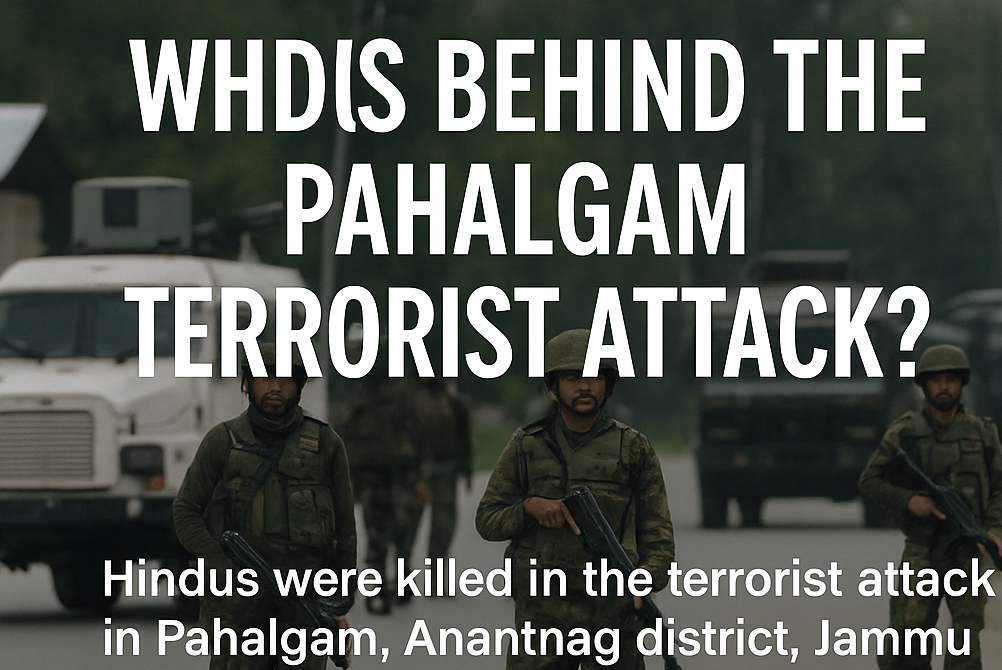
Who Is Behind the Pahalgam Attack? An Analysis of Terror Groups

The serene town of Pahalgam is nestled in the Anantnag district of Jammu and Kashmir. It turned into a scene of chaos and horror after a devastating terrorist attack. This attack shocked the nation and the world. As the investigation unfolds, questions mount: Who orchestrated this attack? What were their motives? This article explores the suspected groups and their patterns. It examines the political and strategic implications behind the Pahalgam attack.
Overview of the Pahalgam Attack
On 21 April 2025, a sudden assault occurred in Pahalgam, Kashmir. Many people died, and many others were injured. The attackers used sophisticated weapons, showcasing planning and intent. The targeted nature of the attack points towards organized terrorist involvement rather than random violence.
Key Facts:
Location: Pahalgam, Anantnag district, Jammu & Kashmir
Primary Target: hindus
Attack Method: sniper fire and more
Historical Context: Why Pahalgam?
Pahalgam is a popular tourist spot and the starting point of the Amarnath Yatra. It has been relatively peaceful compared to other parts of Kashmir. However, its strategic and symbolic value makes it a prime target for insurgents.
Why Pahalgam Was Chosen:
•Presence of security convoys during Yatra season
•Disruption of peace to damage tourism and economy
•Provocation aimed at international attention
Who Could Be Behind the Pahalgam Attack?
1. Lashkar-e-Taiba (LeT)
Lashkar-e-Taiba is one of the prime suspects in many past attacks in Jammu and Kashmir. This group has a long history of targeting military and civilian installations.
Previous attacks include the 2008 Mumbai attacks. The Pulwama attack in 2019 is also attributed to them.
Modus operandi: Guerrilla tactics, ambushes, and targeting convoys
Base of operation: Allegedly based in Pakistan-administered Kashmir
2. Jaish-e-Mohammed (JeM)
Another Pakistan-based terror group, JeM has been responsible for some of the deadliest attacks on Indian soil.
JeM is known for suicide bombings. They execute fidayeen attacks. These attacks have targeted Amarnath Yatra pilgrims before. JeM often releases videos and manifestos. These materials claim responsibility.
3. The Resistance Front (TRF)
The TRF is a relatively new but deadly outfit. It is believed to be a proxy of LeT. This setup is used to mask direct Pakistani involvement.
Operates under the guise of being an indigenous group.Tech-savvy and recruits through social media.Has claimed recent attacks in South Kashmir.
NIA and Military Intelligence Inputs
According to initial reports by the National Investigation Agency (NIA) and Army Intelligence, the attackers may have received logistical support. This support is believed to come from local overground workers (OGWs). They had conducted prior reconnaissance of the area.
Key Statements:
Home Minister’s Office: “We will bring every perpetrator to justice.”
Army Spokesperson: “The attack was premeditated with external backing.”
Eyewitness Reports: Several militants were seen fleeing towards pahalgam
Motives Behind the Attack
In Kashmir, terrorist attacks are strategically timed. The motives behind these attacks are often varied. They might aim to derail the upcoming elections in Jammu and Kashmir. There is a possibility of sabotaging the Amarnath Yatra to spread fear. Retaliation for successful anti-terror operations might be another motive. Another objective could be seeking international attention by attacking tourists or civilians.
Possible Motives: The motives include the derailment of the upcoming elections in Jammu and Kashmir. Another motive is sabotaging the Amarnath Yatra to spread fear. They might retaliate for successful anti-terror operations. Additionally, they might seek international attention by attacking tourists or civilians.
Involvement of Pakistan: A Geopolitical Angle
India has consistently accused Pakistan of harboring and supporting terrorist groups that operate in Kashmir.
•UN Reports have highlighted camps across the LOC. Current intelligence indicates increased activity.
•Cross-border infiltration has been on the rise. More incidents have been documented recently.
•Diplomatically, India has raised the issue on global forums. The country is seeking international support.
•Pakistan, meanwhile, has denied all allegations. It calls them “baseless” and part of India’s narrative war.
Digital Trail and Terror Financing
Investigators are tracing digital footprints to identify cross-border handlers, encrypted communications, and crypto transactions used to finance such operations.
Indicators Being Analyzed:
•Encrypted messaging platforms (Telegram, Signal)
•Dark web transactions
•Hawala networks linking to terror groups
Local Recruitment and Radicalization
While foreign terrorists often get the spotlight, home-grown militancy is a growing concern.
•Unemployed youth and disenchanted locals are being radicalized online
•OGWs (Over Ground Workers) play a crucial support role
•TRF and ISJK are using social media propaganda
Public Reaction and Political Fallout
Political Leaders Condemn the Attack
Across party lines, leaders have condemned the Pahalgam attack.
•Prime Minister: “We stand united against terrorism.”
•J&K LG Manoj Sinha: “Terrorists will not succeed in disturbing peace.”
Public Sentiment
Locals in Kashmir and citizens across India took to social media to express their outrage and solidarity with the victims.
Security Forces’ Response and Counter-Operations
Following the attack, massive search operations and combing missions were launched across South Kashmir.
•Drone surveillance and night vision deployed
•Topographic data used to narrow down hideouts
•Multi-agency coordination (Army, CRPF, Police, NIA)
Short-Term Measures:
Enhanced security for pilgrims and tourists
Quick apprehension and neutralization of suspects
Information blackout in operational zones
Long-Term Strategy:
De-radicalization programs
Diplomatic pressure on Pakistan
Strengthening local governance and trust-building
Conclusion: A Nation Demands Answers
The Pahalgam attack is more than a tragic incident. It is a test of India’s security apparatus. It also challenges the country’s diplomatic strategy and national resilience. Investigations are still underway. However, all signs point to cross-border terror outfits. A network of local support is enabling such brutality.
India must respond with resolute counter-terror action, international diplomatic engagement, and grassroots-level security reinforcement.
Know more about # pahalgam attack:
Impact of the 2025 Pahalgam Attack on Kashmir Tourism
Discover more from News Tap One
Subscribe to get the latest posts sent to your email.

