
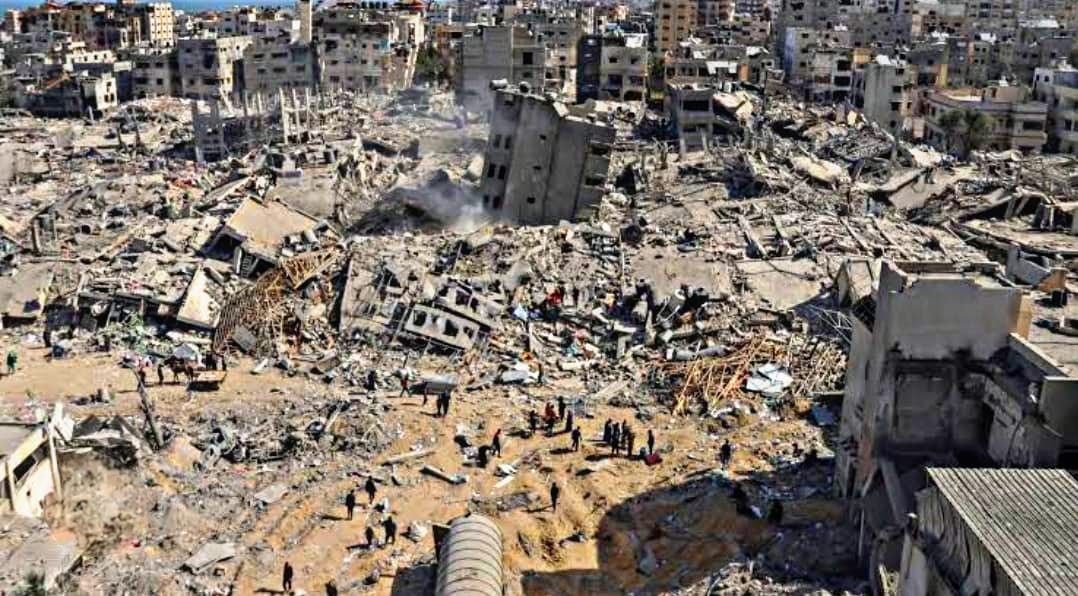
Destruction and Despair: Israel Resumes Airstrikes on Gaza, Killing Hundreds as Ceasefire Collapses

March 18, 2025: Israel Resumes Airstrikes on Gaza, Killing at Least 235 After Truce Talks Collapse Wave of Airstrikes Hits Gaza Following Ceasefire Breakdown Gaza City, March 18, 2025 – 3:45 AM (local time)
The Israeli Air Force launched a series of intense airstrikes across the Gaza Strip, killing at least 235 people and injuring hundreds more, according to local hospital reports. The attacks, which began in the early morning hours, targeted key locations throughout Gaza, including residential buildings, suspected Hamas sites, and infrastructure hubs. The bombardment shattered a fragile ceasefire that had been in place since January and marked one of the deadliest single-day escalations since the war began 17 months ago. As explosions rocked Gaza City, Rafah, and Khan Younis, terrified civilians fled their homes, seeking safety in already overcrowded shelters. Rescue workers struggled to pull survivors from the rubble as emergency services were overwhelmed by the scale of destruction.
Ceasefire Talks Collapse, Netanyahu Orders Military Action
The airstrikes followed the collapse of ongoing truce negotiations between Israel and Hamas. Talks, which had been mediated by Egypt and Qatar, reportedly broke down over key issues such as the release of hostages held by Hamas, the easing of the Israeli blockade, and long-term security guarantees. Israeli Prime Minister Benjamin Netanyahu, frustrated by the lack of progress, declared that Israel would respond with “increasing military strength” against Hamas. “This is just the beginning,” Netanyahu’s office stated following the strikes, emphasizing that Israel will not hold back in its efforts to eliminate Hamas’ military capabilities. The decision to launch the operation came after high-level consultations with security officials, who argued that Hamas was using the ceasefire to regroup and rearm.
Mass Casualties and Humanitarian Crisis Deepens
As the airstrikes intensified, Gaza’s already strained hospitals faced an overwhelming influx of wounded civilians. Medical officials reported that emergency wards were running out of critical supplies, including anesthesia, blood units, and antibiotics, due to the ongoing Israeli blockade. Dr. Ayman Abu al-Ouf, a senior physician at Al-Shifa Hospital, described the situation as catastrophic: “We have patients lying on the floors because there are no available beds. Many of the wounded are women and children. If this continues, we will run out of medical supplies within days.” Eyewitnesses described the horror of the attacks. “We were asleep when the first strike hit,” said Ahmed al-Khatib, a resident of Gaza City. “The whole building shook. We ran outside, and there was nothing but dust and screaming. My neighbor’s house was completely destroyed.” In Rafah, families who had been displaced by previous conflicts now find themselves in an even more desperate situation. “Where do we go now?” asked Umm Khaled, a mother of four. “There is no safe place left in Gaza.”
Israeli Justification and Military Strategy
The Israeli Defense Forces (IDF) stated that their strikes targeted Hamas’ military infrastructure, including command centers, weapons depots, and tunnels used for smuggling. The IDF released footage showing precision strikes on alleged militant hideouts, though many civilians were caught in the crossfire. “We are targeting Hamas leadership and military assets,” an IDF spokesperson said. “Hamas is responsible for the suffering of its own people by refusing to engage in serious negotiations.” Israeli citizens, particularly those in border communities, have voiced strong support for the renewed military campaign, citing ongoing threats from Hamas rocket attacks. However, within Israel, there are also growing concerns over the safety of hostages still held by Hamas and the potential for prolonged conflict.
Hostage Families and Political Tensions in Israel
The airstrikes have sparked protests in Tel Aviv and Jerusalem, where families of hostages taken by Hamas in the initial October 2023 attack have demanded that the government prioritize negotiations over military action. Many fear that the renewed escalation will reduce the chances of securing the release of their loved ones. “This war will not bring our children home,” said one protester at a demonstration outside the Knesset. “We need diplomacy, not bombs.” The Israeli government is facing internal political pressure, with Netanyahu’s far-right coalition partners pushing for an all-out offensive against Hamas, while more moderate voices call for a renewed push for a diplomatic resolution. Defense Minister Yoav Gallant has hinted that a ground invasion could be considered if Hamas does not back down.
International Reactions and Calls for Ceasefire
The attacks have drawn strong international condemnation. Countries including Turkey, Iran, South Africa, France, Saudi Arabia, and Egypt have criticized Israel’s military response, calling for an immediate ceasefire. The United Nations has expressed alarm over the humanitarian situation, with Secretary-General António Guterres urging restraint. The White House confirmed that it had been consulted before the strikes and expressed support for Israel’s right to defend itself. However, the U.S. also called on Israel to avoid excessive civilian casualties and encouraged a return to diplomatic efforts.
What Comes Next? War or Diplomacy?
With the situation escalating rapidly, the future remains uncertain. Netanyahu’s government appears determined to continue its military campaign, while Hamas has vowed to retaliate with further attacks. For the people of Gaza, the renewed violence brings more destruction, displacement, and despair. As international calls for a ceasefire grow louder, the world watches to see whether Israel and Hamas will return to negotiations—or if the conflict will spiral into an even deadlier phase. March 18, 2025: Israel Resumes Airstrikes on Gaza, Killing at Least 235 After Truce Talks Collapse
Wave of Airstrikes Hits Gaza Following Ceasefire Breakdown
Gaza City, March 18, 2025 – 3:45 AM (local time) The Israeli Air Force launched a series of intense airstrikes across the Gaza Strip, killing at least 235 people and injuring hundreds more, according to local hospital reports. The attacks, which began in the early morning hours, targeted key locations throughout Gaza, including residential buildings, suspected Hamas sites, and infrastructure hubs. The bombardment shattered a fragile ceasefire that had been in place since January and marked one of the deadliest single-day escalations since the war began 17 months ago. As explosions rocked Gaza City, Rafah, and Khan Younis, terrified civilians fled their homes, seeking safety in already overcrowded shelters. Rescue workers struggled to pull survivors from the rubble as emergency services were overwhelmed by the scale of destruction.
Ceasefire Talks Collapse, Netanyahu Orders Military Action
The airstrikes followed the collapse of ongoing truce negotiations between Israel and Hamas. Talks, which had been mediated by Egypt and Qatar, reportedly broke down over key issues such as the release of hostages held by Hamas, the easing of the Israeli blockade, and long-term security guarantees. Israeli Prime Minister Benjamin Netanyahu, frustrated by the lack of progress, declared that Israel would respond with “increasing military strength” against Hamas. “This is just the beginning,” Netanyahu’s office stated following the strikes, emphasizing that Israel will not hold back in its efforts to eliminate Hamas’ military capabilities. The decision to launch the operation came after high-level consultations with security officials, who argued that Hamas was using the ceasefire to regroup and rearm.
Mass Casualties and Humanitarian Crisis Deepens
As the airstrikes intensified, Gaza’s already strained hospitals faced an overwhelming influx of wounded civilians. Medical officials reported that emergency wards were running out of critical supplies, including anesthesia, blood units, and antibiotics, due to the ongoing Israeli blockade. Dr. Ayman Abu al-Ouf, a senior physician at Al-Shifa Hospital, described the situation as catastrophic: “We have patients lying on the floors because there are no available beds. Many of the wounded are women and children. If this continues, we will run out of medical supplies within days.” Eyewitnesses described the horror of the attacks. “We were asleep when the first strike hit,” said Ahmed al-Khatib, a resident of Gaza City. “The whole building shook. We ran outside, and there was nothing but dust and screaming. My neighbor’s house was completely destroyed.” In Rafah, families who had been displaced by previous conflicts now find themselves in an even more desperate situation. “Where do we go now?” asked Umm Khaled, a mother of four. “There is no safe place left in Gaza.”
Israeli Justification and Military Strategy
The Israeli Defense Forces (IDF) stated that their strikes targeted Hamas’ military infrastructure, including command centers, weapons depots, and tunnels used for smuggling. The IDF released footage showing precision strikes on alleged militant hideouts, though many civilians were caught in the crossfire. “We are targeting Hamas leadership and military assets,” an IDF spokesperson said. “Hamas is responsible for the suffering of its own people by refusing to engage in serious negotiations.” Israeli citizens, particularly those in border communities, have voiced strong support for the renewed military campaign, citing ongoing threats from Hamas rocket attacks. However, within Israel, there are also growing concerns over the safety of hostages still held by Hamas and the potential for prolonged conflict.
Hostage Families and Political Tensions in Israel
The airstrikes have sparked protests in Tel Aviv and Jerusalem, where families of hostages taken by Hamas in the initial October 2023 attack have demanded that the government prioritize negotiations over military action. Many fear that the renewed escalation will reduce the chances of securing the release of their loved ones. “This war will not bring our children home,” said one protester at a demonstration outside the Knesset. “We need diplomacy, not bombs.” The Israeli government is facing internal political pressure, with Netanyahu’s far-right coalition partners pushing for an all-out offensive against Hamas, while more moderate voices call for a renewed push for a diplomatic resolution. Defense Minister Yoav Gallant has hinted that a ground invasion could be considered if Hamas does not back down.
International Reactions and Calls for Ceasefire
The attacks have drawn strong international condemnation. Countries including Turkey, Iran, South Africa, France, Saudi Arabia, and Egypt have criticized Israel’s military response, calling for an immediate ceasefire. The United Nations has expressed alarm over the humanitarian situation, with Secretary-General António Guterres urging restraint. The White House confirmed that it had been consulted before the strikes and expressed support for Israel’s right to defend itself. However, the U.S. also called on Israel to avoid excessive civilian casualties and encouraged a return to diplomatic efforts.
What Comes Next? War or Diplomacy?
With the situation escalating rapidly, the future remains uncertain. Netanyahu’s government appears determined to continue its military campaign, while Hamas has vowed to retaliate with further attacks. For the people of Gaza, the renewed violence brings more destruction, displacement, and despair. As international calls for a ceasefire grow louder, the world watches to see whether Israel and Hamas will return to negotiations—or if the conflict will spiral into an even deadlier phase.
Discover more from News Tap One
Subscribe to get the latest posts sent to your email.

