
“A New Rhythm in Indian Literature: Satyajit Mandal Unveils ‘Alliteration Rhythm’”

Written and covered by aditya adhikari
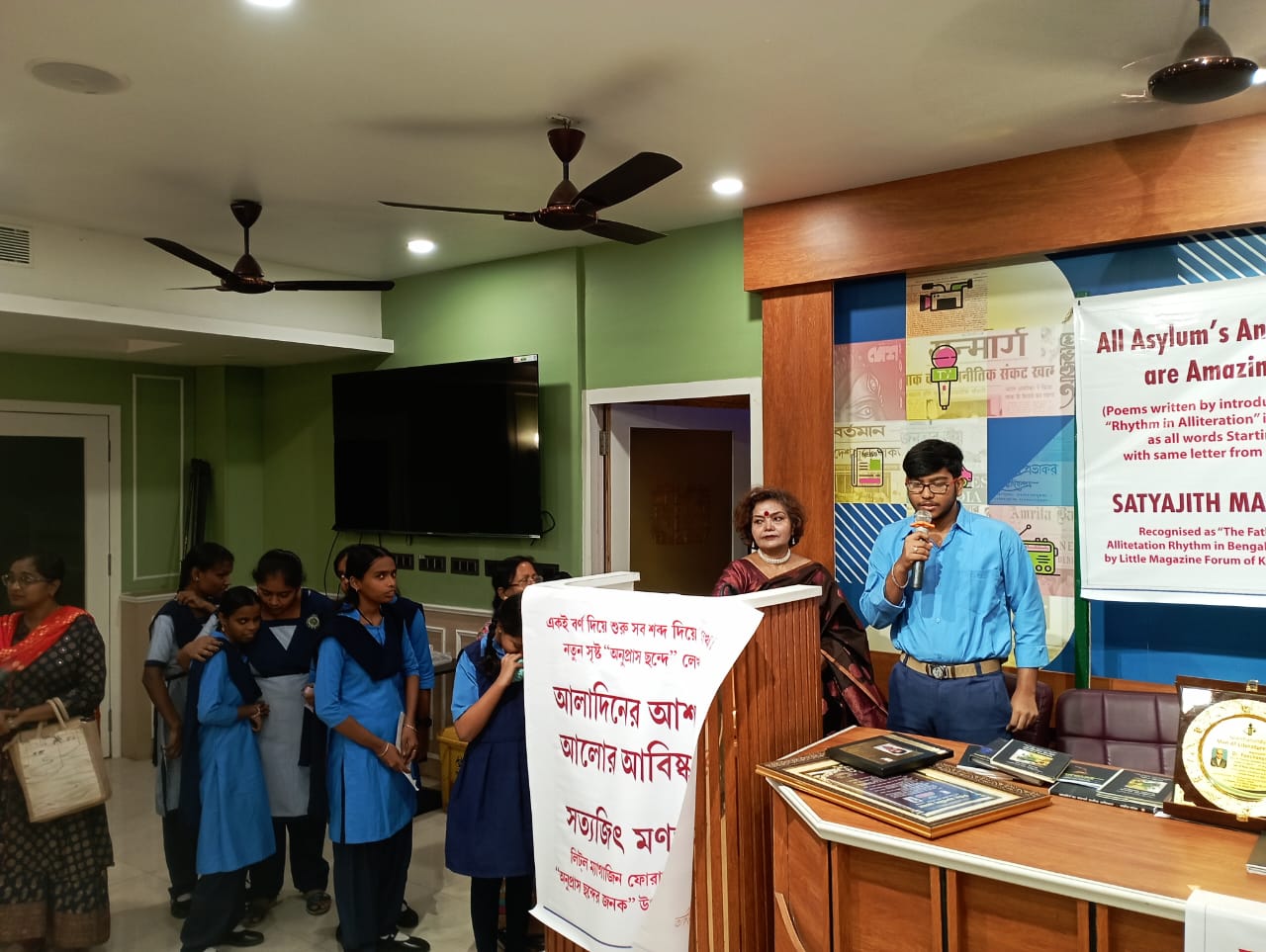
Kolkata : A new chapter in Indian literature is going to begin as poet Satyajit Mandal unveiled a different poetic style called “Alliteration Rhythm” at a press meet in the Press Club of Kolkata on Wednesday.
Mandal’s invention extends the conventional notion of alliteration into a full-fledged rhythmic pattern: each word in a poem starts with the same letter or sound. Already certified by linguists, the technique has been called a new, disciplined method that merges linguistic precision with artistic creativity.
According to the organizers, this is the first time that the poetic rhythm has been officially recognized in Bengali, English, and Hindi literature. Other events planned under the initiative include the world’s first Braille Poetry Festival as part of the Sparshanandan project for promoting literary creativity among visually impaired poets.
For Mandal, who has long been experimenting with word patterns and sound harmony, “Alliteration Rhythm” is not just a technique; it’s a new way of hearing language through rhythm and repetition.
For poet Satyajith Mandal, blindness never did dim his vision for poetry. While performing on various platforms, he realised that talented blind poets rarely get recognition. “They are equally creative and can write powerful poetry too, but they remain deprived,” he said.
In 1992, Mandal came out with the first Braille poetry magazine and organized competitions among blind students across eastern India. Later, he visited schools in West Bengal, Bihar, Assam, Shillong, and Cuttack to discover hidden talents. His relentless effort brought about the world’s first “Drishtihin Der Kobita Utsab”—a poetry festival exclusively for the visually impaired.
One morning, while feeding crows on his rooftop, a line came to him — “Sob sokale surjer songbordhona sova.” The repetition of the ‘S’ sound inspired him to experiment with poems where every word began with the same letter. Thus, a new poetic form was born called “Alliteration Rhythm.”
Later, he extended this idea to Bengali letters ‘অ’ to ‘হ’ and, in English, from ‘A’ to ‘Z’. And his English work entitled “All Asylum’s Anthems Are Amazing” and the Bengali book “Aladiner Aschorjo Alor Abiskar” earned him the title “Father of Alliteration Rhythm.” One day soon, Mandal plans to host an international poetry festival for blind poets.
Discover more from News Tap One
Subscribe to get the latest posts sent to your email.

