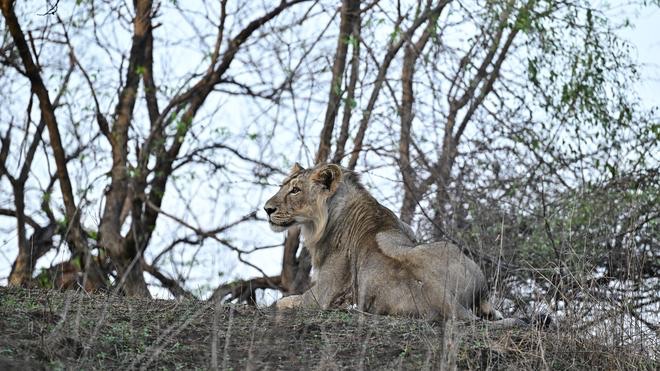
Man Jailed for Harassing Lion in Gujarat’s Bhavnagar

In a deeply concerning incident that has stirred conversations across the country, a man was arrested in Gujarat’s Bhavnagar district for harassing an Asiatic lion. The incident came to light after a video went viral on social media, showing the man shouting at, approaching, and throwing objects near a lion. The footage not only sparked outrage among environmentalists and the public but also prompted swift action from forest officials and law enforcement. The incident is a wake-up call regarding human intrusion into wildlife habitats and reflects the growing challenges of balancing conservation with modern social behavior.

The Location: Gir Forest and Its Importance
The Gir Forest National Park is the last natural habitat of the Asiatic lion. Spread across Gujarat, this protected zone houses a population of less than 700 of these majestic creatures. The forest is tightly regulated to ensure minimal human interference, and any unauthorized entry is considered a serious offense under Indian law. Buffer zones around the forest are also vital for wildlife movement and safety. Unfortunately, in this case, the man bypassed restrictions and entered a sensitive area without permission. By disturbing the lion, he not only risked his own life but also disrupted the fragile ecosystem in which these lions thrive. Forest officials believe that more stringent surveillance is required in these buffer areas.
The Viral Video and Its Aftermath
The video was initially posted to a personal social media account, reportedly to gain views and engagement. In the clip, the man can be seen taunting the lion and attempting to record its reactions. This reckless act spread rapidly, shared by thousands who condemned the behavior. Wildlife activists and conservationists tagged state authorities, urging action. The Forest Department launched an investigation within hours. Using digital forensics and community intelligence, the culprit was identified and arrested. The swift response from the department reflects the seriousness with which wildlife crimes are now treated in India.
Legal Framework: The Wildlife Protection Act, 1972
India’s Wildlife Protection Act is one of the most robust legal instruments aimed at safeguarding its rich biodiversity. Asiatic lions are listed under Schedule I of the Act, granting them the highest level of protection. This means that any attempt to harm, disturb, or even unnecessarily approach them is a punishable offense. In this case, the man was booked under sections related to intrusion into protected areas and harassment of wildlife. He was sentenced to 14 days of judicial custody pending further investigation. Legal experts suggest that such penalties should be made stricter, especially in cases where the motive is public fame or social media engagement.
Community Awareness and Forest Department’s Action
Following the arrest, the Forest Department organized awareness campaigns in surrounding villages. Their goal was to educate the local population on the dangers of wildlife interference—not just for the animals, but for humans too. They emphasized that lions, though often tolerant of human presence due to years of cohabitation in Gujarat, are still wild and potentially dangerous. Forest rangers distributed leaflets and conducted street plays in regional dialects to reach wider audiences. NGOs also joined hands with the department to provide support for conservation-friendly education in rural schools, ensuring the next generation grows up with respect for nature.
The Role of Social Media in Wildlife Crime
Social media, while a powerful tool for advocacy and awareness, has also become a double-edged sword. The need to create viral content has led individuals to cross ethical and legal lines. Filming wild animals, especially in protected areas, has now become a form of digital trophy hunting. Experts are urging platforms like Instagram, Facebook, and YouTube to install stricter AI-based monitoring systems that detect and remove content showing wildlife harassment. Additionally, influencers are being encouraged to use their platforms to promote responsible tourism and environmental protection. Several Indian influencers have already started such initiatives, creating reels and stories about ethical wildlife encounters.
The Psychological Impact on Wildlife
Lions, like many wild animals, are extremely sensitive to disturbances. Sudden noise, aggressive body language, or unfamiliar human scents can cause stress responses. These responses may not be immediately visible, but repeated exposure can lead to changes in behavior, disrupted feeding or mating patterns, and migration away from safe zones. In some cases, lions may move toward human settlements to escape stressors, ironically increasing the chances of dangerous human-wildlife conflicts. Animal behaviorists emphasize that one moment of disturbance can have ripple effects lasting weeks. Conservation is not just about preserving lives, but also about ensuring animals can live without fear.
Suggested Solutions for Long-Term Change
To prevent such incidents in the future, a multi-pronged approach is required. Firstly, surveillance in forest areas should be upgraded with drone cameras, thermal imaging, and AI motion detection. Secondly, stricter penalties for offenders, including long-term jail time, should be enforced. Thirdly, partnerships between governments and social media companies should be formed to ensure faster content takedowns. Fourth, rural education programs should make environmental studies compulsory. Fifth, a national campaign on ethical wildlife tourism should be launched to guide both tourists and locals on acceptable behavior around wild animals.
The Bigger Picture: Human-Wildlife Conflict in India
India is home to a wide variety of endangered species including tigers, leopards, elephants, and lions. As the human population grows and expands into forest land, the rate of human-animal interactions has increased. In many states, wild animals are spotted near highways, villages, and even towns. The key to peaceful coexistence lies in mutual respect and awareness. Infrastructure projects must be wildlife-friendly, and compensation for damage caused by animals must be swift and fair. A cultural shift toward seeing animals as co-inhabitants rather than threats is crucial for the future of Indian biodiversity.
Man Jailed for Harassing Lion in Gujarat | Bhavnagar Wildlife News
Discover more from News Tap One
Subscribe to get the latest posts sent to your email.