
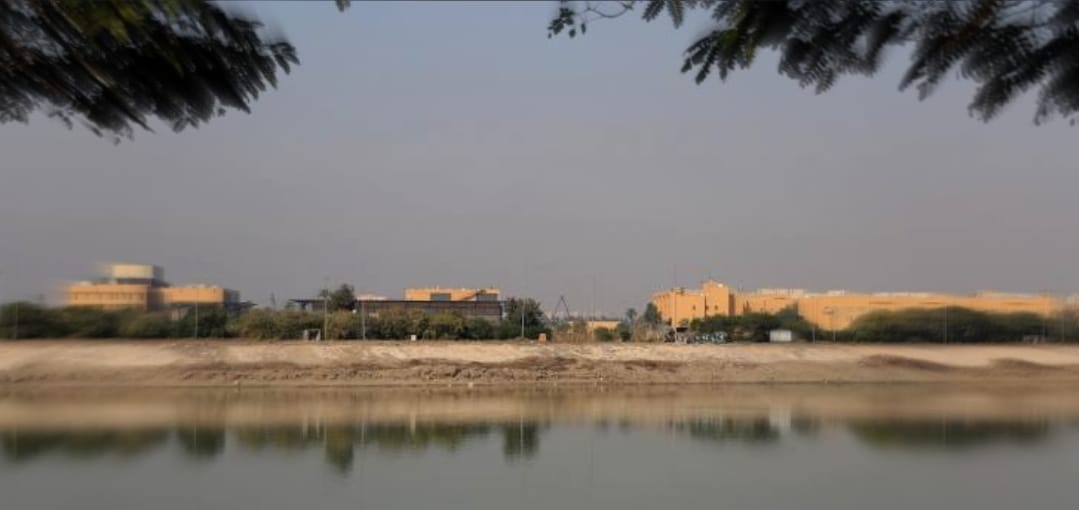
Baghdad Embassy Evacuation: US Acts on Threats.
June 12, 2025 | Baghdad, Iraq
Rising Risks Trigger Baghdad Embassy Evacuation
On Wednesday, the US State Department confirmed a partial evacuation of personnel from its embassy in Baghdad and consulate in Erbil. The move follows an uptick in threats reportedly tied to Iran-aligned groups operating in Iraq and neighboring regions.
Officials cited “credible and increasing security risks” as the reason for the decision. All non-essential staff and family members were instructed to leave immediately. A limited core team remains to handle urgent diplomatic work and essential consular functions.
The US administration emphasized that while personnel are being withdrawn, the diplomatic mission is not shutting down.

Iran’s Influence Fuels Baghdad Embassy Evacuation
According to defense and intelligence officials, the Baghdad embassy evacuation directly links to threats posed by Iran-backed militias. These militias, active in Iraq and Syria, have increased surveillance and hostile rhetoric against US interests.
Pentagon briefings suggested that recent drone movements and intercepted communications indicated an imminent risk. American intelligence agencies are actively tracking movements of key Iran-linked operatives in the region.
Iran’s Islamic Revolutionary Guard Corps (IRGC) recently vowed retaliation for past US actions, heightening the urgency of the decision.
Washington Strengthens Military Posture Regionally
In addition to the evacuation, the US has repositioned military assets across the Middle East. Aircraft carriers, anti-missile systems, and reconnaissance aircraft have been placed on alert.
Military bases in Qatar, Bahrain, and Kuwait have been instructed to implement heightened threat protocols. Additionally, defense officials approved voluntary departure for dependents of deployed personnel in the region.
This broader redeployment aims to deter attacks while ensuring rapid response capacity if US assets are targeted.
Effect of Baghdad Embassy Evacuation on US-Iraq Relations
Iraq’s Foreign Ministry released a statement expressing regret over the US decision, while reassuring that the nation remains safe for diplomats. Iraqi security agencies have increased patrols around foreign missions in Baghdad’s Green Zone.
Privately, some Iraqi officials admitted concern over growing Iranian influence and acknowledged difficulties in curbing militia activities. This could strain Washington-Baghdad ties in the long term, particularly as Iraq seeks Western investments.
Several diplomatic observers suggest this move signals a temporary disengagement by the US from direct involvement in Iraq’s volatile internal security environment.
Ongoing Consular Services Despite Staffing Cut
Despite the evacuation, key functions like visa processing, US citizen assistance, and emergency services will continue. The embassy has transitioned many functions online or to regional consulates with full staffing.
A temporary helpdesk will handle passport renewals and emergency evacuations for US nationals in Iraq. Officials have urged citizens to register their presence with the State Department’s Smart Traveler Enrollment Program (STEP).
Travel advisories for Iraq remain at Level 4 — “Do Not Travel” — citing terrorism, kidnapping, and armed conflict.
Broader Impact of Baghdad Embassy Evacuation
The Baghdad embassy evacuation echoes past events like the 2020 Soleimani fallout and 2012 Benghazi incident, where US missions faced deadly consequences. By acting early, Washington hopes to avoid diplomatic casualties.
Analysts believe this reflects a calculated shift in policy, moving toward remote diplomacy and military deterrence rather than on-ground negotiation. It may also impact ongoing trade talks and humanitarian coordination programs in Iraq.
NGOs operating in Baghdad are reassessing risk levels and might suspend field operations temporarily.
Security First Amid Complex Threat Web
The Baghdad embassy evacuation marks a critical moment in US-Iraq relations. It showcases the rising risk to foreign missions and the US’s evolving regional strategy. While some diplomatic staff remain, the move reflects a precautionary, security-first approach.
Tensions with Iran, militia provocations, and regional instability all contribute to this rapid diplomatic recalibration. For now, Washington remains firm in protecting its personnel while maintaining limited engagement in Iraq’s future.
Read more : Indira Gandhi Verdict: 1975 Ruling That Triggered Emergency.
Discover more from News Tap One
Subscribe to get the latest posts sent to your email.

