
Indian Air Force Begins Major Military Drill Near Pakistan Border Amid Rising Tensions

Rajasthan Skies Roar With Activity
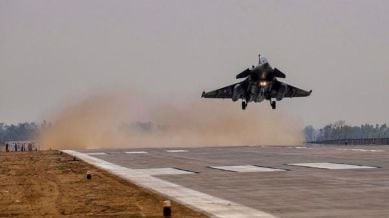
As diplomatic friction between India and Pakistan escalates following the Pahalgam terror attack, the Indian Air Force (IAF) has launched a large-scale two-day military exercise near the western border in Rajasthan. The drill, which began on May 7 and will continue through May 8, aims to test operational readiness and strategic capabilities in high-stress, real-time scenarios.
The exercise involves frontline fighter aircraft such as Rafales, Mirage 2000s, and Sukhoi-30MKIs, alongside AWACS, drones, and aerial refueling units. Airspace over large portions of western India has been temporarily restricted to civilian flights for the duration of the operation.
Strategic Timing Amid Regional Volatility
This show of strength comes at a time of heightened alert across India’s defense apparatus. Following the Pahalgam terror attack, which killed 26 civilians and was allegedly orchestrated by Pakistan-backed groups, India has hardened its posture both diplomatically and militarily. The IAF drill is widely seen as both a message of deterrence and a preparation for contingencies.
Civil Defense Mobilization Across States
Complementing the IAF’s action, the Centre has also directed states to conduct synchronized civil defense drills on May 7. This includes testing air-raid sirens, blackout protocols, and evacuation rehearsals in over 200 districts. It’s one of the most comprehensive mock drills held since the 1971 Indo-Pak conflict.
Leadership Signals Resolve
Prime Minister Narendra Modi, in a high-level security meeting last week, gave the armed forces full operational autonomy to respond as deemed necessary. Union Home Minister Amit Shah also issued a stern warning, asserting that those behind the Pahalgam attack “will be hunted down one by one.”
Pakistan’s Parallel Provocations
While India readies its defenses, Pakistan has been conducting its own drills, including missile tests. Though officially framed as routine, these parallel exercises contribute to regional instability.
Discover more from News Tap One
Subscribe to get the latest posts sent to your email.

