
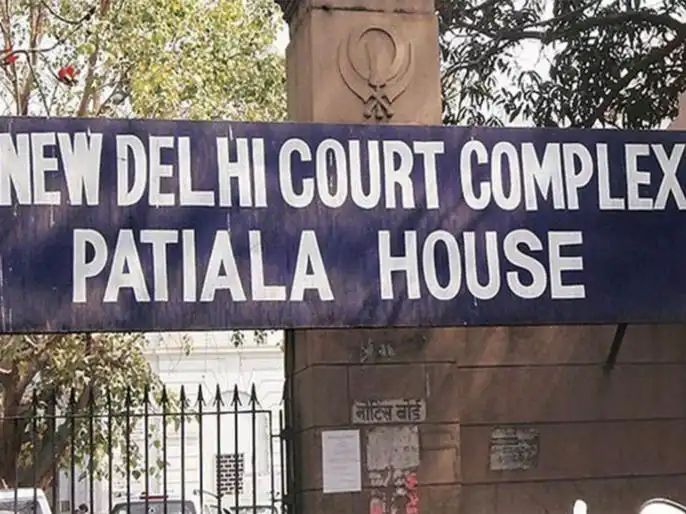
AI Summit protest: Court grants anticipatory bail to Manish Sharma, directs him to join investigation

On a cold February morning, as diplomats and technology leaders from over a hundred nations gathered inside Bharat Mandapam for the AI Impact Summit, something unexpected unfolded outside. A small group of protesters — some of them shirtless — made headlines for all the wrong reasons. Weeks later, the ripples of that single act of dissent are still being felt inside a Delhi courtroom.
The Man At The Center
Manish Sharma, National Incharge of the Indian Youth Congress, was not among those who stood at the gates that day. He wasn’t photographed, wasn’t arrested on the spot, and by his own defence’s account, wasn’t anywhere near Bharat Mandapam on February 20. And yet, Delhi Police named him a key conspirator — the man who, they allege, pulled the strings from behind the scenes.
Authorities accused him of planning the protest, handling logistics, and coordinating with co-accused persons. A Non-Bailable Warrant was issued against him. The case grew, the courtroom arguments grew sharper — and finally, on Friday, March 20, the Patiala House Court granted Sharma anticipatory bail, directing him to join the investigation the following day. Additional Sessions Judge Amit Bansal, who presided over the matter, also ruled that should police seek to arrest him, they must give him a seven-day advance notice.
It was a moment of relief — but not an acquittal. The investigation continues.
What Happened at the Summit
The AI Impact Summit at Bharat Mandapam on February 20 was no ordinary government event. It was convened for the signing of a landmark declaration on artificial intelligence, with participation from more than 100 countries including the European Union, and was attended by several foreign dignitaries.
That backdrop is precisely what made the protest so charged — politically and legally. According to Delhi Police, those who organised the protest had done their homework: a recce was carried out on February 16, 17, and 18, days before the demonstration was executed. (ANI News) Investigators pointed to CCTV footage from a restaurant allegedly showing four accused individuals in a meeting, with Sharma purportedly having called a co-accused named Siddharth Avdhoot.
To the prosecution, this wasn’t impulsive dissent. It was a calculated plan.
Two Very Different Arguments
Inside the courtroom, two contrasting narratives played out.
For the state, Additional Solicitor General DP Singh argued with urgency. He told the court that Sharma, as a key conspirator, needed to be taken into custody so investigators could confront him with evidence and determine whether others were involved in a larger conspiracy. Three public servants had been injured during the protest. The accused, police maintained, were part of an unlawful assembly.
The prosecution also drew attention to the legal restrictions in place that day — protests are not permitted at locations or routes where foreign dignitaries are present — and noted that a court-designated protest area at Jantar Mantar existed for exactly this purpose.
Senior Advocate Rebecca John, representing Sharma, pushed back firmly. Her argument carried a quiet but pointed logic: Sharma was not at the scene. Even if a scuffle had taken place, she argued, it was not his responsibility. Violation of a prohibitory order, she reminded the court, is a bailable offence — not grounds for custodial detention.
Then came a question that cut through the legal formalities: “Where is the enmity between communities? Nothing happened even after the protest.” It was a pointed challenge to the charge of promoting communal disharmony.
John also invoked a broader principle — that arrest should be a last resort, not a first response, because it brings with it humiliation and lasting harm to a person’s dignity
The Galgotia Question
One moment in the proceedings stood out for its boldness. The defence raised the case of Galgotia University, which had reportedly caused embarrassment at the Summit when a robot it presented was claimed by China as its own.
John asked directly: had Delhi Police registered any case against Galgotia for the incident that brought a bad name to India during the very same Summit? No answer was given. It was a pointed reminder that the law, if applied unevenly, raises its own uncomfortable questions.
The Political Undertow
This case has never been far from politics. Senior Advocate Ramesh Gupta, who argued for Sharma at an earlier hearing, called it politically motivated. He reminded the court that protests of a similar nature had taken place before 2014 without criminal consequence — and produced a photograph of a senior Haryana leader participating shirtlessly in a protest against Commonwealth Games corruption as evidence.
When police cited Sharma’s role as head of the Indian Youth Congress as justification for his custody, Gupta shot back: “Is the Indian Youth Congress a banned organisation? Is this a crime, being a member of the Indian Youth Congress?” The courtroom, by accounts, grew briefly heated before order was restored.
What Comes Next
With anticipatory bail now granted, Sharma is expected to appear before Delhi Police’s Crime Branch for questioning. The investigation into the broader protest network remains open. Co-accused Rajeev Kumar — described in court as a media consultant who attended the Summit in a personal capacity and expressed willingness to cooperate — is also part of the ongoing proceedings.
The case poses questions that go beyond a single protest at a single summit. It asks where the line sits between the right to dissent and the duty to protect national dignity. It asks whether the state has applied its powers proportionately. And it asks what kind of country India wants to be — one where protest is policed as conspiracy, or one where the courts remain a check on that instinct.
For now, Manish Sharma walks free — but not without conditions. The courtroom chapter isn’t over yet.
Discover more from News Tap One
Subscribe to get the latest posts sent to your email.

