
Exclusive: U.S. Declines to Label Pakistani Airstrike on Kabul Rehab Center a War Crime, Cites Islamabad’s Right to Self-Defense
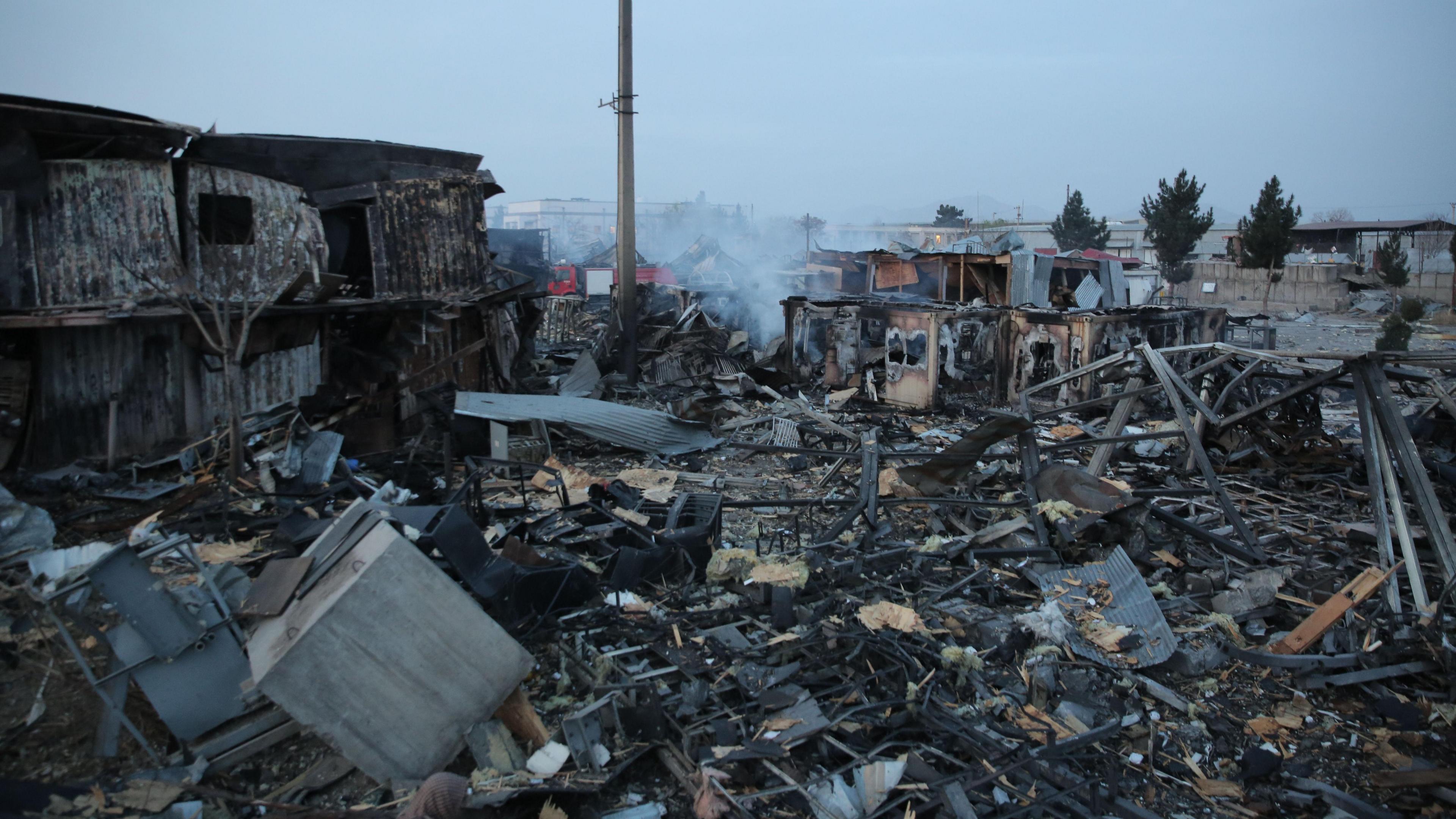
In the pre-dawn hours of March 16, Pakistani fighter jets struck the Omid rehabilitation centre in Kabul, a sprawling civilian facility that had become one of Afghanistan’s largest treatment centers for the country’s devastating opioid epidemic. Afghan authorities say more than 400 civilians died — patients undergoing detoxification, their families, medical staff and support workers. Independent estimates reviewed by Western diplomats and humanitarian organizations put the toll lower but still catastrophic, in the low hundreds.
Pakistan’s military described the operation as a targeted strike on “militant infrastructure” used by the Taliban and Tehrik-i-Taliban Pakistan (TTP) to plan cross-border attacks. Kabul called it an indiscriminate assault on a protected medical site with no military presence whatsoever.
Now, in responses provided exclusively to NewsTap One on background, the U.S. State Department has delivered its first official comments on the incident — a carefully worded statement that acknowledges the reports, expresses general opposition to civilian targeting, yet stops well short of condemnation, offers no assessment under international humanitarian law, and makes no call for an independent investigation.
The full exchange, given in writing to NewsTap One, reads as follows:
Q1: Does the United States have an official position? A: “We are aware of these reports.”
Q2: How does the US assess legality? A: “The Pakistani people have suffered greatly at the hands of terrorists, including the Taliban, who continue to allow Afghanistan to be used as a launching pad for horrific cross-border attacks.”
Q3: Would the United States consider this incident a potential international war crime, given the targeting of a civilian rehabilitation facility? A: “The United States does not condone military targeting of civilians and supports Pakistan’s right to defend itself against attacks from the Taliban, a Specially Designated Global Terrorist group.”
Q4: Is there any call from the US for an independent investigation or accountability measures? A: “The Department of State and Mission Pakistan remain in constant contact with our Pakistani partners on a number of issues, including regional security.”
The answers are notable as much for what they omit as for what they state.
Nowhere does the U.S. government condemn the strike. Nowhere does it apply the core principles of international humanitarian law — distinction between combatants and civilians, proportionality of attack, and the special protection granted to medical facilities under the Geneva Conventions and Additional Protocol I. A drug rehabilitation center is, by definition, a civilian object entitled to heightened safeguards; the U.S. response does not address whether those safeguards were respected.
The phrasing instead pivots repeatedly to Pakistan’s legitimate security grievances and the Taliban’s role in sheltering terrorists. The effect is a diplomatic endorsement of Islamabad’s right to self-defense that does not engage with the reported scale of civilian harm or the nature of the target.
This calibrated language reflects deep strategic alignment between Washington and Islamabad on counterterrorism, even after years of strained relations following the 2021 U.S. withdrawal from Afghanistan. Pakistan remains a critical, if uneasy, partner in containing TTP, al-Qaeda remnants and Islamic State affiliates that use Afghan territory as a sanctuary. U.S. officials have repeatedly described the Taliban as a “specially designated global terrorist group,” language mirrored in the State Department’s reply.
Yet the absence of any call for verification, transparency or accountability stands in contrast to Washington’s posture toward similar incidents involving adversaries. When Russian forces strike Ukrainian hospitals or civilian infrastructure, U.S. statements routinely invoke international law, demand independent probes and threaten consequences. Here, the emphasis is on continued dialogue with “Pakistani partners.”
Humanitarian organizations have documented the Omid centre’s purely civilian character: it housed detoxification wards, counseling rooms, a pharmacy and family accommodation — no barracks, no weapons caches, no command posts, according to multiple Afghan health officials and aid workers who spoke to NewsTap One on condition of anonymity because they fear reprisals. Satellite imagery circulating since the strike shows extensive damage to residential-style buildings, not hardened military structures.
Pakistan has not released evidence publicly linking the Omid centre to TTP operations. Afghan authorities have invited international investigators to the site; so far, no such team has been permitted full access.
The U.S. response, while technically neutral, risks reinforcing a broader pattern in which civilian harm by counterterrorism partners receives muted scrutiny compared with actions by designated enemies. International law does not bend according to alliances. The principles of distinction and proportionality apply equally to all parties, regardless of the justice of their cause.
As rescue workers continue to pull bodies from the rubble of Omid — a name that means “hope” in Dari — the question lingers in diplomatic corridors from Washington to Islamabad to Kabul: when hundreds of civilians die in a strike on a medical facility, does mere “awareness of reports” meet the standard the United States demands of others?
The State Department’s words, deliberately restrained, may prove louder than any outright condemnation could have been. They signal that, for now, strategic partnership and counterterrorism imperatives will continue to shape America’s public posture — even when the human cost is measured in hundreds of lives inside a place built to heal.
Whether that posture holds as more evidence emerges, or whether it eventually forces a reckoning with the consistency of international norms, remains the open and uncomfortable question hanging over the ruins of the Omid rehabilitation centre.
Discover more from News Tap One
Subscribe to get the latest posts sent to your email.

