
Panchami Road Horror: Two Crashes, One Dead; Is Road Safety Being Overlooked?

Kolkata: Two road accidents in West Bengal on Panchami, Thursday, October 15, have raised fresh concerns about road safety during Durga Puja. A diesel tanker overturned on Jessore Road near Birati, leaving its driver and helper seriously injured, while a lorry rammed into several buses parked beside a roadside hotel in Narayangarh, West Midnapore, killing a government bus conductor and injuring eight others. As thousands of people take to the roads for the festivities, the incidents have renewed questions about traffic management, the safety of major road corridors and the priorities of the state administration.
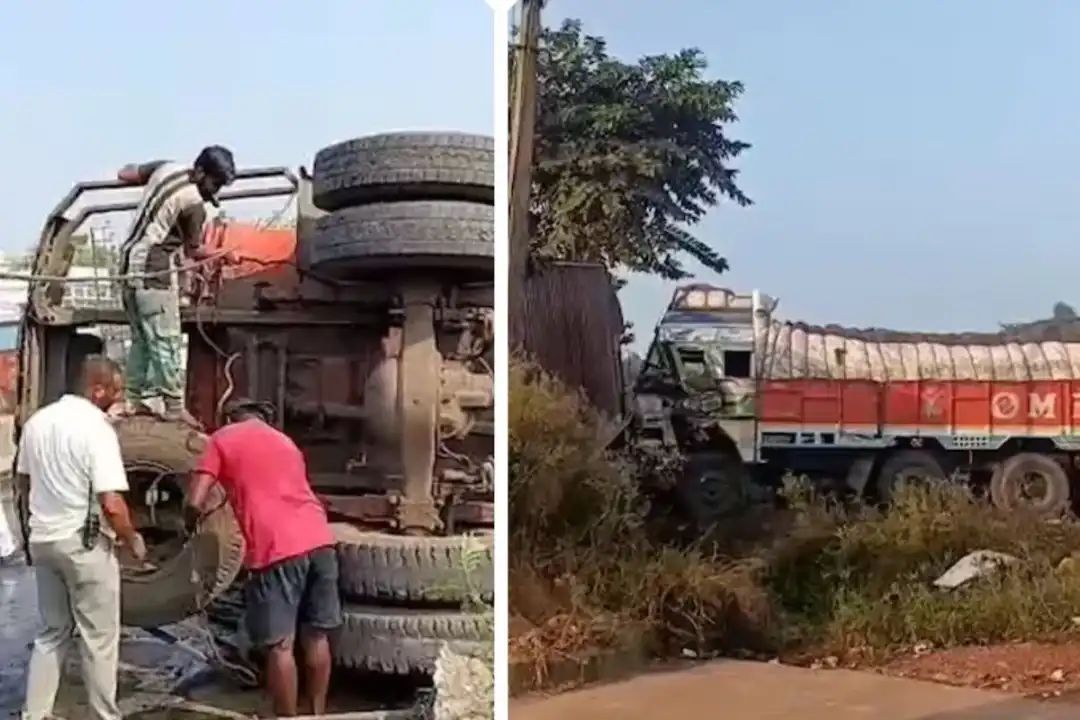
The first accident occurred near Gauripur Kali Temple in Birati, North 24 Parganas, on the stretch of Jessore Road connecting the airport area with Barasat. According to reports citing police sources, the diesel tanker was travelling from the airport towards Barasat when a tyre burst caused the driver to lose control. The vehicle overturned, spilling diesel across the road and disrupting traffic during the morning rush hour.
Both the driver and the helper sustained serious injuries. The accident created an additional safety hazard because of the diesel spread across the carriageway. Police personnel reached the spot to manage traffic and arrange for the removal of the overturned tanker. Authorities also faced the challenge of clearing the spilled fuel and making the road safe for other vehicles.
The incident triggered severe congestion on Jessore Road, leaving office-goers and other commuters struggling to reach their destinations. Traffic movement was disrupted as vehicles were unable to pass safely through the affected stretch, forcing some commuters to take longer alternative routes. The accident once again highlighted the vulnerability of busy roads when a heavy vehicle overturns, particularly when hazardous material spills onto the carriageway.
In a separate incident, a lorry collided with several vehicles parked beside a roadside hotel on National Highway 16 in Narayangarh, West Midnapore. The collision involved five vehicles, including three buses, and resulted in one death and eight injuries.
According to reports, the lorry was travelling from the Kharagpur direction when it crashed into the parked buses. A government bus travelling from Digha towards Durgapur was among the vehicles struck. The impact proved fatal for the bus conductor, who died at the scene. Another bus travelling from Ghatal towards Odisha was also hit, with its front section severely damaged. The lorry subsequently struck a container.
Eight people were injured in the Narayangarh collision. Police personnel from Narayangarh police station and officials from the National Highways Authority reached the scene and took steps to clear the damaged vehicles. The crash caused traffic congestion on National Highway 16 before movement was gradually restored. Police detained the lorry’s helper as part of the investigation, while the precise cause of the collision remained under investigation.
The two accidents have occurred at a time when road use increases significantly during Durga Puja, with people travelling between cities, towns and suburban areas to visit pandals and attend celebrations. Heavy vehicles, passenger buses, private cars, motorcycles and pedestrians all share increasingly busy routes during the festive period. In such circumstances, the adequacy of traffic management, roadside parking arrangements, vehicle safety checks and emergency response becomes particularly important.
The accidents also bring the wider question of road safety into focus as the new West Bengal government promotes changes to the way Durga Puja is organised and funded. The administration has announced a different approach to public expenditure on the festival, including reducing the direct grant for Puja committees from the previous year’s Rs 1.10 lakh to Rs 1 lakh and encouraging larger, financially stronger committees not to accept government assistance. The annual Durga Puja Carnival organised by the previous administration has also been scrapped for this year.
The government has presented these measures as a shift in its approach to public spending and festival management. However, the question remains whether efforts to reduce expenditure on certain celebrations are being matched by sufficient attention to essential public services, particularly road safety and infrastructure maintenance. While reducing festival-related expenditure and ensuring safer roads are separate policy matters, both concern how public priorities are set and resources are used.
Another development has intensified the debate over road safety in Kolkata. Ahead of Durga Puja, several roads, flyovers and junctions were painted in bright colours as part of an urban beautification initiative. The initiative drew criticism after videos circulated on social media purportedly showing bikers skidding on a newly painted flyover following rain.
West Bengal Urban Development Minister Agnimitra Paul said an inquiry had been ordered to determine the cause of the reported incidents. She maintained that anti-skid paint had been used and said the painting was funded through corporate social responsibility (CSR), rather than government money. The minister also said that alternative arrangements would be considered if the colours created difficulties for motorists.
The road-painting controversy has prompted a broader discussion about the balance between beautification and safety. Although the Birati tanker accident and the Narayangarh collision have not been linked to the painted roads, the incidents have brought road safety back into public focus during the festive period. The cause of each accident must be established independently through investigation, rather than assumed on the basis of timing or political debate.
The central question is therefore not simply how much money is being spent or saved on Durga Puja, but whether the arrangements made for the festival adequately protect the people travelling through the state. Are roads being inspected and maintained with the same urgency as they are being decorated? Are heavy vehicles and passenger buses being monitored effectively? Are roadside parking and stopping points sufficiently safe? And are emergency services equipped to respond quickly when an accident blocks a major road?
These questions require answers based on inspections, accident investigations and the implementation of road-safety measures. The government has ordered an inquiry into the reports of bikers skidding on painted roads, while police are investigating the Narayangarh collision. The circumstances surrounding the Birati tanker overturning also need to be established beyond the initial report of a tyre burst.
Durga Puja is one of West Bengal’s busiest travel periods, and the public’s expectations extend beyond colourful streets and festive arrangements. Safe roads, effective traffic management and timely emergency assistance are equally important parts of the festival infrastructure. The two accidents on Panchami have made that responsibility difficult to ignore.
Discover more from News Tap One
Subscribe to get the latest posts sent to your email.

