
From Tiger Hill to a Voter Line: Kargil War Hero’s Quiet Battle for His Right to Vote

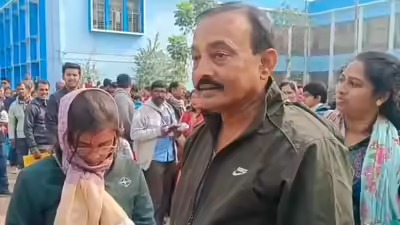
On a cold morning in Barasat, hundreds of anxious faces clutched files and identity cards. Among them stood a man. He once stood guard at Tiger Hill during the Kargil war. Sanjib Bhattacharya, 64, a retired Indian Army soldier, waited patiently in a long queue. He was not in line for medals or recognition. He was there for something far more basic: his right to vote. For Bhattacharya, this moment was heavy with irony. Between 1980 and 2006, he served the nation in uniform, including active deployment near Leh during the 1999 Kargil conflict. While he was protecting India’s borders, West Bengal conducted its last Special Intensive Revision (SIR) of electoral rolls in 2002. Because he was away on duty, his name never made it to the voter list. That absence followed him quietly for more than two decades.
Now, in 2026, Bhattacharya is one of nearly 32 lakh “unmapped voters” across Bengal. These voters must appear before election officials. They need to prove their eligibility and reclaim their voting rights. At the Barasat Block-I office, he stood with documents in hand. He was joined by his two brothers who are both former Army personnel. They face the same situation. Their shared service history, once a source of pride, has unexpectedly become a bureaucratic complication.
“There was harassment, no doubt,” Bhattacharya said softly. “We were asked to come with our daughters, nephews, everyone. But as Army men, following rules is part of our life.” His words carried discipline, but also quiet hurt.
When Service Becomes Absence
What makes Bhattacharya’s case painful is not just the paperwork, but the reason behind it. In 2002, voter registration relied heavily on physical presence and local verification. Soldiers posted far from home, central government employees, and migrant workers often slipped through the cracks. There were no special safeguards, no automatic inclusion for those serving the country outside their home states.
Back then, the exclusion went unnoticed. There was no queue, no protest—just a missing name. Years passed. Elections came and went. A soldier returned home after retirement, only to realise that democracy had moved on without him.
Then and Now: A Stark Contrast
In 2002: Bhattacharya was in uniform, stationed in a harsh, high-altitude war zone. His absence from Bengal was a duty, not a choice. There were no digital systems, no easy way to update records remotely.
In 2026: He is back home, a civilian, standing in line under the sun. Digital systems exist, hearings are organised, and transparency is promised—but the burden of proof lies entirely on him.
The comparison is unsettling. When he served the nation, the nation did not record his vote. Now, when he seeks his vote, the nation asks him to prove himself.
Public Anger and Moral Discomfort
Local residents have expressed anger and embarrassment over the situation. “It is shameful,” said a neighbour. “Someone who protected the country should not have to stand in line to prove his citizenship.” A local councillor shared the same view. They stated that special arrangements should have been made. This would have been for defence personnel posted outside Bengal for long periods.
The discomfort goes beyond one family. Bhattacharya’s daughters now work as a schoolteacher and a hospital manager. They are professionals contributing to society. Yet the family was summoned together for verification. The process, though legal, felt excessive and insensitive.
A System That Needs Empathy
Administratively, experts say this problem is solvable. Military service records are digitised, verifiable, and centrally maintained. Linking them with electoral databases could prevent such cases entirely. Priority verification or automatic inclusion for veterans would cost little but mean a great deal.
More Than One Man’s Vote
Bhattacharya’s story is not loud. There are no slogans, no protests, no accusations. Just a quiet man standing in line, waiting his turn, trusting the system he once defended with his life.
As Bengal prepares to publish its final voters’ list in February, his case raises a simple but powerful question. If those who stood at the borders must now stand in queues to prove they belong, what does that say about how we honour service in everyday governance?
For Sanjib Bhattacharya, reclaiming his vote is not about politics. It is about dignity—and about finally being counted.
In the end, the Special Intensive Revision (SIR) is not just a technical exercise of checking names and documents. It reminds us that democracy survives only when people participate with patience. Honesty and a sense of shared responsibility are also essential. The process can feel tiring. It may even seem unfair at times. This is especially true for those who believe their loyalty to the country should already be beyond question. But the larger aim of SIR is not to target individuals. Its purpose is to protect the integrity of the nation’s electoral system.
SIR is needed because societies change. People migrate for work, serve the country in distant places, pass away, or move across states. Without periodic revision, voter lists become outdated, leaving room for duplication, errors, and misuse. A clean and accurate electoral roll ensures that every genuine citizen is counted and that every vote truly matters.
Cooperation in this process is not for personal gain or political advantage. It is an act of collective responsibility. When citizens come forward, verify their details, and follow the rules, they strengthen the foundation of free and fair elections. That foundation ultimately protects the country—not any single party or person.
Standing in a queue today, submitting documents, or attending a hearing may feel small and inconvenient. But these small acts of cooperation ensure that tomorrow, the nation’s voice is honest and strong. It is truly representative of its people.
Discover more from News Tap One
Subscribe to get the latest posts sent to your email.

