
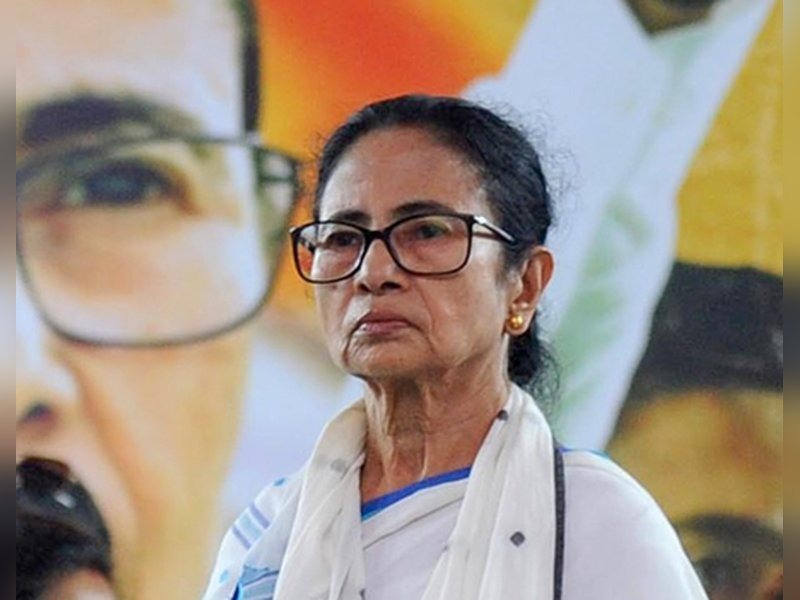
Mamata Rebukes Modi Again: Gorkha Hills Appointment Faces New Challenge

Introduction
West Bengal Chief Minister Mamata Banerjee addressed the Prime Minister Narendra Modi a second time on 17 November 2025, thereby reiterating her pronounced objection to the central government’s decision to designate an interlocutor for matters concerning the Gorkha population in the Darjeeling hills. The controversy regarding the appointment of such an interlocutor originated when Chief Minister Banerjee submitted her inaugural letter to the Prime Minister on 18 October 2025. Her second letter was written on November 17, 2025, after she allegedly received no satisfactory response.
In her recent letters to the Prime Minister, West Bengal Chief Minister Mamata Banerjee identified the core problem as the Union government’s unilateral appointment of an interlocutor for Gorkha issues without consulting the state government. This action is perceived as an unconstitutional encroachment upon India’s federal structure and an assault on West Bengal’s autonomy. The cause of the problem, according to Banerjee, is the Centre ignoring the established Gorkhaland Territorial Administration (GTA) and potentially disrupting the hard-earned peace in the region for political reasons.
In her letters, the Central Government (Union government) is accused by Mamata Banerjee and the West Bengal government of acting in a “unilateral, arbitrary and unconstitutional” manner. The specific action accused is the appointment of a retired IPS officer, Pankaj Kumar Singh, as an interlocutor without consulting the state, which is seen as a violation of India’s federal structure.

Key Details of the Second Letter:
Protest against Unilateral Move: The Chief Minister termed the Centre’s appointment of a retired IPS officer, Shri Pankaj Kumar Singh, as an interlocutor a unilateral, arbitrary, unconstitutional, and without jurisdiction move.
Lack of Consultation: She expressed shock that the interlocutor’s office started functioning as of November 10, 2025, despite her previous letter of October 18, 2025, and without any consultation with the state government. The Prime Minister’s Office had acknowledged the first letter and advised the Home Minister to look into the matter.
Violation of Federalism: Banerjee argued that the move encroaches upon the federal structure of the nation and the autonomy of West Bengal, especially since the Gorkhaland Territorial Administration (GTA) Act, 2011, already governs the relevant regions.
Peace and Stability Concerns: She warned that the Centre’s intervention appears to be a “politically motivated attempt to disturb the peace and stability” of the region, which has remained peaceful since 2011 due to state government efforts.
Demand for Revocation: The letter concludes with another request for the Prime Minister to personally intervene and revoke the appointment order.
This second letter highlights escalating tensions between the Union and State governments over jurisdiction in the sensitive Darjeeling hills region.
Political Motivations and Timing:
The Union government decided to employ an interlocutor to Gorkha issues at a time that appears to be very political. According to Chief Minister Mamata Banerjee, this was done in the run-up to the 2026 West Bengal Assembly elections when politics in the Darjeeling hills is important. Gorkha community is a major voting constituency and both the state party trinamool congress and the BJP are seeking their support. According to Banerjee in his letter, the Centre is attempting to unrest the peace in the area by bypassing the state government and the current Gorkhaland Territorial Administration (GTA) and wants to address Gorkha groups directly to secure votes in the new polls. The unilateral step taken by the Centre disregarding the state to claim autonomy resembles an expression that it can resolve the historical Gorkha demands on its own and be in a better position to secure a win during the elections. This action aggravates the relationship between the Centre and the West Bengal government.
This action strengthens the conflict which has existed between the Centre and the government of West Bengal.
Reactions from Gorkha Political Groups:
Reactions of the various Gorkha political groups will be numerous, as the community has always been divided on the way to resolve the Darjeeling hills issues. The one party government that leads the Gorkhaland Territorial Authority (probably Bahratiya Gorkha Prajatantrik Morcha headed by Anit Thapa) will most likely support the state government. They will perceive the novel interlocutor as an attempt at the takeover of the power of the GTA and the disturbance of the peace that has been established. They will request that any negotiations should be done via the present government.
Groups such as the Gorkha Janmukti Morcha or the Gorkha National Liberation Front on the other hand could be happy with the intervention of the Centre, which they perceive as a genuine attempt to address their grievances of a permanent political solution or even statehood to them despite what they believe to be years of neglect by the state government. They might argue that the Centre is the only place that can actually progress since state deals have failed. The nomination may lead to internal disagreements within the Gorkha community, and each leader would prefer to be in the centre of negotiations. Such ambivalent responses indicate the complexity of the problem. The interlocutor would face a difficult task of handling a fragmented political divide, as no other group represents the entire Gorkhas, and this makes the task of the Centre and the state grievances even more difficult.
The “Permanent Political Solution” and ST Status Demands:
The predominant motivation behind the desire of the Centre to have an interlocutor is the attempt to satisfy the long-standing demands of the Gorkha community: a Permanent Political Solution (PPS) and a Scheduled Tribe (ST) status of 11 Gorkha groups. These are the principal problems that have been motivating politics in the Darjeeling hills over a long period of time. The PPS is a name used by Gorkha camps that typically implies they desire the independent Gorkhaland state or an enormously more powerful autonomous arrangement than the existing GTA. The state government believes that the GTA Act of 2011 is sufficient but a lot of Gorkha parties believe that it is not achieving their target.
Moreover, the fact that these 11 groups have ST status is a very critical matter. ST status would provide them with protection under the constitution, preference in schools and employment, and land protection. This is one of the huge components of Gorkha identity politics. The appointment of the Centre by some people is seen as an indication that the Centre cares about these demands and attempts to address them, which previous governments were unable to do. The objection that is raised by the state government is not only that it is a procedural violation, but also that a Centre solution would take bypass of the state and alter politics and power in West Bengal.
Constitutional and Legal Dimensions:
The constitutional question overriding in this struggle is the distribution of power between the national government and the state government of West Bengal as established in the Indian Constitution. According to Chief Minister Mamata Banerjee, the one-sided appointment by the Centre of an interlocutor without prior consultation with the state government is a violation of the federal rules in India and an unconstitutional usurpation of the freedom of West Bengal. GTA was established through a legislature by the West Bengal Assembly. The law also provides the state government with authority to the area rules, land and the local government but some of the issues must be approved by the national government.
The Centre is likely to claim that it can assign interlocutors to address the issue of national problem, particularly those that involve security, unrest, or constitutional amendment such as statehood. It could argue that the Darjeeling problem is of national security and peace of the border and therefore its direct intervention is justifiable. The constitutional battle will revolve around whether the employment of the interlocutor resembles an encroachment of the state powers or it is one of the remaining powers of the national government or a collective power that upholds peace, stability, and national integrity. This might bring a case to the Supreme Court which would determine the extent of powers held by the Centre in the third place of dealing with autonomous regions within a state.
Conclusion
The issue that arose in this conflict is that the government picked one individual to negotiate Gorkha cases, which is a major issue with regard to the relationship between the centre and the states. The Union government initiated a discussion of the constitution, federalism, and state control by circumventing the process of the traditional state such as the GTA. The struggle demonstrates the way politics, long-standing Gorkha needs to have a permanent political solution, and the power equilibrium of various ranks of government interact. The outcome of this confrontation is likely to provide a significant precedent on which future regional issues are tackled determining the extent to which the centre will possess dominance over the rights of state governments in India.
Discover more from News Tap One
Subscribe to get the latest posts sent to your email.

