
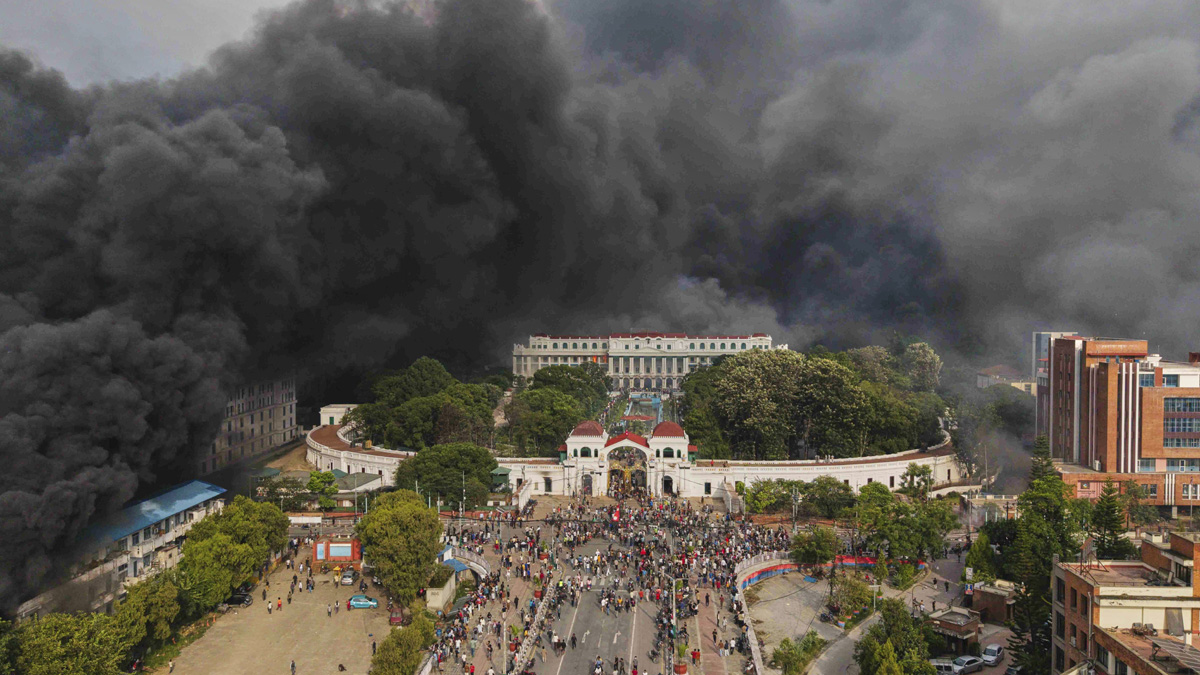
Nepal’s Bureaucracy Struggles with Damaged Workspaces After Protests
Kathmandu, Nepal: With calm returning after the fall of the KP Oli government, Nepal’s bureaucracy is facing a new crisis — the lack of functional infrastructure. Burnt and damaged buildings during the recent protests have forced several key institutions to operate from tents and makeshift arrangements.
“We don’t have proper desks, chairs, or even laptops to complete our assignments,” a mid-level bureaucrat said, reflecting the severe working conditions.
Loss Beyond Buildings
The protests destroyed not only physical structures but also vital records, computers, and equipment, hampering essential services.
The Home Ministry, which was in the middle of constructing a new building, has seen its premises taken over by the Prime Minister’s Office.
The Supreme Court is functioning out of tents, with judges and staff struggling to restore judicial work.
Police offices remain in partial disarray, with locals volunteering to help clean damaged spaces.
Public Response and Expert Concerns
Community members are stepping in to assist. “The damage is so much that all the things in the burnt buildings have gotten carbonised,” said NGO leader Govinda. “Everybody is coming in whichever capacity they can to help around.”
Experts, however, warn that without functional infrastructure, Nepal’s administrative recovery could stall, even with political stability returning.“
You can have a government in place, but without basic facilities, bureaucratic machinery cannot function effectively,” noted a Kathmandu-based governance analyst.
Discover more from News Tap One
Subscribe to get the latest posts sent to your email.

