
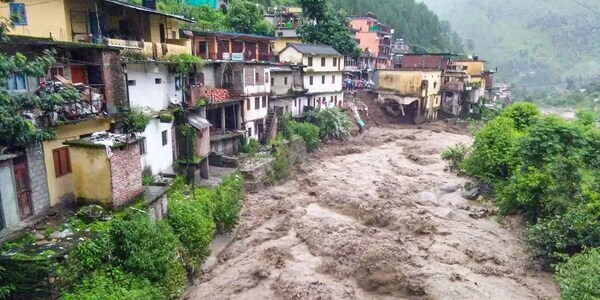
Deadly Cloudbursts Uttarakhand: Flash Floods Wreck Kangra and Kullu Villages.
June 26, 2025 | Kangra, Himachal Pradesh
Flood Havoc Unleashed After Torrential Rains Lash Mountain Districts
Deadly Cloudbursts Uttarakhand Trigger Widespread Destruction in Himachal
Multiple cloudbursts battered Himachal Pradesh’s Kangra and Kullu districts early Thursday morning.
Torrential downpours triggered flash floods that claimed two lives and left over 20 people missing.
The incident follows an increase in extreme weather events across North India’s mountainous belt.

In Kangra, the Manuni Khad area suffered severe flooding after a sudden cloudburst.
The water swept through a hydroelectric project site, affecting nearby labour colonies.
Emergency services arrived quickly, launching rescue operations and alerting downstream communities.
Flash Floods Overwhelm Kangra’s Infrastructure
The force of the floodwaters destroyed homes, blocked roads, and snapped electricity supply in parts of Kangra.
Rescue teams recovered two bodies downstream near Dharamshala’s power project.
Several other individuals were swept away in the darkness before daybreak.
Eyewitnesses described scenes of chaos as water surged through the valleys.
Many residents fled their homes without belongings, fearing structural collapse.
Displaced families sought refuge in temporary shelters set up by district authorities.
Deadly Cloudbursts Uttarakhand Wreck Kullu’s Remote Villages
In Kullu, Banjar, Sainj, Gadsa, and Manikaran valleys faced simultaneous cloudbursts around midnight.
Houses collapsed under the pressure of water and mud.
Bridges across narrow streams gave way, leaving villages cut off from emergency services.
Local roads vanished beneath rushing streams of muddy water.
In Sainj, families reported three people missing while retrieving belongings from rising water levels.
The Parvati River rose sharply, threatening nearby habitations.
Emergency Crews Respond with Speed
Teams from NDRF, SDRF, and local police began rescue and relief missions at first light.
They used boats, ropes, and drones to navigate submerged paths and locate missing individuals.
Evacuations continued throughout the day, prioritizing the older people, children, and the injured.
District officials confirmed the rescue of five workers from Kangra’s submerged labour camp.
Several more remain missing, prompting divers to scan riverbeds and forest edges.
All administrative leaves were canceled to reinforce manpower on the ground.
Rivers Breach Danger Marks Amid Continuous Rainfall
The Beas, Brahmaganga, Gomti, and Satluj rivers crossed safe limits across multiple regions.
Pandoh Dam authorities opened floodgates to ease water pressure.
A bridge collapsed in Baladhi, cutting access to remote hamlets on both banks.
Vehicles parked along the Beas were washed away within minutes.
Water also entered houses and farmlands, causing significant property loss.
Power outages and network disruptions added to the communication challenge.
Deadly Cloudbursts Uttarakhand Raise Evacuation and Health Concerns
Residents from low-lying areas were shifted to safer zones by afternoon.
The local administration provided drinking water, blankets, and sanitation kits at temporary camps.
Medical teams treated cases of hypothermia, minor injuries, and anxiety.
Many affected families are migrant workers who lost essential documents and savings.
District collectors assured compensation and support once immediate rescue efforts end.
Relief camps in Rehla Bihal and Nagnu remained overcrowded by evening.
Himachal Issues Weather Alerts and Prepares for More Rain
The Indian Meteorological Department (IMD) issued an orange alert for the next 48 hours.
They warned of additional rain, especially in hilly and flood-prone zones.
Authorities advised against trekking, rafting, and river-side travel until further notice.
Public announcements in local dialects urged residents to avoid flooded trails and unstable slopes.
Schools and tourist camps were shut as a precaution.
Landslide-prone roads remain under constant monitoring.
Long-Term Measures Planned to Tackle Flooding
This disaster underscores the urgency of climate adaptation in fragile Himalayan ecosystems.
State officials proposed climate-resilient housing near floodplains and stricter zoning laws.
Early-warning sirens and AI-based weather monitoring systems will be expanded to all districts.
Himachal’s disaster authority also plans new training for village-level emergency response volunteers.
More investment will go into slope stabilization and riverbank reinforcement.
These steps aim to reduce loss during similar extreme weather events in future years.
Final Word on Deadly Cloudbursts Uttarakhand
The Himachal floods reflect a rising trend of climate-driven disasters in India’s northern states.
From cloudbursts to glacial lake outbursts, vulnerable communities need stronger infrastructure and early warning tools.
This week’s tragedy serves as a wake-up call to prepare before nature strikes again.
Read more : Emergency Lessons India: Shah Urges Youth to Protect Democracy.
Discover more from News Tap One
Subscribe to get the latest posts sent to your email.
