
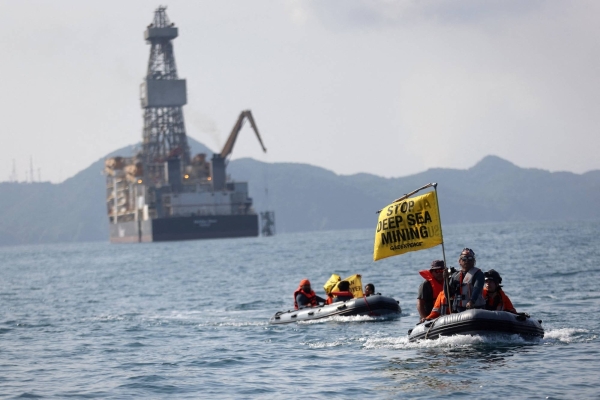
UN Slams Trump’s Deep-Sea Mining Drive as Threat to Global Ocean Governance

ISA warns US move outside international law could harm marine ecosystems and undermine decades of global cooperation
The United Nations has expressed alarm at US President Donald Trump’s move to accelerate deep-sea mining outside American territorial waters without international sanction.
Leticia Carvalho, the head of the International Seabed Authority (ISA), cautioned that any nation cannot exploit deep-sea minerals unilaterally under international law set by UNCLOS.
She stressed that this provision is binding on all nations, even those such as the United States that have not ratified the UN Convention on the Law of the Sea.
UNCLOS established in 1982 considered international waters to be common human heritage and brought forth ISA with an aim of allowing equitable as well as safe utilisation of world ocean resources.
While being a non-signatory to it, America used to promote ISA for years. The uncharacteristic switch has raised many questions among worldwide leaders and researchers equally.
The Trump government wishes to extract precious nodules high in minerals such as cobalt and nickel at the bottom of the ocean, escaping multilateral control.
It is done under the cover of an old, little-used piece of American legislation, which has been criticized by countries like France and China, who prefer a common legal regime.Carvalho described the action as “unexpected,” particularly after Washington had taken a positive role in ISA initiatives for over three decades until recently.
She explained such autonomous choices “establish a risky precedent,” undermining the stability and equity of global ocean governance and cooperation.
ISA is busy making sure there are clear rules striking a balance between economic interest and the imperative of safeguarding delicate underwater environments from permanent harm.
Carvalho emphasized that obeying global guidelines guarantees safer exploration, tighter international relationships, and long-term security for investors and marine flora and fauna alike.
Discover more from News Tap One
Subscribe to get the latest posts sent to your email.

