
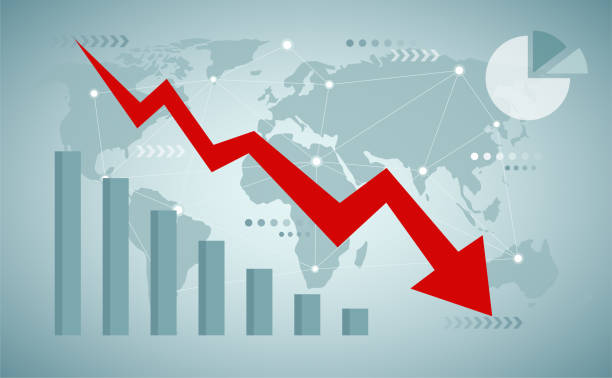
Trade Wars Threaten Global Prosperity

Global Recession Risks Surge Amid Tariffs and Trade Tensions
The global economy is now facing a severe risk of recession after a geopolitical/economic shock and trade policies that have forced businesses to have greater caution. Today’s release of multiple expert reports, market conditions, and institutional forecasts show the degree of concern for a slowdown in growth across the world’s major economies.
Key Factors Influencing Recession Risk:
1) U.S. Trade Policies and Tariffs
The foundational source of rising recession risks is the disruption in global trade flows because of the steep planned new U.S. trade tariffs. The U.S. government, under President Donald Trump, instituted a 145% tariff on imports from China and a 10% tariff on imports from other countries. This change completely disrupted global trade flows.
The vessel arrivals into the Port of LA have decreased nearly 30% from last year. Bookings of containers from China have decreased approximately 45% as of mid-April 2025. Protectionist policies are driving supply chain disruption, increasing input and production costs, and effectively reducing consumer purchasing power, which together are undermining recession risk prospects.
2) Decline in Business Confidence and Investment.
Major US retailers like Walmart and Target warned there would be rising supply chain costs that would lead to price shifts for consumers. Businesses orders are declining, corporate investment is slowing, and consumer confidence indexes are sharply lower.Companies are unwilling to invest in an uncertain environment which worsens the prospects of economic contraction.
3) Global Economic Projections
The International Monetary Fund (IMF) lowered its outlook for global growth in 2025 to 2.8% and highlighted worsening trade relationships and increasing volatility in its assumptions. JPMorgan Chase raised its likelihood of a global recession to 60%, based on trade disruptions and a weaker investment backdrop.
4) European Concerns
Francois Villeroy de Galhau of the European Central Bank (ECB) criticized the U.S.’s tariffs and noted that protectionism is harmful to the economy in the U.S. and globally. The ECB said they still have the option of gradual rate cuts to generate economic activity, with inflation falling and weak growth in the Eurozone.
Market Movements
Wall Street moved toward a modest decline today as S&P 500, Dow Jones Industrial Average, and the NASDAQ futures dropped by approximately 0.1%-0.2%. There was similar cautious trading across Asian-Pac indices and European markets. The market has become decidedly more risk-averse, as money is being transferred toward traditional safe-haven assets. Such assets include gold which has fluctuated in price.
The most recent developments suggest that the global economy will struggle in the coming quarters. Tariffs are on the rise, trade is disrupted, business investment is falling, and consumer sentiment remains muted, all implying a higher likelihood of downturn into a recession in 2025. Policymakers across the globe are being urged to maintain stability, lessen protectionism, and foster economic cooperation, in order to avoid a prolonged global recession.
Discover more from News Tap One
Subscribe to get the latest posts sent to your email.