
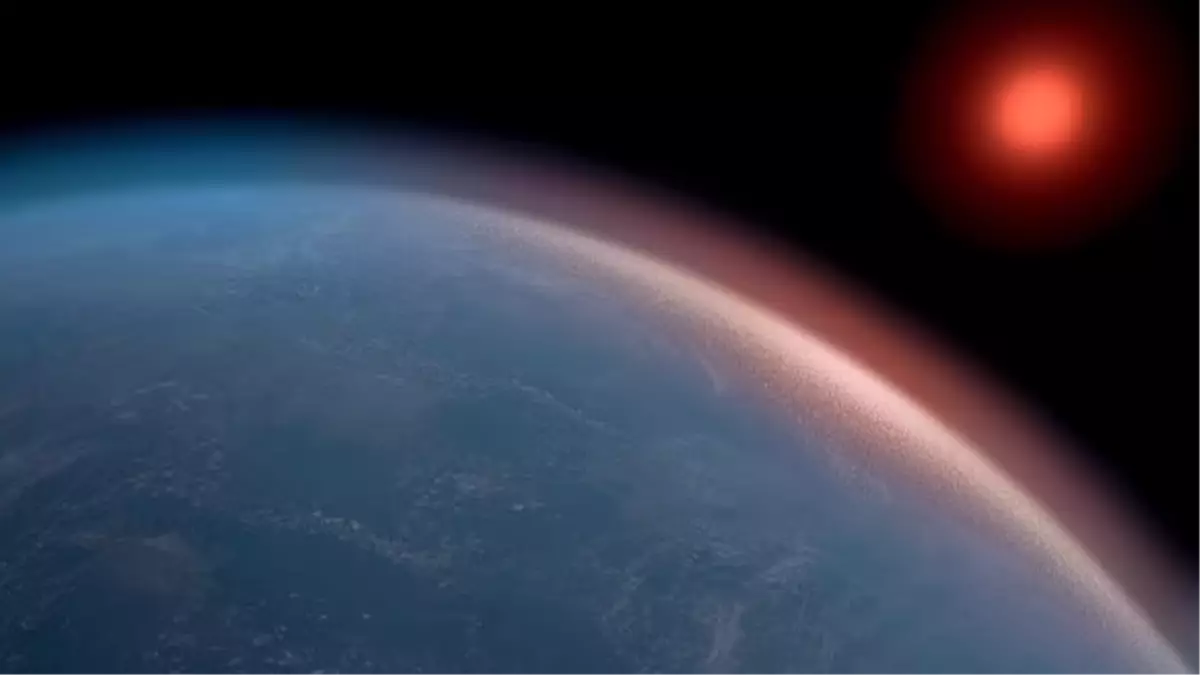
Life Beyond Earth? K2-18b Offers New Hope

The James Webb Space Telescope uncovers compelling biosignatures in K2-18b’s hydrogen-rich atmosphere.
The hunt for life beyond our planet took a major step forward based on the recent chemical signatures on an exoplanet known as K2-18b. The planet is roughly 124 light-years away in the constellation of Leo. It has been verified that K2-18b has a characteristic atmosphere with possible life-related molecules that form in its atmosphere. Thus, K2-18b is one of the most promising exoplanets for extraterrestrial life, so far.
Discovery and Observation
K2-18b was originally discovered in 2015 by NASA’s Kepler Space Telescope (K2 mission). In 2023–2025, observing with the James Webb Space Telescope (JWST) produced game-changing results surrounding the planet’s atmosphere.
The Hubble Space Telescope First detected water vapor in K2-18b’s atmosphere. Later, the James Webb Space Telescope conducted a spectroscopic analysis of K2-18b’s atmosphere. The analysis indicated the presence of dimethyl sulfide (DMS) and dimethyl disulfide (DMDS)—chemicals. On Earth, these compounds are produced exclusively by biological organisms, especially marine microorganisms like phytoplankton. This discovery confirmed the possibility of life on K2-18b.
Characteristics of K2-18b.
The distance of K2-18b from Earth is 124 light-years. Location of the planet is in Constellation Leo. Planet Type is a Hycean (Hydrogen + Ocean) planet. The Mass of K2-18b is 8.6 times Earth and Size is 2.6 times Earth’s radius. Its Star is Red Dwarf Star (K2-18) and Its Orbital Period is 33 Earth days. Atmosphere Composition is Hydrogen-rich with potential clouds.
What Are Hycean Planets?
Hycean planets are a new class of exoplanet that has been theorized. They have Hydrogen-dominated atmospheres with Possibility of oceans under thick gaseous layers.
K2-18b satisfies the criteria, suggesting it may host global oceans which are necessary for life.
Key Discoveries
Dimethyl Sulfide (DMS) – On Earth DMS is nearly exclusively produced by marine microbes, primarily phytoplankton.
Dimethyl Disulfide (DMDS) – Also biologically related.
Carbon Dioxide (CO₂) and Methane (CH₄) – Important greenhouse gases that can stabilize temperature for habitability.
DMS and DMDS detection has 99.7% confidence, but follow-up to verify is needed.
Why Does This Matters?
These are the strongest biosignatures found on an exoplanet. If confirmed, this would be the first scientific evidence of extraterrestrial life—even if it is microbial. The discovery then proves life could be common, and exist in many habitats throughout the universe.
Future Missions and Research
Scientists will follow-up studies using:
- JWST’s NIRSpec and MIRI instruments
- Ground-based telescopes (i.e. ESO’s Extremely Large Telescope)
These Missions will aim to Re-Confirm molecular existence. Determine temperature and the depth of the ocean. It will also determine whether a non-biological process could explain their formation.
Worldwide Response
The find has received widespread media attention to-the BBC, Al Jazeera, Reuters and The Guardian. Scientists and space agencies around the world are calling it a “milestone in astrobiology.”
K2-18b is a paradigm change in the search for life beyond Earth: The James Webb Space Telescope has revealed evidence of biological activity on K2-18b prompting the scientific community to consider the possibility of a historic discovery. As technology and observations improve, K2-18b may provide an answer to one of humanity’s great questions: “Are we alone in the universe?
Discover more from News Tap One
Subscribe to get the latest posts sent to your email.
