
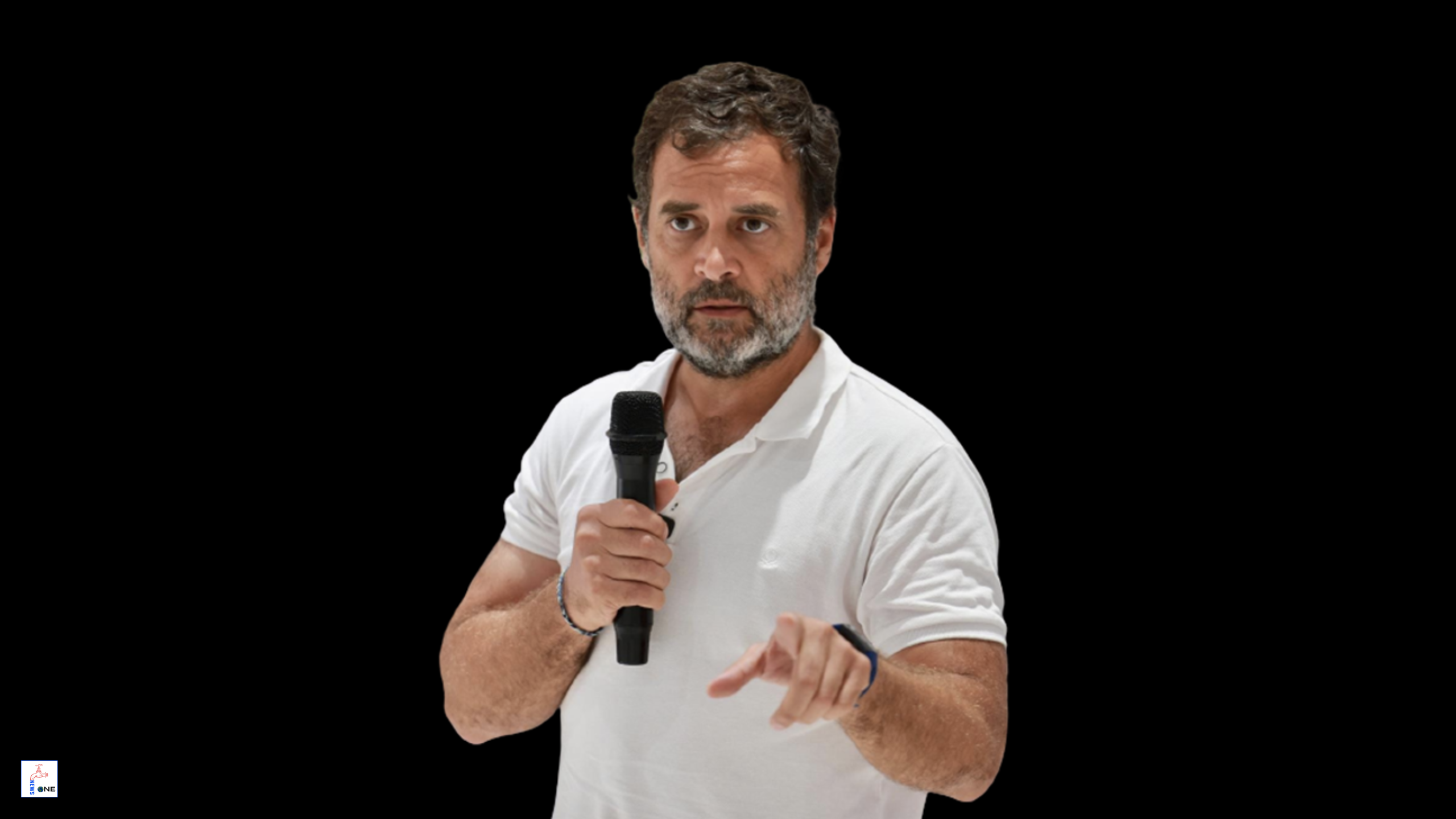
Rahul Gandhi Sparks Debate by Labelling Muslim League as ‘Completely Secular’: Controversy Erupts Over Political Alliance
Washington, DC – In response to a question regarding the Congress party’s alliance with the Indian Union Muslim League (IUML) in Kerala, Congress leader Rahul Gandhi reaffirmed the secular nature of the Muslim League and emphasized the absence of any non-secular elements within the party. Rahul Gandhi addressed concerns raised about the Congress party’s partnership with the IUML. He stated, “The Muslim League is a completely secular party, and there is nothing non-secular about the Muslim League.”
Rahul Gandhi’s defense of the Congress party’s alliance with the Indian Union Muslim League (IUML) raises legitimate concerns and invites criticism. By asserting that the Muslim League is a completely secular party with nothing non-secular about it, Gandhi appears to overlook the historical context and controversial aspects associated with the IUML.
Firstly, it is important to acknowledge that the IUML has been primarily formed to represent and advocate for the interests of the Muslim community in India. While it is essential to have parties that represent minority groups, aligning with a party that explicitly identifies with a particular religious community can raise questions about the Congress party’s commitment to true secularism.
Furthermore, critics argue that the IUML has often been associated with a brand of identity politics that may prioritize the interests of a specific religious community over the larger concerns of the state or the nation. By forming an alliance with the IUML, the Congress party risks being perceived as pandering to sectarian interests rather than focusing on the welfare and development of all citizens.
Additionally, Rahul Gandhi’s assertion that there is nothing non-secular about the Muslim League may disregard instances where the party has been involved in communal or divisive politics. It is crucial to evaluate the actions and statements of political parties beyond their self-proclaimed labels to assess their true commitment to secularism.
Critics argue that rather than forming alliances based on religious or sectarian considerations, political parties should prioritize partnerships that are based on shared ideologies, principles, and goals. By aligning with the IUML, the Congress party opens itself up to criticism that it may be compromising its secular credentials in the pursuit of electoral gains.
In conclusion, Rahul Gandhi’s defense of the Congress party’s alliance with the Indian Union Muslim League has attracted criticism for potentially undermining the party’s commitment to secularism and for raising concerns about prioritizing sectarian interests over the welfare of all citizens. It is important for political leaders to be mindful of the message their alliances send and to ensure that their actions are consistent with their proclaimed principles of inclusive governance.
Discover more from News Tap One
Subscribe to get the latest posts sent to your email.

