
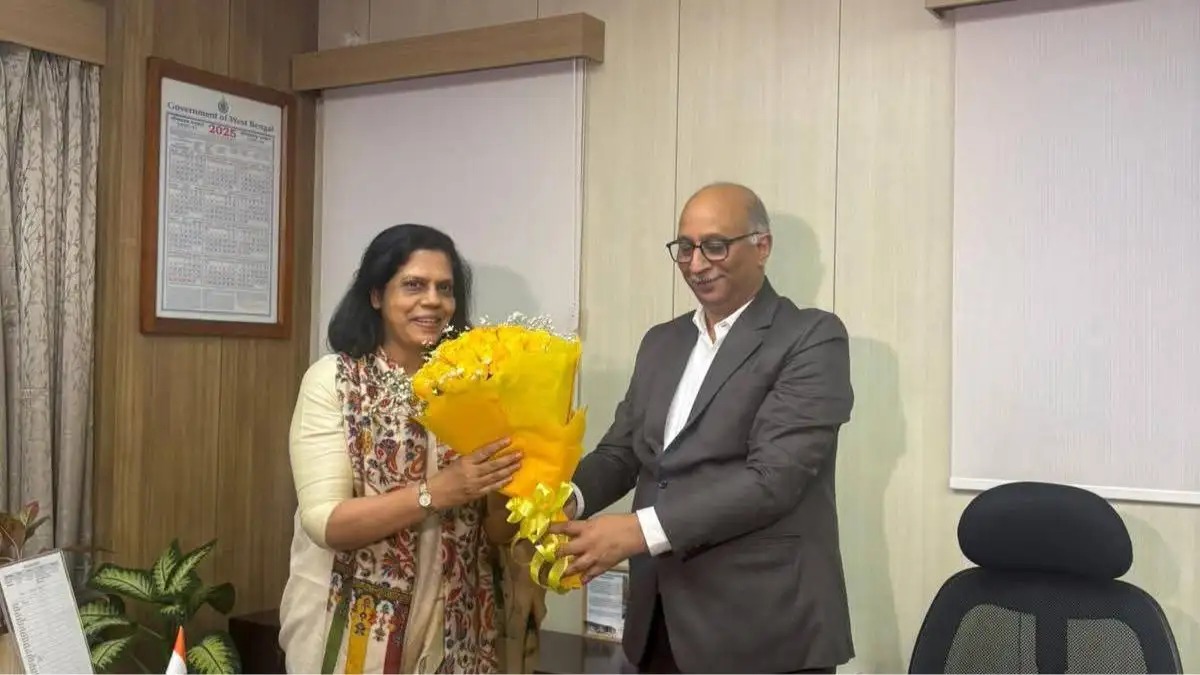
History Made in Bengal: Nandini Chakraborty Becomes First Woman Chief Secretary

History did not arrive loudly that day. It entered the state secretariat quietly, carrying weight, memory, and consequence. Nandini Chakraborty’s appointment as the first woman Chief Secretary was not just an administrative decision. It was an emotional moment shaped by years of conflict, resilience, and calculated patience. Power finally settled where struggle once lived. For many, it felt symbolic. For others, unsettling. For her, it was the culmination of endurance.
Her journey to the top was never clean or linear. Nandini’s career carried sharp turns, uncomfortable pauses, and public controversy. As the Governor’s Principal Secretary, she stood between two power centres that rarely trusted each other. Raj Bhavan and Nabanna pulled in opposite directions. Instructions conflicted. Authority was tested. Every move was scrutinized. When she was finally removed, it felt less like transfer and more like exile. Yet she did not collapse. She waited.
Tourism was her holding ground. A softer department, but not insignificant. There, she stayed disciplined, quiet, and focused. The system often tests loyalty through silence. Then came December 2023. She was handed the Home Department. It was not symbolic. It was strategic. Trust returned slowly, built through control, clarity, and performance. The state watched. She delivered. And the system responded.
Her elevation now carries layered meaning. A woman Chief Secretary working under a woman Chief Minister reshapes the emotional landscape of power. It challenges habits, not laws. It unsettles long-held assumptions inside closed rooms. For young officers watching from below, it redraws ambition. For critics, it sharpens scrutiny. Representation alone is not victory, but it changes the conversation permanently.
Manoj Pant’s exit was equally telling. His term ended, but not his relevance. Extensions had already stretched his tenure. Still, the government chose continuity over rupture. He moved into the role of Principal Secretary to the Chief Minister. Same rank. Same proximity to power. Different chair. It was not removal. It was repositioning. Experience was preserved, not discarded. That decision revealed administrative pragmatism, not sentiment.
Behind this reshuffle stood many silent contenders. Varun Ray, Atri Bhattacharya, Prabhat Mishra. Competent names. Serious expectations. Yet selection is never democratic. It is decisive. When the seal fell on Nandini’s name, others recalculated quietly. Bureaucracy trains officers to swallow emotion publicly. Privately, ambition always leaves scars.
The dominoes fell quickly after. Jagdish Prasad Meena took over the Home Department. Varun Ray moved to Tourism. Files changed desks. Offices changed occupants. Governance adjusted its rhythm without pause. These changes appear routine, yet they reshape policy tone, administrative speed, and political comfort.
Now Nandini Chakraborty stands at the peak. Her past will follow her. Every decision will be judged through memory. Authority magnifies mistakes. But it also amplifies vision. Her success will not be measured by symbolism alone. It will be measured by stability, restraint, and outcomes. History has opened the door. What remains is how she chooses to walk through it.
Discover more from News Tap One
Subscribe to get the latest posts sent to your email.

