
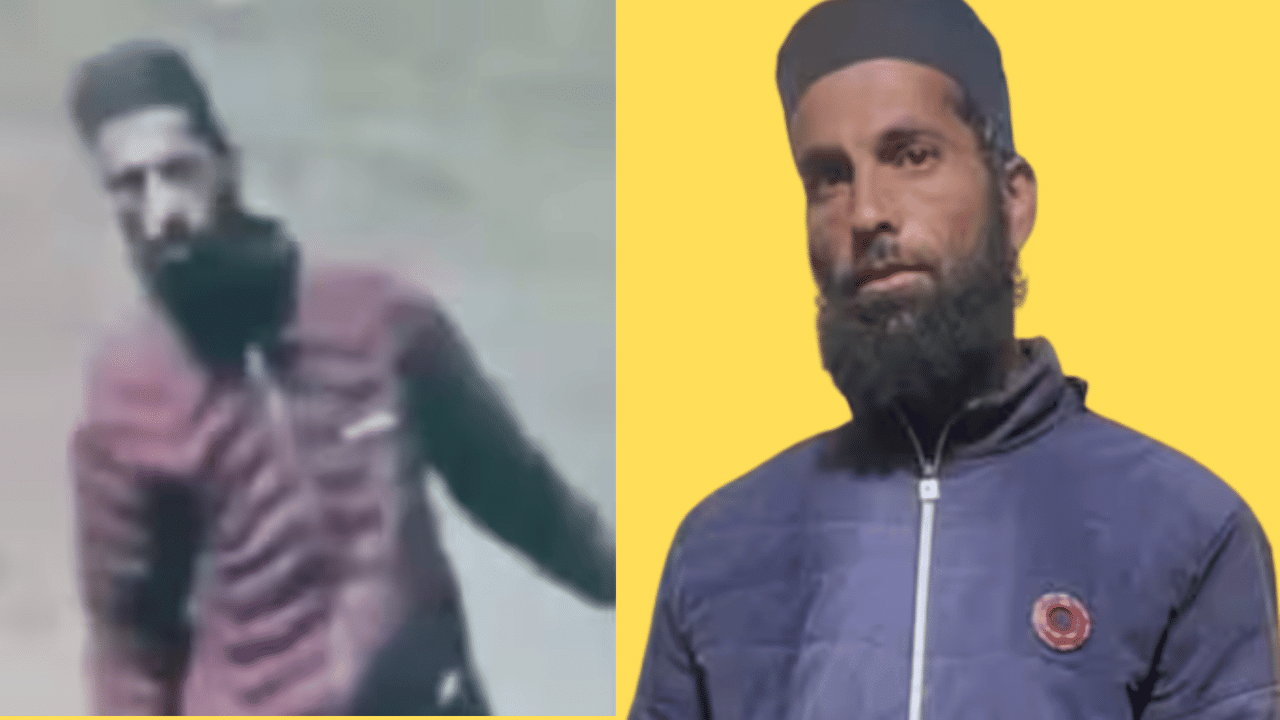
‘It Still Haunts Me’: Abdul Waheed’s Harrowing Account as First Responder to Pahalgam Terror Attack

On the afternoon of April 22, 2025, Abdul Waheed, a 38-year-old head of the Ponywala Association in Pahalgam, Jammu and Kashmir, received urgent calls from local police inquiring about an incident at Baisaran meadow, a scenic tourist spot known as “mini Switzerland.” Unaware of the unfolding tragedy, Waheed sensed something dire from the flurry of calls and rushed to the scene, just three kilometers away, with his brother-in-law, Sajad Ahmad. Arriving before the police, he encountered a horrific sight: 26 people, including 25 tourists and a local ponywala, lay dead or dying in the aftermath of a brutal terror attack. Waheed’s haunting account of the “massacre,” shared in interviews, reveals the profound trauma he endured and the courage he displayed in aiding the injured, while he now pleads for the return of tourists vital to Pahalgam’s livelihood.
The attack, carried out by five to six militants linked to The Resistance Front (TRF), a Lashkar-e-Taiba offshoot, targeted tourists based on their religious identity, with most victims being Hindus. The assailants, emerging from dense pine forests around 1:50 p.m., fired for 10 minutes, leaving 26 dead and 16 injured. Waheed arrived around 3:10 p.m., over half an hour after the gunfire ceased, and described a scene of devastation: bodies strewn across the meadow, women and children crying inconsolably, and survivors pleading for help. “The scene was terrible,” he recalled. “A woman kept begging me to save her husband. When I went near him, I found him already dead. I had no courage to tell her the truth. I only tried to console her and offered water.” Despite his fear, Waheed provided water to the injured and called for more ponywalas to assist in rescuing survivors.
Waheed’s quick response was captured in a viral video, where a distressed survivor referred to him as “the President,” signaling his role as a community leader bringing hope amid chaos. He and other locals, including shawl hawker Sajad Ahmad Bhat, ferried at least 11 injured tourists to safety on ponies and improvised stretchers, navigating the meadow’s treacherous, unmotorable terrain, accessible only by foot or horseback. The remote location, surrounded by deep gorges and pine forests, delayed security forces, who arrived after Waheed, with the nearest CRPF base four to five kilometers away. The Station House Officer (SHO) of Pahalgam and tourist police soon joined, followed by CRPF and Army personnel, who secured the area. Waheed noted initial restrictions by the CRPF, justified due to uncertainty about ongoing threats, but his efforts remained pivotal in the early rescue.
In the days following, Waheed faced repeated questioning by security agencies, including the National Investigation Agency (NIA), which is probing the attack with evidence like a local photographer’s video and an Army officer’s testimony. He clarified that local police knew he arrived only after their call, yet the scrutiny reflects the attack’s high-profile nature, which intensified India-Pakistan tensions and led to measures like the suspension of the Indus Waters Treaty. The attack, the deadliest in J&K since the 2019 Pulwama incident, exposed security lapses, as Baisaran was opened to tourists two months early without informing security forces. Waheed’s emotional toll is evident in his words: “It would have been better to die than to see that scene in the meadow. It still haunts me.”
Beyond his trauma, Waheed expressed deep concern for Pahalgam’s future. The attack devastated tourism, with over 90% of hotel rooms emptying within 24 hours and 48 resorts closing for security reasons. Baisaran, once attracting 1,500 visitors daily and supporting 500 local livelihoods, is now off-limits. “We are nothing without tourists,” Waheed said, echoing the sentiments of locals like Shafi Wani, another pony operator. He and the community, who offered shelter in gurdwaras and free meals to fleeing tourists, are praying for visitors to return. The spontaneous protests across Kashmir, unorganized by political groups, and the J&K Assembly’s resolution condemning the attack as an “assault on Kashmiriyat” signal a unified rejection of terrorism, giving Waheed hope. His actions, alongside those of locals like Bhat, exemplify compassion and bravery, serving as a powerful testament to humanity amidst terror.
Discover more from News Tap One
Subscribe to get the latest posts sent to your email.

