
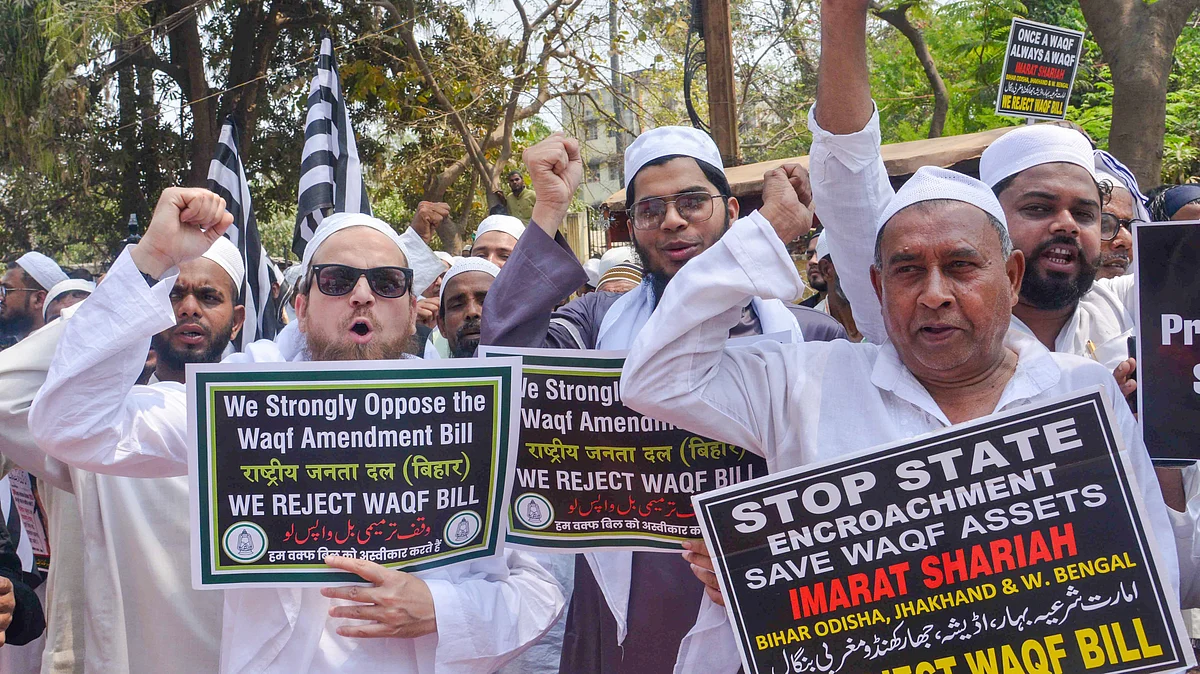
Unrest in West Bengal over the Waqf Act

Mass protests have erupted in West Bengal over the Waqf (Amendment) Act. Political and religious groups opposing the law. Clashes in Murshidabad, internet shutdowns, and Mamata Banerjee’s refusal to implement the law have heightened tensions.
The enactment of the Waqf Act by the Parliament of India in 2025 led to significant protests and dissatisfaction in West Bengal. Especially among the Muslim community. The new law seeks to modify the Management of Waqf Properties with opposition from different political and religious groups contending that the law violates privative rights and religious freedom.
The Key Features of the Waqf (Amendment) Act
Enhanced Government control: The Act gives the federal and state governments more authority to supervise waqf boards, enabling them to keep a careful eye on financial account activities and closely monitor transactions involving waqf properties.
Permitting Non-Muslim participants: The inclusion of non-Muslims on waqf boards, which have historically only included Muslim members, is one of the most controversial clauses.
Improved ownership verification: There are worries that the Act may lead to the mass eviction of long-term tenants because it requires any person or organization claiming ownership of waqf properties to be able to produce substantial legal proof of ownership.
Increased Transparency Measures: The Act requires all waqf properties and financial transactions to be recorded digitally to minimize instances of corruption and mismanagement.
Unrest in West Bengal
On April 10, many thousands assembled at Ramlila Maidan in Kolkata, led by various religious and political leaders, to demand withdrawal of the bill. The protest was organized by the Jamiat-e-Ulema Hind and attended by All India Trinamool Congress (AITC) members, who accused the central government of targeting their own minority communities.
In the Jangipur area of Murshidabad, angry protests broke out, resulting in clashes with police that led to the arrest of 22 people. Some Local authorities imposed Section 144 in some districts, and banned internet access in areas where there was unrest, citing a need to reduce the spread of misinformation and repeat mobilizations.
The Position of the State Government
Mamata Banerjee, Chief Minister of West Bengal, stated she will not implement the Act in the state. She criticized the government at the national level and alleged the law is an effort to meddle in religious affairs and disturb communal harmony.
Though the national government maintains the law is needed for transparency, critics frame it as a threat to religious independence. Tensions are ongoing as protests are up, and there is potential for more to erupt in the coming weeks. The response of the central and state governments at the level of the state of West Bengal will be critical to the evolving situation.
Discover more from News Tap One
Subscribe to get the latest posts sent to your email.

