
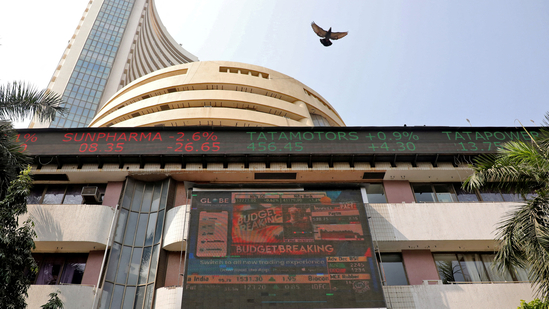
Sensex and Nifty Crash Amid Global Trade War Concerns
New Delhi, April 7, 2025: Indian stock markets witnessed a sharp plunge today as the Sensex and Nifty crash over 4% in early trading. The sell-off comes amidst escalating global trade tensions and fears of a looming recession in the United States. Investors are bracing for what is being termed as “Black Monday” on Dalal Street.
The Sensex and Nifty crash has sent shockwaves across the financial sector, wiping out billions in market capitalization. This sharp decline is being attributed to global factors, particularly the ongoing trade war between the United States and China. Analysts are warning that this could lead to prolonged uncertainty in global markets, impacting Indian investors significantly.

The Market Bloodbath
At the opening bell, the BSE Sensex fell by 3,158 points or 4.19%, settling at 72,206.03. Meanwhile, the Nifty50 index dropped below the critical 21,900 mark, losing 1,010 points or 4.41% to reach 21,893.50. This marks one of the worst declines for Indian benchmark indices in recent history.
Key sectors such as metals, IT, auto, and realty were hit hard:
- Nifty Metal: Declined by 8%.
- Nifty IT: Fell by over 7%.
- Nifty Auto and Realty: Dropped more than 5% each.
The broader market also suffered significant losses:
- Small-cap Index: Down by 10%.
- Mid-cap Index: Slumped by 7.3%.
Major losers included Tata Steel (-10%), Infosys (-6.98%), Tata Motors (-7.86%), and Tech Mahindra (-6.36%). The Sensex and Nifty crash has wiped out approximately ₹19 lakh crore in market capitalization on the Bombay Stock Exchange (BSE) today.
Foreign portfolio investors (FPIs) have been net sellers in Indian equity markets this month, withdrawing ₹10,355 crore due to heightened volatility. Domestic institutional investors attempted to cushion the blow but could not offset the massive sell-off.
Comparative Data
| Index | Opening Value | Points Lost | Percentage Decline |
|---|---|---|---|
| Sensex | 72,206.03 | -3,158 | -4.19% |
| Nifty50 | 21,893.50 | -1,010 | -4.41% |
| Nifty Metal | NA | NA | -8% |
| Nifty IT | NA | NA | -7% |
Global Factors Behind the Crash
The primary trigger for today’s Sensex and Nifty crash was renewed fears of a global trade war following retaliatory tariffs imposed by China on U.S. imports. President Donald Trump’s sweeping tariff proposals last week had already rattled markets worldwide. China responded with a 34% duty on U.S. imports and export controls on rare earth minerals, further escalating tensions.
This tit-for-tat tariff battle has raised concerns about a slowdown in global economic growth:
- U.S. Stocks: Nasdaq plunged by 5.82%, while Dow Jones and S&P 500 fell nearly 6% last week.
- Asian Markets: Hong Kong’s Hang Seng dropped by 10%, Japan’s Nikkei fell by 7%, and Korea’s Kospi declined by over 5%.
Analysts warn that these developments could lead to prolonged uncertainty in global markets. India’s exports to the U.S., which account for only about 2% of GDP, may see limited direct impact but broader repercussions are inevitable.
The Sensex and Nifty crash is also being fueled by fears of tightening monetary policies globally as central banks battle inflationary pressures. The Federal Reserve’s hawkish stance on interest rates has further dampened investor sentiment worldwide.
Investor Sentiment and Recommendations
The Sensex and Nifty crash has left investors worried about their portfolios as market volatility continues to rise. Analysts have identified crucial support levels for both indices that traders should monitor closely:
- Sensex Support Level: Around 71,500.
- Nifty Support Level: Around 22,000.
Key Insights from Analysts
- Sectoral Weakness: Metals and IT stocks are expected to remain under pressure due to global uncertainties.
- Short-Term Strategy:
- Avoid aggressive buying.
- Focus on defensive sectors like FMCG and pharmaceuticals.
- Monitor developments in India–U.S.–China trade negotiations closely.
Recommendations for Investors:
- Diversify portfolios to reduce exposure to volatile sectors.
- Invest cautiously in large-cap stocks with strong fundamentals.
- Wait for clarity on global trade policies before making major investments.
Outlook for Indian Markets
While today’s crash is alarming, experts believe that India remains relatively insulated compared to other Asian economies due to lower tariff exposure. However, uncertainties surrounding global trade policies could continue to weigh on investor sentiment.
Upcoming domestic events such as the Reserve Bank of India’s monetary policy meeting on April 9 and corporate earnings announcements may provide some direction to markets in the short term. Analysts also suggest keeping an eye on macroeconomic indicators like CPI and IIP data scheduled later this week.
Key Takeaways:
- Sensex and Nifty experienced their steepest fall in months.
- Global trade tensions are the primary cause of today’s bloodbath.
- Investors should adopt a cautious approach amid heightened volatility.
As markets reel under pressure from international developments, all eyes will be on policymakers’ next steps to stabilize sentiments globally and domestically.
The Sensex and Nifty crash serves as a reminder of how interconnected global economies are today. Investors must remain vigilant about international developments while focusing on long-term strategies to navigate such turbulent times effectively.
Also Read: Kancha Gachibowli Forest: A Battle Between Development and Conservation
Discover more from News Tap One
Subscribe to get the latest posts sent to your email.
