
West Bengal’s 4,133 Zero-Enrolment Schools: What Happens Next?

Kolkata: The future of thousands of schools in West Bengal has come under scrutiny after data from the Unified District Information System for Education Plus (UDISE+) showed that 4,133 schools in the state reported zero student enrolment during the 2025–26 academic year. The figure accounts for a substantial majority of the 5,663 zero-enrolment schools recorded across India.
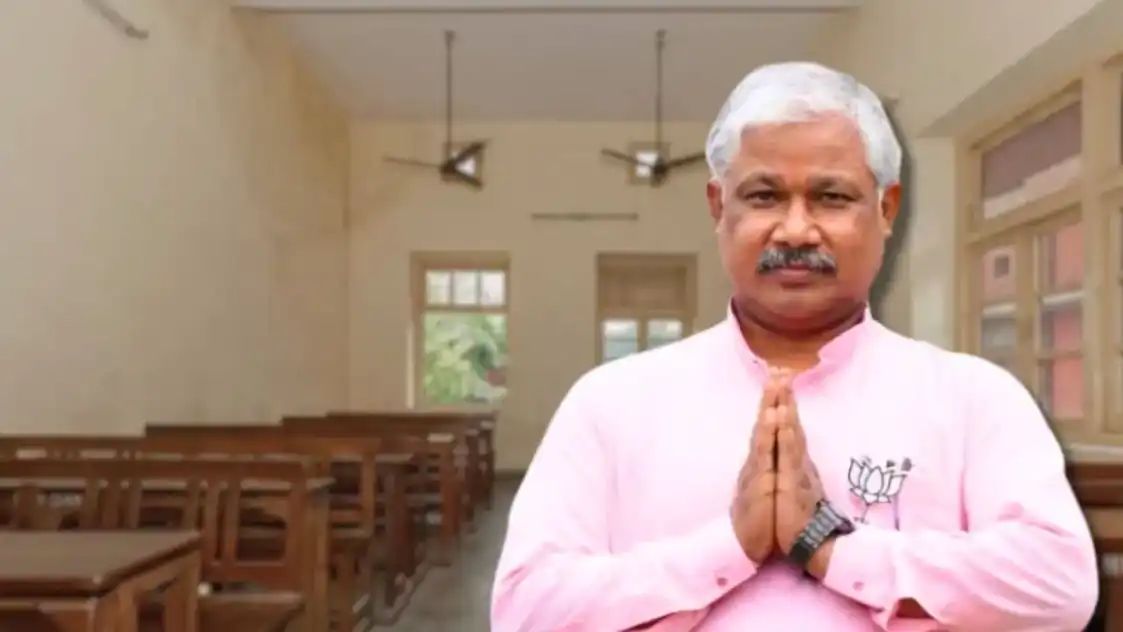
The data triggered questions over whether the state government was preparing to shut down a large number of schools with no students. However, School Education Minister Dipak Barman has clarified that the figure should not be interpreted as a list of schools that are set to be closed.
According to the minister, discrepancies in data uploaded to the UDISE+ portal may have contributed to the unusually high number. He said some private schools had updated information relating to teachers but had not properly entered student-enrolment details, resulting in certain institutions being recorded as having teachers but no students.
UDISE+ is the Union Ministry of Education’s official school-education data system. Recognised schools submit information through the platform on areas including student enrolment, teachers, infrastructure and other institutional details. The information goes through administrative validation before being compiled into national and state-level datasets.
In view of the discrepancies, the state government has decided that the schools reporting zero enrolment need to be physically verified before any decision is taken about their future. District-level committees headed by the respective district magistrates have been tasked with examining the schools and assessing their land, buildings, infrastructure and physical condition.
The verification process is also expected to determine whether individual schools can be revived or whether their existing infrastructure could be put to other public uses. According to reports, possible uses include training centres, healthcare-related facilities, animal-resource facilities and other community infrastructure, depending on local requirements.
The government has also drawn a distinction between the 4,133 schools appearing in the UDISE+ data and the 933 government-aided schools that are currently being examined more closely for having remained without students for an extended period. The state has indicated that the latter group contains properties whose land and buildings may have remained unused despite continuing to exist as institutional assets.
The issue has also brought attention to the uneven distribution of teachers across West Bengal’s school system. According to the UDISE+ figures, 19,502 teachers were associated with the 4,133 schools reporting zero enrolment. At the same time, 6,769 schools were reported to have only one teacher each, collectively serving around 2.29 lakh students.
The state government has said that teacher rationalisation is being considered to address such disparities, including shifting teachers from institutions with surplus staffing to schools facing shortages. Recruitment is also being pursued to address vacancies.
The situation therefore involves more than simply deciding whether schools with no students should be closed. It raises questions about changing enrolment patterns, the utilisation of public assets, teacher deployment and the accessibility of schools in different parts of the state.
For now, the government’s position is that the 4,133 figure should not be treated as a confirmed list of schools facing closure. Physical verification and subsequent administrative assessments will determine the future of individual institutions.
The debate is likely to continue as the state examines whether schools with genuinely zero or persistently low enrolment can be revived, merged or repurposed while ensuring that existing students continue to have access to adequate educational facilities.
Discover more from News Tap One
Subscribe to get the latest posts sent to your email.
