
Mirza Ghalib Street Fire: Leaseholder Arrested, Fire-Safety Probe Widens

The probe into the deadly Mirza Ghalib Street hotel fire has entered a pivotal phase, with Kolkata Police arresting Abu Zafar, the leaseholder of Hotel Shikha Inn, where the fire broke out early Wednesday. Two hotel staff members have also been detained for questioning, while the original owner, Bireshwar Mitra, is reportedly still absconding. The arrest comes after a fire in the five-storey building claimed nine lives, including a four-year-old child, and injured six others.
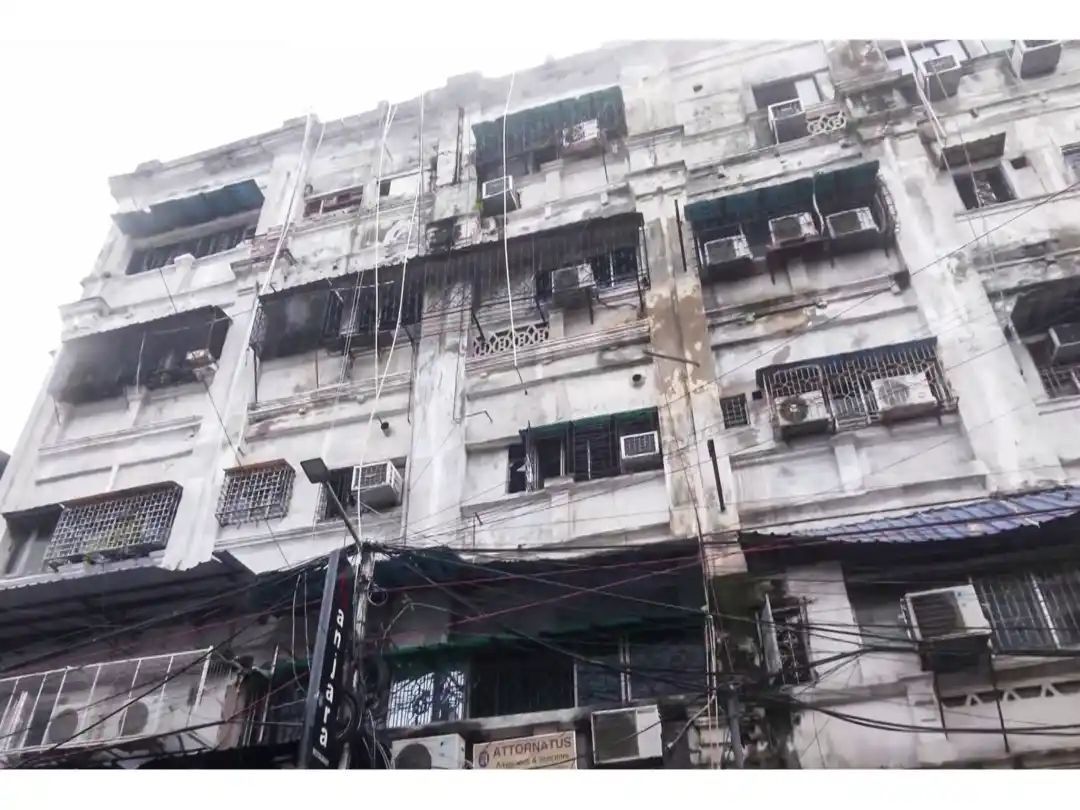
The blaze broke out at around 1:45 to 2 am on August 19 in the congested building on Mirza Ghalib Street near New Market, which housed several hotels and guesthouses. Around 60 people were rescued during the operation. Five of those killed have been confirmed as Bangladeshi nationals, including four members of the same family, according to the Bangladesh Deputy High Commission in Kolkata.
The immediate focus of the investigation is now on what caused the fire and whether safety failures turned a fire into a mass-casualty disaster. A five-member Special Investigation Team has been assigned to examine the incident. A preliminary forensic examination has reportedly pointed towards an AC unit at the third-floor reception area as a possible source of the fire. Investigators reportedly found damage around the unit’s wiring or service port before electrical cables began bursting and flames and smoke spread. This remains a preliminary forensic finding and should not yet be treated as the final cause of the fire.
The nature of the deaths has made the authorities probe deeply into the safety arrangements of the hotel. Preliminary post-mortem findings indicate that victims suffered smoke inhalation and asphyxiation, rather than dying primarily from burns. Reports have also highlighted cramped rooms, inadequate ventilation and narrow access routes inside the building, all of which could have made escape more difficult once thick smoke filled the premises.
One of the striking details to emerge is the size and layout of Shikha Inn. The hotel reportedly occupied only around 1,100 square feet but had been divided into five small rooms. Investigators are examining whether the premises had adequate emergency exits, ventilation and other mandatory safety arrangements for operating as a hotel. These details have raised a larger public concern that even if an electrical fault triggered the fire, could the deaths have been prevented if the building had adequate fire-safety infrastructure?
The authorities’ response has already extended beyond Shikha Inn. The West Bengal Fire Services Department has issued show-cause notices to 13 establishments ; nine hotels and four restaurants in the area over alleged non-compliance with fire-safety requirements. The establishments have reportedly been asked to respond within 24 hours, with further action awaiting, depending on the findings.
The wider inspection raises another important issue for Kolkata, as to how many other hotels and guesthouses operating in densely populated commercial areas are actually complying fully with fire-safety rules? The state has indicated that hotels, lodges and guesthouses will undergo broader scrutiny following the tragedy. The exercise is expected to examine permits, fire licences and safety infrastructure rather than focusing only on the building where Wednesday’s fire occurred.
The tragedy has also shed light to the building’s multiple-hotel arrangement. Several establishments reportedly operated from different parts of the same structure, making evacuation more complicated. In a fire, the danger is not determined only by where flames originate but by multiple factors such as smoke movement, stairway access, locked or obstructed exits, room configuration and the number of people occupying the premises can determine whether people are able to escape. Preliminary reporting has already raised concerns about these factors, although the SIT investigation will have to find out which specific deficiencies were present and whether they contributed directly to the deaths.
The arrest of Zafar is therefore an important development, but it does not mean that investigators have established him as the person responsible for the fire or the deaths. He is the leaseholder being investigated in connection with the incident. Police are also questioning two staff members, while efforts are reportedly continuing to locate the original owner. The legal responsibility of each person will depend on evidence gathered during the investigation and subsequent proceedings.
There is also a humanitarian and cross-border dimension to the tragedy. The area around Mirza Ghalib Street is frequented by Bangladeshi visitors, often including people travelling to Kolkata for medical treatment. Five Bangladeshi nationals have been confirmed among the casualties, including four members of one family, while six injured Bangladeshi nationals have reportedly been discharged. The deaths have consequently affected not only Kolkata’s local community but families across the border who came to the city in search of better healthcare facilities.
For citizens, the tragedy has raised questions that go beyond the fate of one hotel. Were the necessary fire clearances in place? Were inspections conducted regularly? Were emergency exits and ventilation systems adequate? How were multiple hotels allowed to operate within such a compact structure? And why does enforcement appear to have intensified only after lives were lost? These are questions that the ongoing investigation and the wider safety audit will need to address with evidence rather than political claims.
The administration’s decision to scrutinise 13 nearby establishments is significant because it could determine whether the Mirza Ghalib Street tragedy was an isolated failure or a consequence of a bigger problem in Kolkata’s hospitality architecture. A safety audit will hold some significance only if violations are followed by concrete action, including redressal of grievances wherever necessary, correction of deficiencies and regular follow-up inspections.
Presently, the SIT investigation, the forensic findings, the leaseholder’s arrest and the fire-safety notices represent the primary major steps towards accountability. But the final answers are supposed to emerge from the evidence; what triggered the blaze, what allowed it to spread so rapidly, whether mandatory safeguards were missing or inadequate, and whether any failures could have prevented nine deaths. Until those questions are conclusively answered, the Mirza Ghalib Street fire remains not just a tragedy, but a warning about the consequences of weak fire-safety enforcement in Kolkata’s densely packed residential architecture.
Discover more from News Tap One
Subscribe to get the latest posts sent to your email.

