
“Paltano Darkar”: BJP’s Call for Real Change Aims to Reshape Bengal Politics
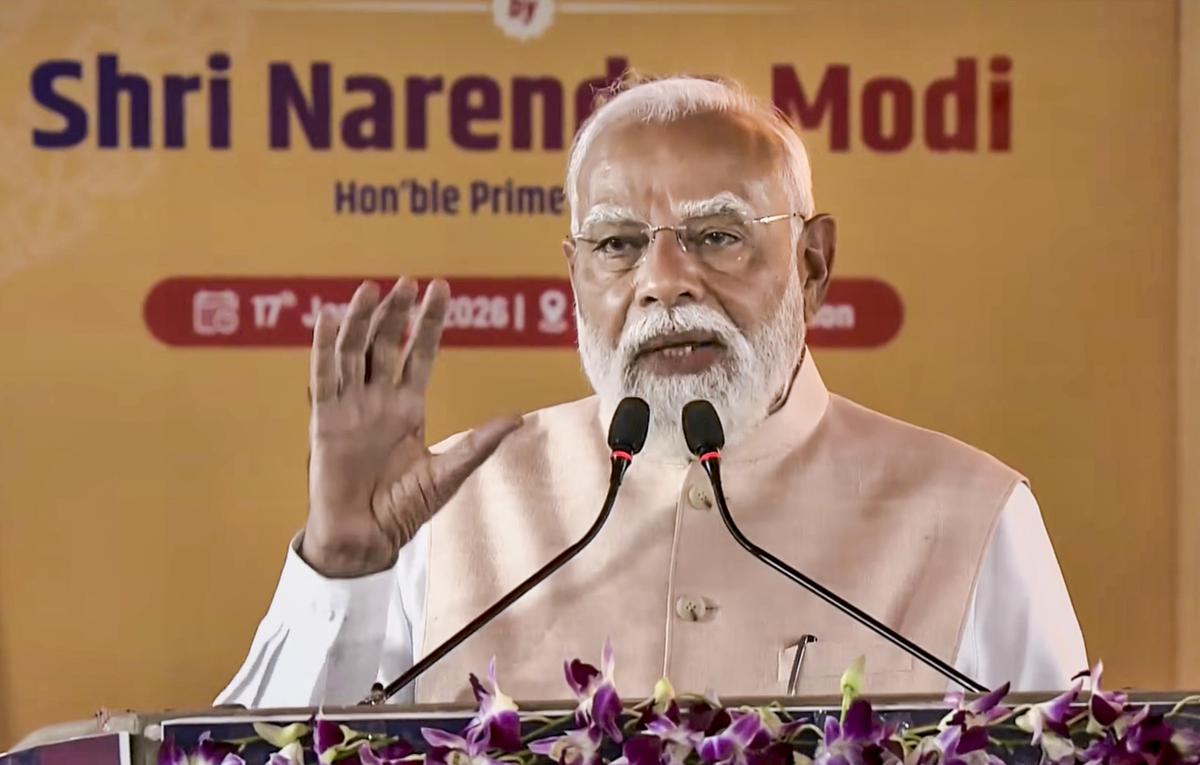
Prime Minister Narendra Modi on January 17, 2026, from the politically significant district of Malda in West Bengal, formally sounded the bugle for the BJP’s 2026 Assembly election campaign, delivering a sharp and emotionally charged “battle cry” — “Paltano darkar, chai BJP sarkar” (Need change, want a BJP government). The slogan was given to a huge crowd in Bengali, which presented the impending election as a turning point to the state, as a choice between what Modi termed as the misrule, corruption, and syndicate culture of the sitting Trinamool Congress (TMC) and the coming BJP promise of “asli poriborton” or real change through development and good governance.

By claiming that the Mamata Banerjee-led government had prevented access of central welfare schemes like housing, free rations and Ayushman Bharat to the poor, Modi charged that corruption and systematic extortion had brought governance in Bengal to its knees. Illegal infiltration was another theme of his assault which he argued had changed the demographic makeup of the state and led to unrest in some of the border states such as Malda and Murshidabad and made the issue a social and national security issue. In an attempt to strengthen belief in the BJP prospects, the Prime Minister referred to the recent electoral victories in Bihar, Odisha, and Brihanmumbai Municipal Corporation elections which, according to him, indicated the increasing popular confidence in the BJP development model and that Bengal had now come into its turn. The rally that also saw the launch of India first sleeper trains in the name of Vande Bharat was a combination of political speech and massive infrastructural promotions, highlighting the ambition of the BJP to connect governance and connectivity and development as its campaign platform. The Malda speech was an unmistakable intensification by the BJP in its campaign to unseat the TMC in the 2026 West Bengal Assembly election which was a high-stakes election.
Inner Meaning and Political Messaging
There is a very dark political undertone to the slogan, “Paltano darkar, chai BJP sarkar”, which is designed so that the anger of people in West Bengal will be directed towards a concise action that will bring a change. Fundamentally, the expression is a straight out attack on the previous commitments of Trinamool Congress on puriborton, implying that the transformation that has been brought about over the years is partial or inefficient. Together with the pledge of “asli poriborton” or actual change, the BJP frames itself as being able to not only give the state a change of power, but also an entire transformation of how governance and politics is conducted in the state.
Reason Influences behind the Slogan
The slogan plays to the ongoing problems that the BJP continues to emphasise on, such as claims of corruption like cut money and syndicate-run extortion that has undermined the reputation of the ruling party in the minds of most voters. It is also based on arguments that the state government has impeded the central welfare programmes such as housing, free rations and health insurance reflecting the kind of governance being a political one and not in the interest of the people. Fears of unlawful intrusion and law and order issues particularly in areas such as Malda and Murshidabad contribute further to the BJP story of insecurity and administrative ineffectiveness.
The slogan serves as a rallying cry because it connects these problems with the promise of development, infrastructure development, and stability, and is an effort to regroup all these various grievances into one political change cry.
Discover more from News Tap One
Subscribe to get the latest posts sent to your email.
