
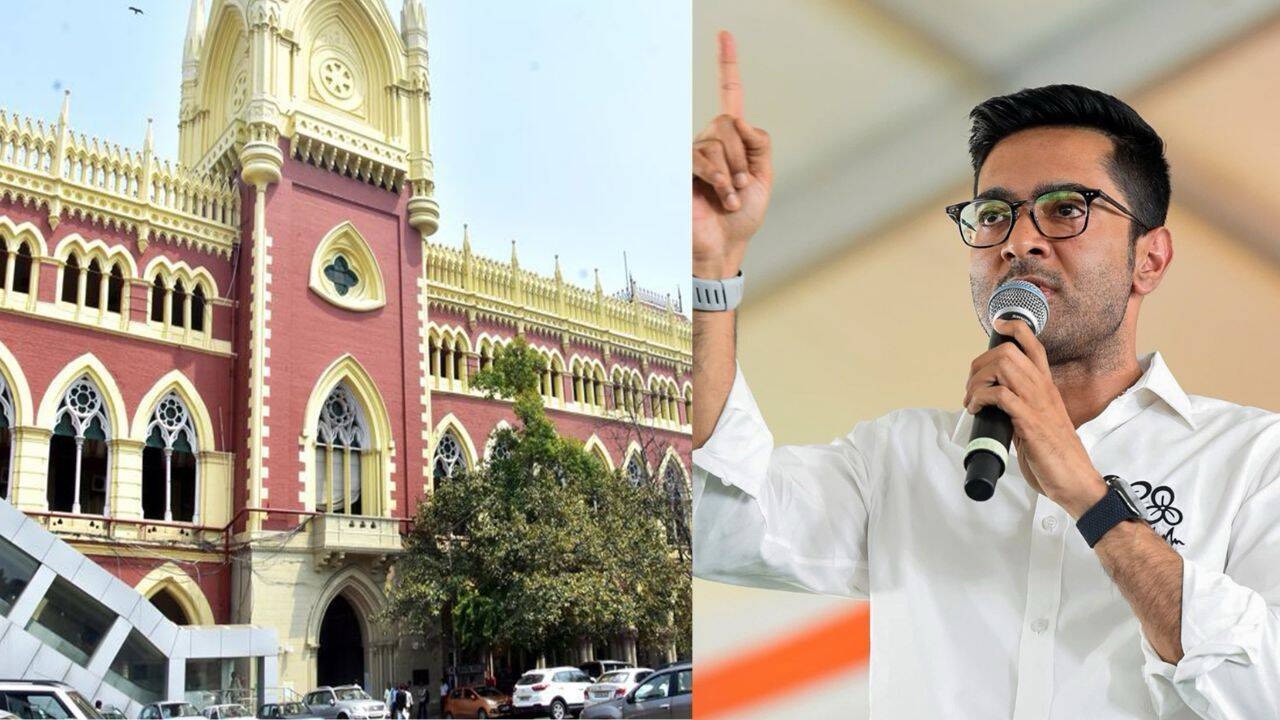
Calcutta High Court Upholds Abhishek Banerjee’s Overseas Travel for Eye Treatment

Kolkata, August 26, 2026: The Calcutta High Court has declined to restrain Trinamool Congress national general secretary and Diamond Harbour MP Abhishek Banerjee from travelling abroad for medical treatment, effectively allowing him to proceed with the overseas eye treatment already authorised by the Supreme Court.
The development came after the West Bengal government sought restrictions on Banerjee’s foreign travel while investigations in several cases against him remain pending. Justice Saugata Bhattacharyya, hearing the matter on Tuesday, refused to grant the state’s request to keep the TMC leader within Bengal. The court’s position is in line with the Supreme Court’s August 10 order permitting Banerjee to travel abroad for three weeks for eye surgery or treatment.
The legal battle over Banerjee’s overseas medical treatment has unfolded over several weeks. The Calcutta High Court had earlier refused his request to travel abroad, after expressing reservations about whether the proposed treatment could be undertaken in India. On August 5, the court dismissed his plea and directed him towards an expert medical assessment at Kolkata’s SSKM Hospital. Banerjee had declined to undergo the examination proposed by the court.
Banerjee subsequently approached the Supreme Court, challenging the High Court’s order. On August 10, a bench comprising Chief Justice of India Surya Kant, Justice Joymalya Bagchi and Justice V. Mohana set aside the Calcutta High Court’s decision and permitted him to travel overseas for three weeks for eye surgery or treatment. The apex court held that his foreign travel would not cause a serious impediment to the ongoing investigation.
The Supreme Court, however, attached specific safeguards to the permission. Banerjee was directed to provide an undertaking stating that he had no passport other than his diplomatic passport, besides furnishing details of his itinerary, place of residence abroad, doctors and hospitals where treatment would be undertaken. He was also required to disclose his return date and flight details at least three days before departure. The court directed authorities not to publish those travel details.
The latest High Court proceedings come against the backdrop of multiple criminal cases and investigations involving Banerjee. On August 25, the same court granted him interim protection from coercive action, including arrest, in three FIRs until November 30. The court also directed him to cooperate with the investigations and said the police must provide him at least 48 hours’ notice before requiring his appearance.
The High Court’s latest stance therefore does not amount to a fresh, unrestricted grant of foreign travel. Rather, it recognises the binding effect of the Supreme Court’s August 10 order and does not impose an additional restriction preventing Banerjee from undertaking the medical trip authorised by the apex court. The Supreme Court’s conditions continue to govern his overseas travel.
The controversy surrounding Banerjee’s travel restrictions is linked to a case arising from alleged intimidatory remarks made during the 2026 West Bengal Assembly election campaign. The investigation and related legal proceedings have continued even as courts have considered his requests for medical treatment abroad.
With the High Court now refusing to block the overseas trip, Banerjee is legally positioned to travel for the authorised three-week period, subject to compliance with the conditions imposed by the Supreme Court. The development marks another turn in a closely watched legal dispute that has brought together questions of medical choice, investigative requirements and restrictions imposed on an accused person’s movement during an ongoing probe.
Discover more from News Tap One
Subscribe to get the latest posts sent to your email.
