
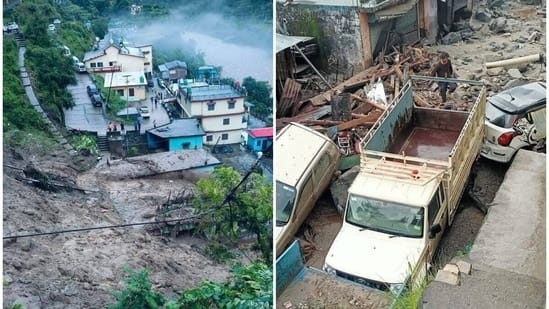
Uttarakhand Chamoli Floods Destroy Homes and Roads in Hills.
Chamoli, Uttarakhand | August 23, 2025
Heavy rainfall lashed Chamoli district on Saturday night, leading to devastating floods that swept through several mountain villages. The disaster damaged homes, cut off crucial road links, and destroyed local farmland. Residents, already vulnerable to recurring monsoon disasters, now face enormous challenges in rebuilding their lives. Government agencies and rescue teams have mobilized quickly, yet relief efforts continue to face obstacles due to the difficult terrain and constant rainfall.

Scale of Destruction in Uttarakhand Chamoli Floods
The Uttarakhand Chamoli floods triggered landslides, collapsing houses and blocking highways that connect remote villages to nearby towns. Water mixed with debris rushed into residential areas, submerging fields and damaging small shops. Many families reported losing household essentials, food stocks, and livestock. The sudden rise in water levels left residents with little time to move to safety.
Authorities confirmed that road connectivity to several regions remained blocked, delaying the transportation of relief materials. Power lines snapped across villages, leaving households in darkness. For families dependent on farming, the floods destroyed standing crops, creating fears of food insecurity in the coming months.
Villages Cut Off After Uttarakhand Chamoli Floods
Several villages across the Chamoli district remain inaccessible after the disaster. Roads leading to hilly settlements were washed away by landslides, while footpaths collapsed under continuous rainfall. The situation forced residents to travel long distances on foot in search of basic supplies.
Local reports suggest that many residents spent nights in makeshift shelters, fearing aftershocks of landslides older people and children remain most vulnerable, as relief camps struggle with overcrowding and limited resources.
Relief and Rescue Operations
Following the Uttarakhand Chamoli floods, disaster response teams began large-scale operations. Bulldozers worked through the night to remove mud and rocks from blocked highways. Medical teams established mobile health units to treat injured villagers and provide emergency medicines.
Helicopters were placed on standby to airlift families from the most inaccessible regions. Despite the efforts, heavy rain slowed down rescue operations. State officials confirmed that relief camps had been set up in schools and community centers, offering food, water, and temporary shelter.
Challenges Facing Relief Efforts
Although the administration acted quickly, several challenges limit the effectiveness of relief distribution. Constant rain prevents heavy vehicles from reaching higher altitudes. Landslides occur repeatedly, undoing progress made in clearing roads.
Communication networks in many villages remain disrupted, making coordination extremely difficult. With bridges damaged, supplies like food grains, drinking water, and medical kits take hours to reach stranded families.
Local volunteers continue to play a critical role by guiding rescue teams through narrow mountain paths and distributing supplies carried on foot.
Government Measures and Official Response
The state government announced immediate relief packages for families affected by the Uttarakhand Chamoli floods. Compensation is being arranged for damaged houses and lost farmland. Officials promised to restore electricity and road connectivity as quickly as possible.
Additionally, the district administration deployed engineers to assess landslide-prone slopes. Weather warnings have been issued for surrounding regions, urging residents to remain cautious and avoid riverbanks. The government also announced the creation of special task forces to improve disaster management strategies in Uttarakhand’s hilly districts.
Voices From the Ground
Villagers who survived the floods described the terrifying night when water and mud rushed into their homes. Farmers lamented the destruction of their fields and the loss of livestock. Many stated that this flood was more destructive than previous disasters, leaving them with fewer resources to recover.
Children and older individuals remain the hardest hit, as crowded relief shelters lack sufficient bedding, medicines, and clean drinking water. Local shopkeepers reported heavy losses as shops and small businesses were buried under debris.
Environmental Lessons From Uttarakhand Chamoli Floods
Experts believe that unplanned construction in fragile zones intensified the damage caused by the Uttarakhand Chamoli floods. Deforestation, hydropower projects, and poorly planned roads have weakened natural barriers, making villages more prone to disasters.
Environmentalists warn that recurring floods in Uttarakhand prove the urgent need for sustainable development. They argue that long-term safety requires stricter building regulations, riverbank protection measures, and afforestation drives to strengthen soil.
Long-Term Preparedness
Officials highlighted the importance of community-level disaster preparedness. Suggestions include creating early warning systems in villages, building stronger embankments along rivers, and equipping local residents with basic rescue training.
Experts also recommend forming village committees that can respond quickly in emergencies, reducing reliance on delayed government assistance. Long-term rehabilitation efforts must focus not only on rebuilding infrastructure but also on restoring livelihoods through crop assistance and small business support.
Key Takeaways From the Uttarakhand Chamoli Floods
The Uttarakhand Chamoli floods underline the vulnerability of Himalayan communities to extreme weather events. While relief work continues, rebuilding lives will take significant time and resources.
The disaster highlights the urgent need for climate-resilient infrastructure, strict construction laws, and community-driven disaster preparedness. Unless sustainable measures are enforced, Uttarakhand’s mountain villages will continue to face recurring tragedies each monsoon season.
Read more : Bengal Monsoon Brings Heavy Rains, Warnings in West Bengal.
Discover more from News Tap One
Subscribe to get the latest posts sent to your email.
