
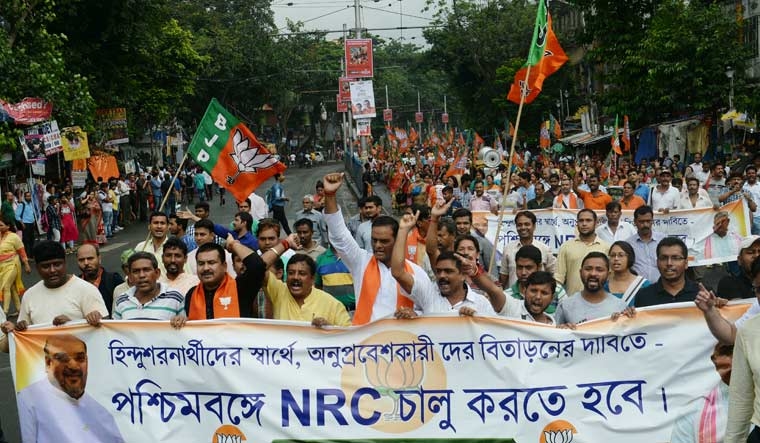
Bengal’s Silent Crisis: Illegal Immigrants and the NRC Debate

West Bengal once again finds itself at the epicenter of a contentious national debate—illegal immigration. The issue, far from being a matter of political rhetoric alone, carries deep demographic, cultural, and security implications. Growing reports of unchecked entry of illegal immigrants from Bangladesh and Myanmar, particularly Rohingya Muslims, into Bengal has sparked a serious concern among the state’s majority Hindu population and organizations that warn of long-term consequences.
The Growing Concern of Illegal Immigration
While India’s eastern border has historically seen inflows of people due to political, economic, and religious turmoil across the border, what is now alarming is the scale and organization of these infiltrations. Allegations suggest that many of these immigrants are being granted ration cards, Aadhaar, and voter IDs through local networks, often under the guise of “charitable service.” This not only undermines the sanctity of Indian citizenship but also reshapes the demographic balance of Bengal’s border districts, creating anxieties of cultural erosion and social unrest.
The Political Divide
The central government has repeatedly issued directives restricting the movement of Rohingya Muslims across the country, citing national security risks. However, the Bengal government appears reluctant to act, often portraying itself as the custodian of “peaceful coexistence.” Critics argue this amounts to deliberate minority appeasement—politics at the cost of national security. The BJP and several social organizations are pushing for an urgent implementation of the National Register of Citizens (NRC) in Bengal, while the ruling state leadership resists the move, fearing backlash from its minority vote bank.
Historical Echoes: Dr. Syama Prasad Mukherjee’s Warning
The warnings of Dr. Syama Prasad Mukherjee, a towering leader and son of Bengal, ring louder today. Mukherjee consistently raised concerns about the fate of Hindus in Bengal, advocating for their protection against demographic and political marginalization. To ignore these lessons of history would be to allow his vision and sacrifices for Bengal’s Hindu community to fade into oblivion.
Why NRC Matters for Bengal
Proponents argue that NRC is not merely an administrative tool—it is a safeguard for national identity and sovereignty. It would help distinguish genuine citizens from infiltrators, ensuring welfare schemes and democratic rights are reserved for rightful Indians. In a state as politically sensitive as Bengal, the unchecked demographic transformation could alter not just cultural identity but also political equations for generations to come.
The Road Ahead
The demand for NRC in Bengal is not just a political slogan; it has become a socio-cultural necessity, at least for those who fear losing their heritage and identity. Unless the state government and the Centre find common ground on this critical issue, Bengal risks slipping into deeper fault lines of communal mistrust and conflict.
History will judge whether the leadership of today upheld the security and cultural integrity of Bengal, or surrendered to short-term political gains. The question remains: will Bengal listen to the voices of concern, or will it let history repeat itself?
Discover more from News Tap One
Subscribe to get the latest posts sent to your email.

