
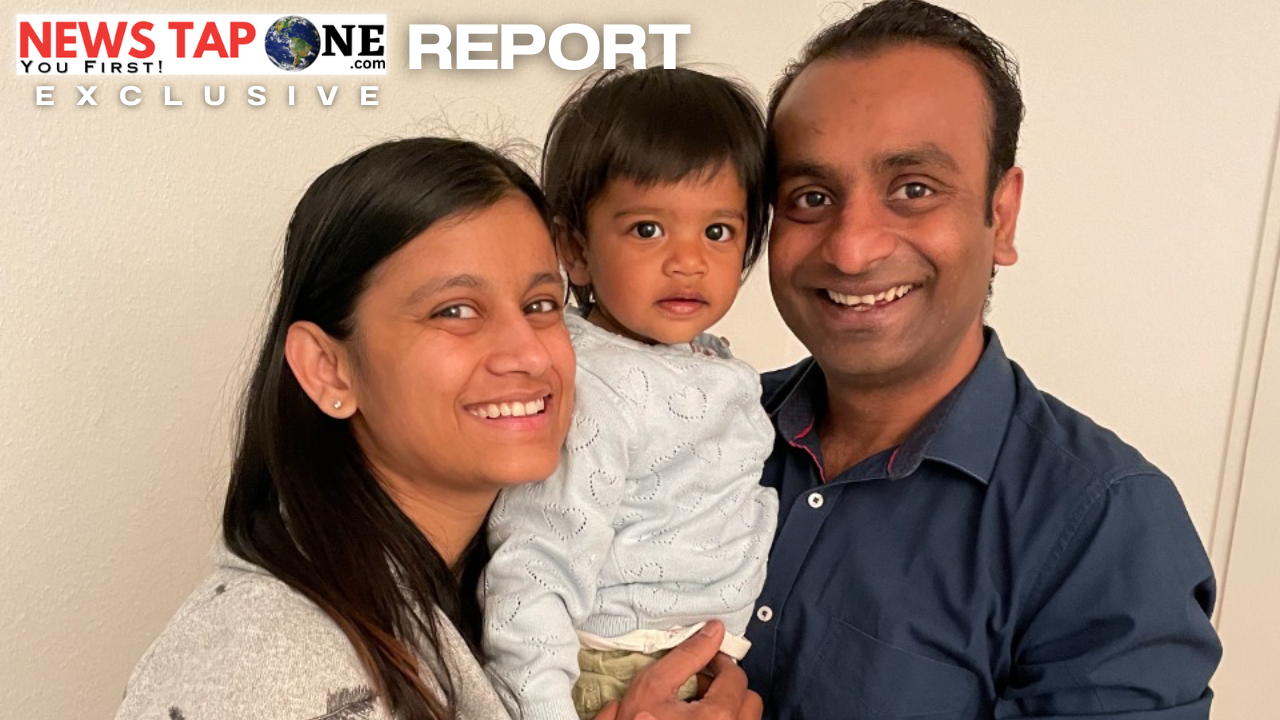
Innocent but Separated: The Shocking Ordeal of Baby Ariha Shah
In a shocking turn of events, the case of baby Ariha Shah, who was taken into custody by the German Child Service on suspicion of sexual assault by her parents when she was just a few months old, has raised serious questions about the handling of the case and the fairness of the legal process. Ariha’s parents, who were accused of a heinous crime, have been vindicated of all charges, yet their baby remains in state custody.
The case, which has garnered widespread attention, has exposed a series of glaring inconsistencies and missteps in the German Child Services’ handling of the matter.
Ariha’s parents diligently provided numerous documents to the court in their defense, including medical opinions from doctors in multiple countries, linguistic affidavits to address language barriers, and reports from experts highlighting potential cultural biases in evaluating their parenting style. Shockingly, the court did not take these crucial pieces of evidence into consideration when passing its verdict.
The core of the case revolves around the injuries found on Ariha, particularly an injury to her genital area. Medical experts have weighed in, suggesting that the injury was highly likely to have been caused by accident, potentially from sitting on a sharp object, with no evidence pointing to intentional harm by the parents. The Child Services’ interpretation of the medical term “penetrating injury” was also found to be flawed, causing further confusion in the case.
Additionally, the initial hospital visit when traces of blood were found in Ariha’s diaper was deemed by the hospital itself as “vaginal bleeding currently without a need for action,” indicating a hormonal cause rather than abuse-related trauma. This crucial information was seemingly overlooked by the authorities.
The treatment of baby Ariha’s sensitive skin was also cited as evidence against the parents, but the Child Services continued to defend their actions even after taking custody of the child, leading to accusations of hypocrisy.
One of the most troubling aspects of the case is the repeated denial of meetings between Ariha and her parents, despite the court permitting such visits. Officials from the Jugendamt, the youth welfare office, cited arbitrary reasons such as the baby crying as a pretext to prevent reunions.
Furthermore, the court proceedings themselves have raised serious concerns. The trial was notably brief, lasting only two days, during which the judge disproportionately favored the court-appointed expert psychologist, dedicating a mere 1.5 hours to the parents’ side. This lopsided approach left little room for a comprehensive examination of the evidence or arguments on the injury in question.
Four expert opinion reports submitted by the parents, including evaluations from senior gynecologists, linguistic experts addressing language barriers, and a psychologist specializing in cultural studies, were seemingly disregarded by the court. The judge neither allowed these experts to present their findings nor acknowledged their reports in the verdict.
Even more puzzling is the court’s treatment of the German doctors involved in the case. Despite their evaluation being questioned by the parents, the court treated them as neutral experts, raising concerns about impartiality.
The court-appointed psychologist recommended allowing Ariha to stay with her parents under supervision, with the possibility of family reunification over time. However, this critical recommendation was completely ignored by the judge, despite its origin from the court’s own expert.
Inconsistencies in the medical assessments throughout the case have added to the confusion. The hospital’s changing stance on the injury’s cause, shifting blame from itself to the parents, has cast doubt on the timeline and the accuracy of the diagnosis.
The lack of motive or delusional behavior on the part of the parents raises even more questions about the allegations against them. They voluntarily sought medical care for their child, casting doubt on any malicious intent.
As the public outcry continues to grow, questions surrounding the fairness of the trial and the competency of the German Child Services in handling such delicate cases remain at the forefront. The fate of baby Ariha Shah hangs in the balance, as her parents and supporters demand justice and a thorough reevaluation of the case.
Amidst the complex and convoluted circumstances surrounding the case of baby Ariha Shah, it is crucial to note that when sexual abuse was initially ruled out, alternative theories, such as ritual abuse or acting under delusion, were put forward, primarily focusing on the mother. However, it is worth emphasizing that the psychological evaluation conducted by the court-appointed expert did not find any evidence of delusion on the mother’s part.
Furthermore, it should be highlighted that there is no established concept of ritual abuse within Jainism, the religious background of the accused family, making such allegations even more perplexing.
Despite these perplexing factors, what remains a glaring omission in the case is the absence of a clear motive for the alleged harm to the child. Notably, the parents themselves took the initiative to seek medical attention for their baby when they noticed unusual symptoms, including blood in the diaper. This raises the legitimate question of why they would voluntarily bring the child to the hospital, particularly after the first visit when the hospital declared the baby to be in good health.
The combination of these perplexing aspects of the case has led to growing concerns about the fairness and accuracy of the accusations against the parents. As the public scrutinizes the proceedings, the demand for a comprehensive and unbiased reevaluation of the case remains paramount.
Jugendamt: House of separations
In November 2018, the European Parliament passed a resolution addressing concerns related to the German Children and Youth Office, known as Jugendamt, and its role in cross-border family disputes. This resolution came in response to petitions received by the European Parliament’s Committee on Petitions from non-German parents who alleged systematic discrimination and arbitrary actions by Jugendamt in family disputes involving children, particularly in cases of parental responsibility and child custody.
The resolution highlighted Jugendamt’s significant role within the German family law system, emphasizing its authority in representing children’s interests, issuing binding recommendations to judges, taking interim measures without the possibility of appeal, and enforcing German court decisions.
Numerous allegations were made by petitioners against Jugendamt, including a broad interpretation of court rulings that undermined non-German parents’ legal protection, interpreting the concept of ‘child’s best interests’ in a way that favored keeping children in Germany even in cases involving abuse or domestic violence against non-German parents, and not recognizing or enforcing judgments from other EU member states in cross-border family disputes.
The European Parliament stressed the need to protect children’s rights in accordance with international agreements, emphasizing the right to maintain relationships with both parents when parents exercise their right to free movement, as long as it is not contrary to the child’s best interests.
Despite these concerns, the resolution acknowledged that substantive family law remains the responsibility of EU member states, and the EU lacks general competence in these matters. Nonetheless, it called for decisions on childcare to prioritize the family as the primary and optimal environment for a child’s welfare, highlighting principles of non-discrimination based on nationality and mutual trust between EU member states’ legal systems.
The European Parliament expressed concern about the lack of resolution in addressing problems related to the German family law system, particularly concerning discrimination against non-German parents in cross-border family disputes. It criticized the European Commission’s inaction in thoroughly assessing the practices of the German family law system, including Jugendamt, and providing effective protection for children’s welfare.
The resolution pointed out a concerning pattern of German authorities refusing to recognize judgments from other member states when children under the age of three had not been heard, despite a ruling from the German Federal Constitutional Court allowing such hearings. It also highlighted discriminatory language requirements during parent-to-child contact, which resulted in communication restrictions and potential bans on contact between parents and their children.
Additionally, the resolution criticized the method of determining a child’s ‘habitual residence’ by German authorities and the absence of statistics on cases where court rulings did not align with Jugendamt’s recommendations.
In response to these concerns, the European Parliament called on the European Commission to take several active measures to ensure fair and non-discriminatory practices in cross-border child custody cases across the EU. These measures included assessing the determination of habitual residence by German judicial authorities, ensuring compliance with EU regulations, conducting checks on discriminatory procedures, addressing language requirements, providing training and exchange opportunities for social service officials, and assessing the implementation of relevant provisions.
The resolution also urged member states to enhance legal support, assistance, counseling, and information for their citizens in cross-border family disputes involving children.
Finally, the European Parliament reminded member states of their obligations under international treaties, particularly the Convention on the Rights of the Child, emphasizing the importance of preserving a child’s cultural, linguistic, and national identity.
The resolution marked the first significant effort by EU institutions to condemn systemic discrimination against non-German parents in German family law disputes. However, it’s important to note that the resolution does not create legally binding standards. The responsibility for implementing concrete solutions to address these issues lies with the European Commission, which, in cooperation with the German government, has the opportunity to find binding solutions.
Discover more from News Tap One
Subscribe to get the latest posts sent to your email.

