
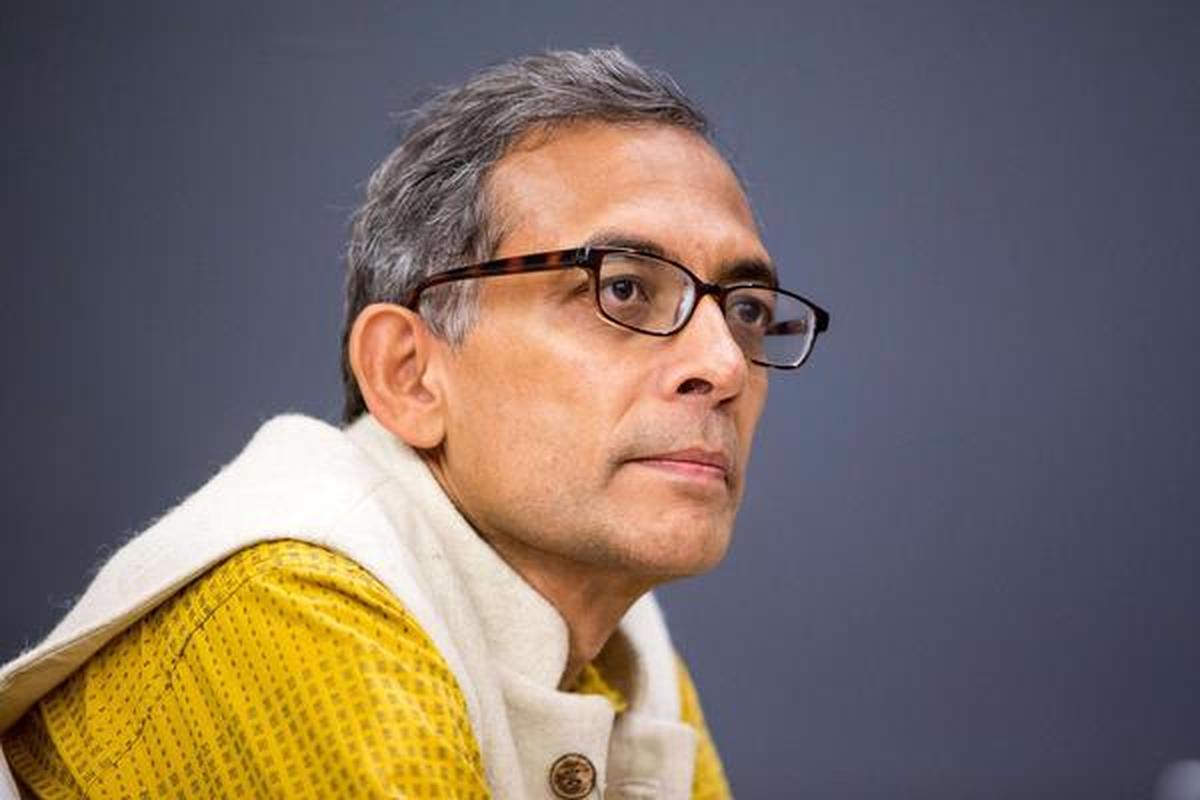
Rising Polarisation is turning India into a Global Puzzle, Warns Abhijit Banerjee
Political polarisation is weakening transparency, making India difficult for global investors and observers to understand, Banerjee warns.

Nobel Laureate economist Abhijit Banerjee has sounded a strong warning that rising political polarisation within India is eroding transparency and damaging the country’s credibility on the world stage – to the point where India is becoming a “mystery” for international investors and observers.
Speaking in an interview with news agencies in Kolkata, Banerjee said that while India continues to register strong headline economic growth, the lack of clear, credible information – compounded by political division – is creating uncertainty for foreign investors. He stressed that media freedom and transparency are the two factors that matter most for sustained investor confidence, far more than political rhetoric.
“Unless we have a very predictable and transparent policy regime and a transparent media, India will remain a mystery to the world,” Banerjee said, underlining investor concerns about inconsistent information and policy unpredictability.
Investor Confidence and Unstable Capital Flows
Banerjee noted that although India has continued to attract foreign investment the inflows are unstable and sensitive to uncertainty. He linked the recent depreciation of the rupee – compared with major currencies – to the lack of sustained capital inflows, suggesting that capital is easily deterred by unpredictabilty in both politics and policy.
He also pointed out that investors care less about political slogans and more about the credibility of the data they use to make decisions:
“Do we really know what the numbers are? That’s what investors care about.”
Beyond markets: governance, education, jobs and trust
Banerjee’s comments went beyond markets and finance. He raised broader concerns that internal polarisation – if it erodes trust in institutions and the media – could hamper long-term political stability and make broad consenus on economic reforms harder to achieve.
He questioned whether the government’s development roadmap sufficiently addresses critical challenges like quality education, job creation – especially in the face of technological disruption such as artificial intelligence – and deep inequalities in access to basic services like health and education.
Banerjee warned that focusing solely on GDP could mask deeper social distress: if most people lack access to quality education and meaningful employment, long-term growth may slow and social hardship could deepen.
The Broader Message
Banerjee’s main point is that strong GDP growth and big investmesnt figures don’t automatically build trust. For global investors and ordinary citizens to feel confident, India also needs transparent Systems, reliable data and strong institutions.
He argues that how India is perceived around the world matters as much as its economic performance. Right now, political divisions and uncertainty may be hurting that perception.
Discover more from News Tap One
Subscribe to get the latest posts sent to your email.

